
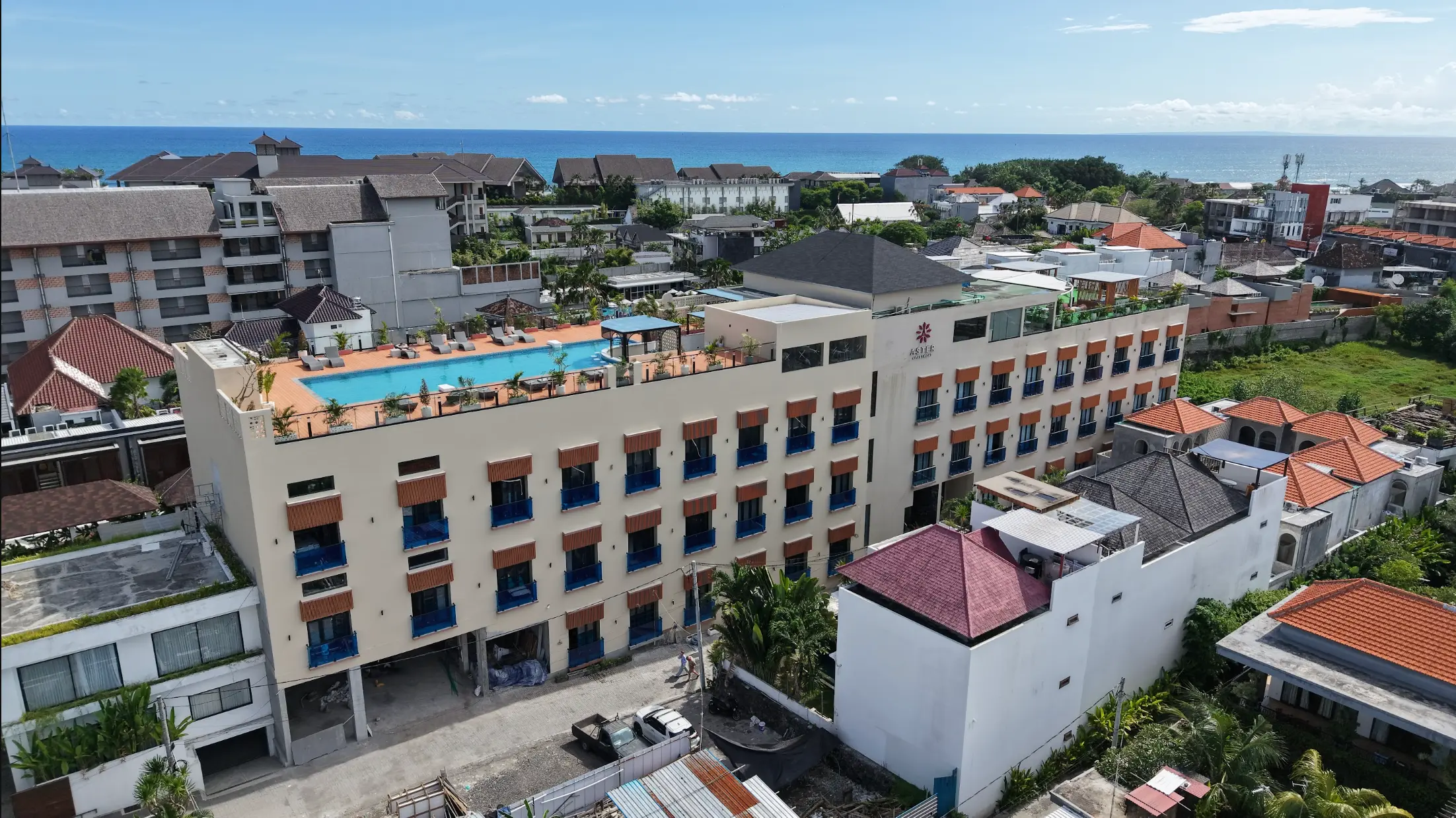
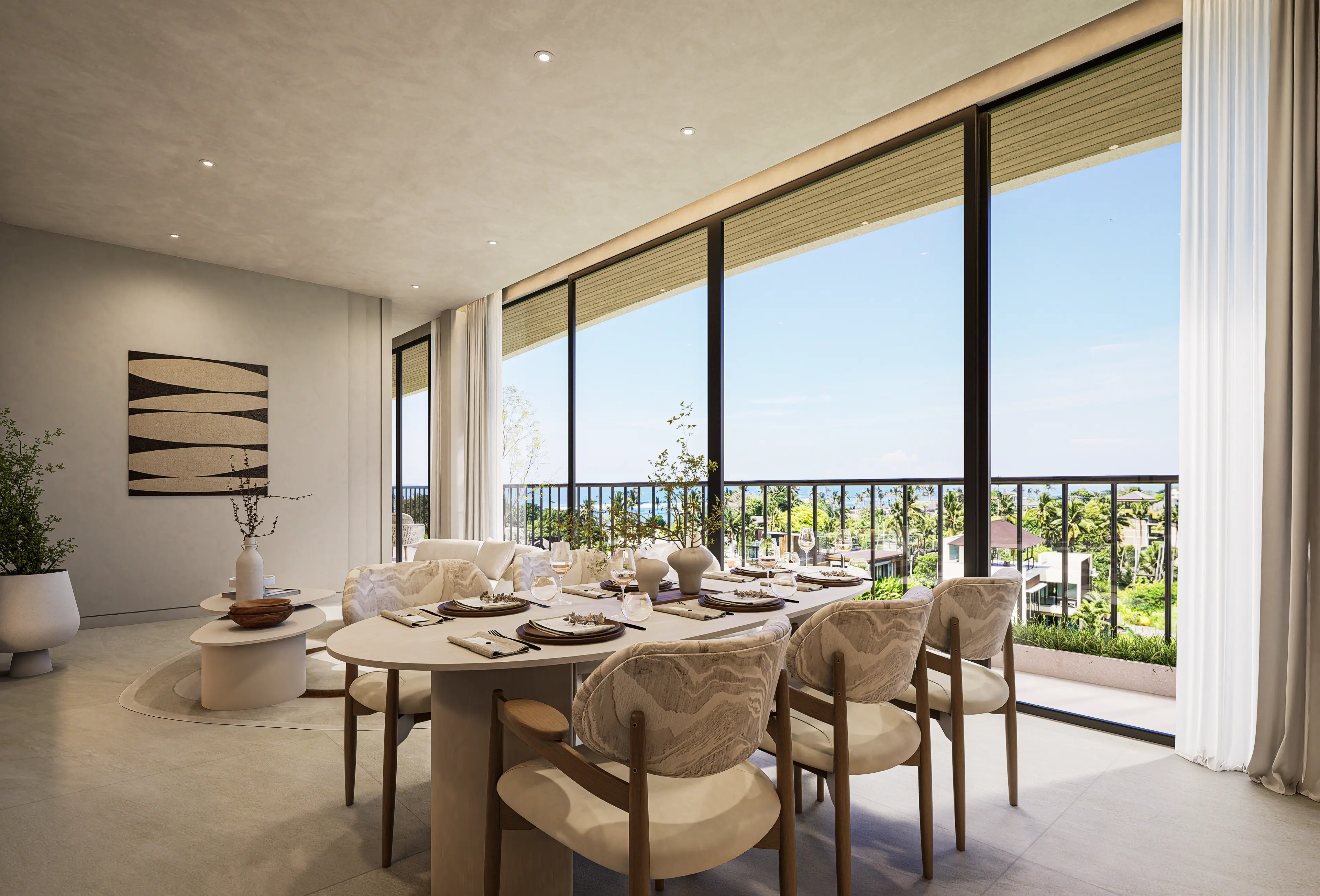
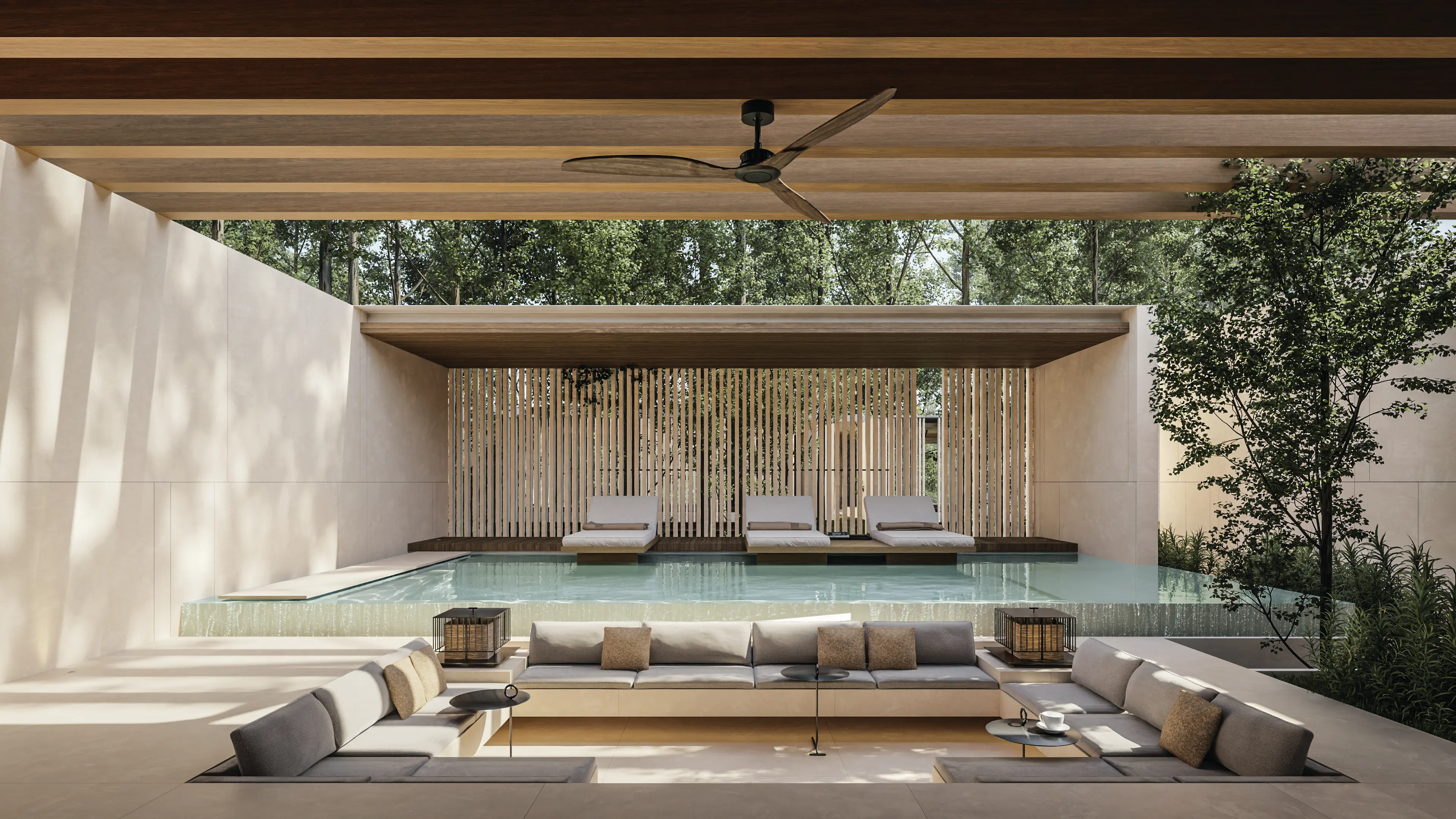
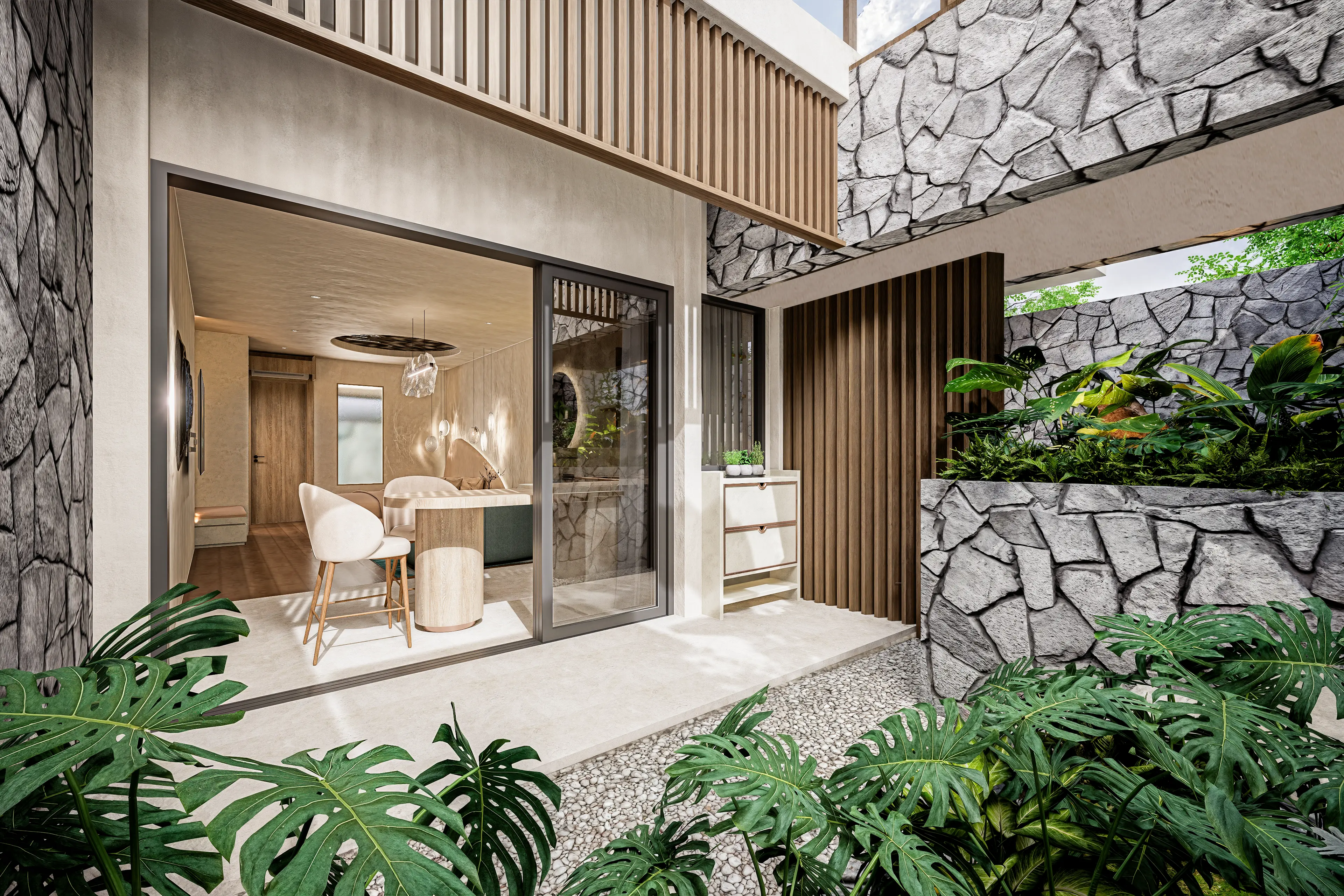
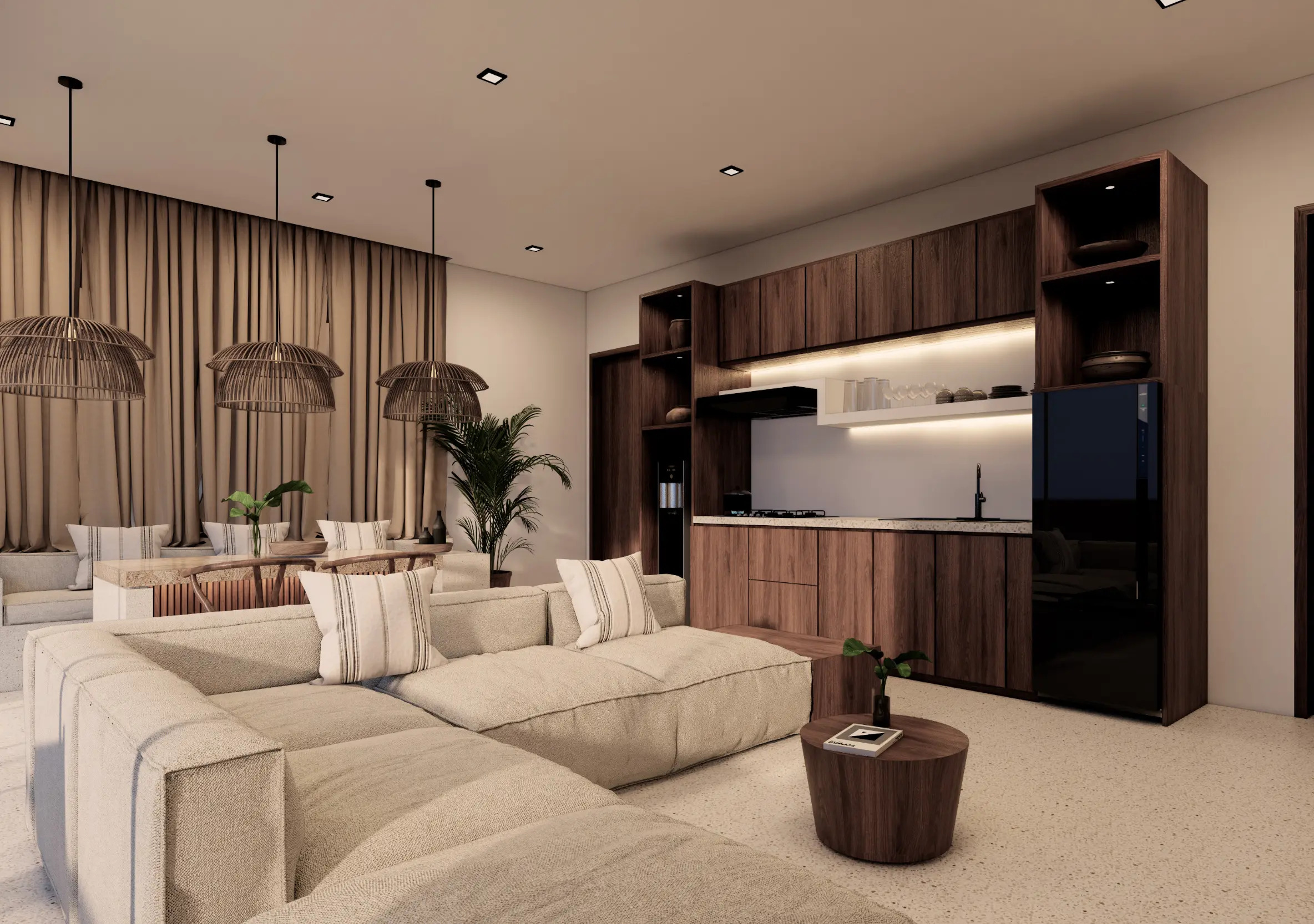
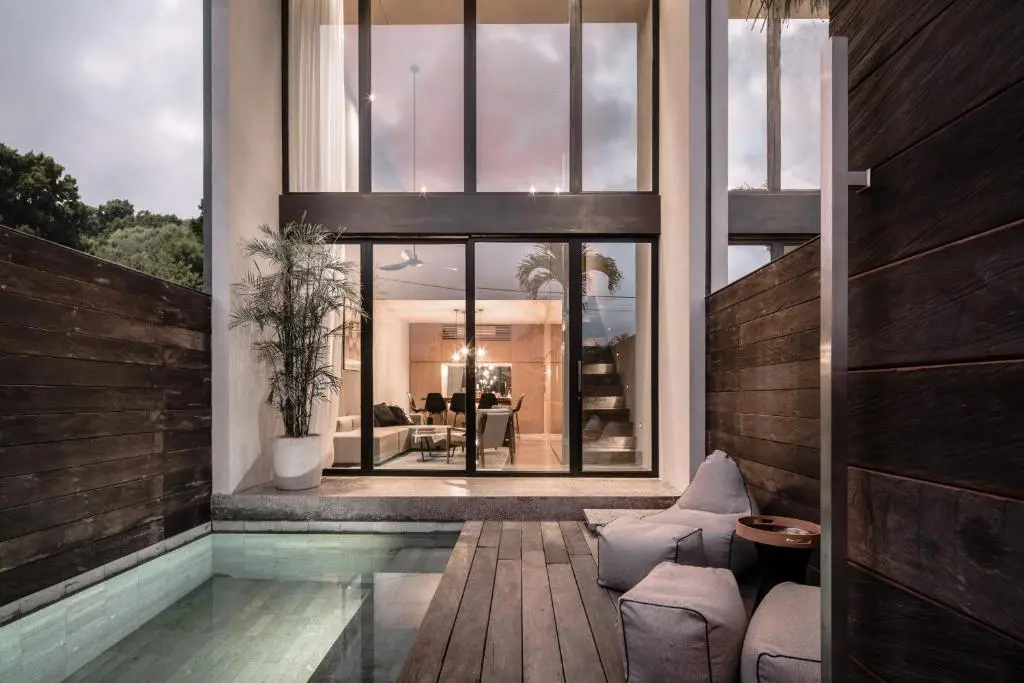
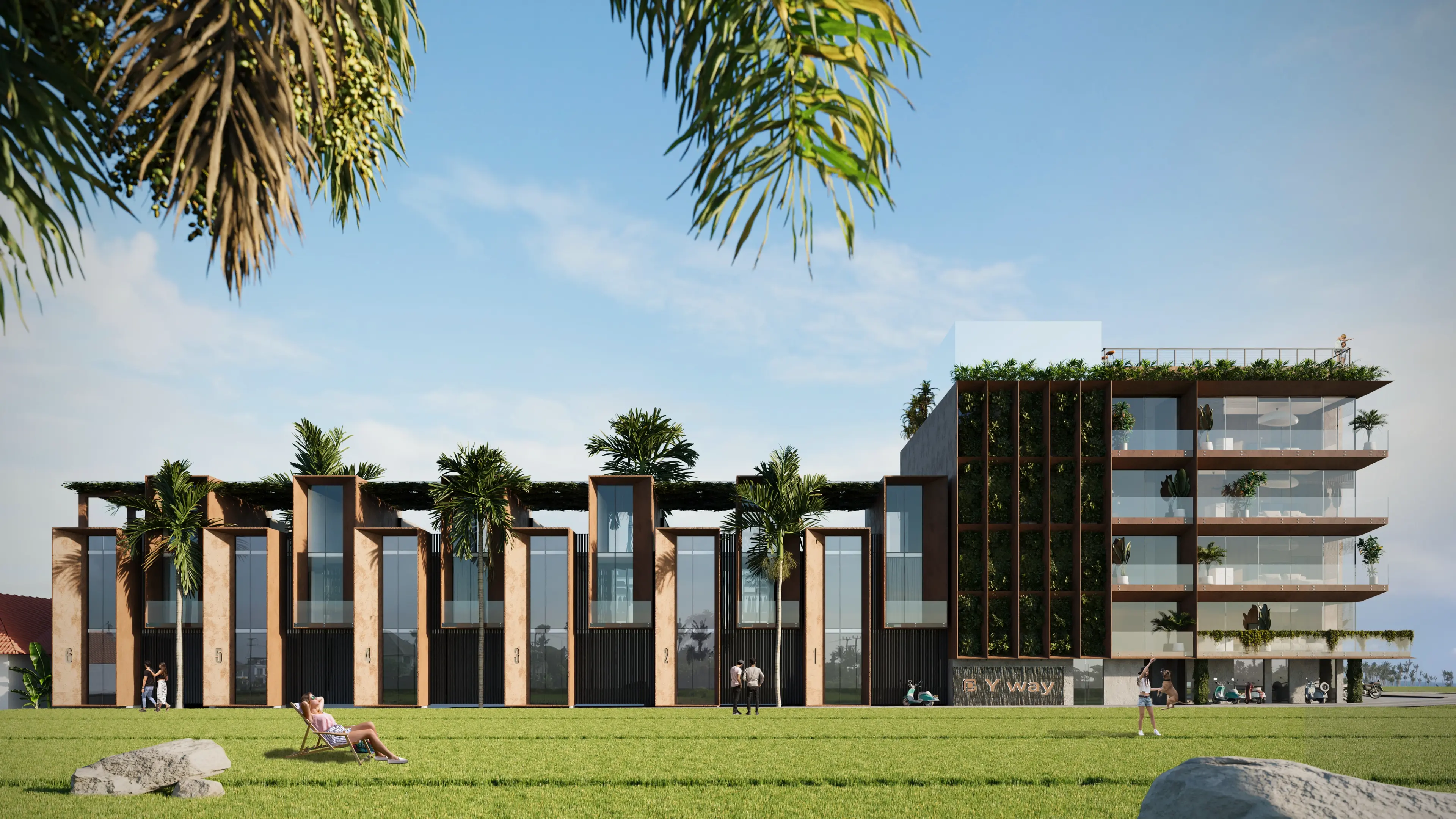
Canggu's apartment market serves a narrower but sharper use case than the region's villa market. Where villa inventory targets diverse buyer profiles — rental operators, owner-occupiers, family-stay buyers, second-home purchasers — Canggu apartments concentrate almost entirely in the hotel-managed or operator-integrated rental segment. The format is designed for one thing: daily-rate short-term rental, run either through an operator's management program or via independent Airbnb operation.
Our dataset tracks 23 active primary-market projects with apartment inventory in Canggu, with apartment-unit prices spanning from $89,000 at the compact studio entry to $910,000 at the premium 2-BR top end; median apartment-unit price sits at $259,000. Unit footprints are typically compact — 25-60 m² for studios and 1-bedroom formats that dominate the segment.
Where Canggu apartments concentrate
Apartment inventory clusters in two sub-areas:
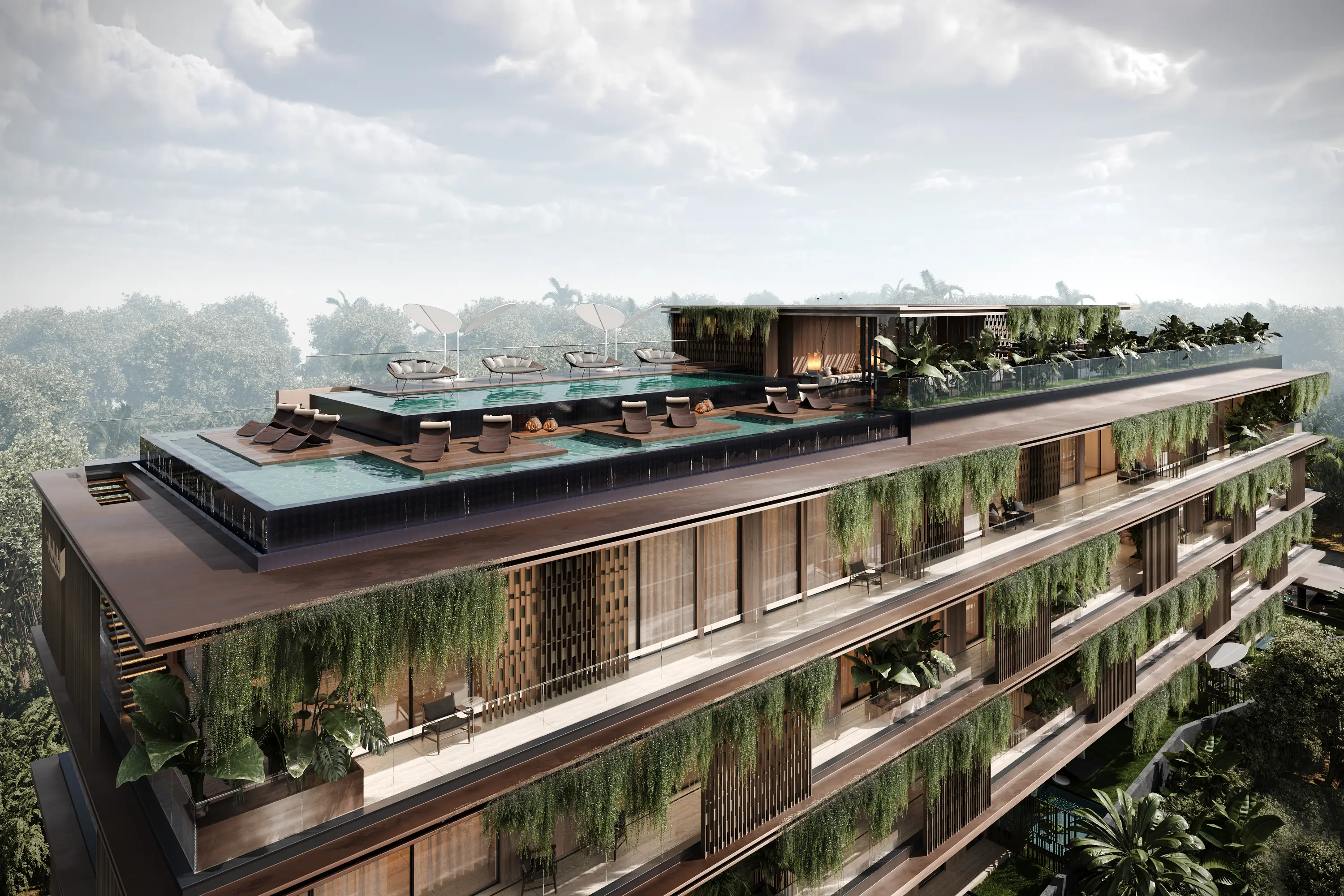
- Pererenan — the largest apartment supply in Canggu. Hotel-managed buildings have scaled here faster than any other Bali sub-market, driven by Pink-zone land availability and lot economics that favor mid-rise apartment development over villa compounds.
- Batu Bolong — second-largest apartment cluster. Generally smaller buildings than Pererenan, often serviced-apartment product targeting the surf-tourism market.
Apartment inventory is essentially absent from Berawa (family-focused villa market), Seseh (compact beachside product), and Umalas (inland residential character).
Typical configuration
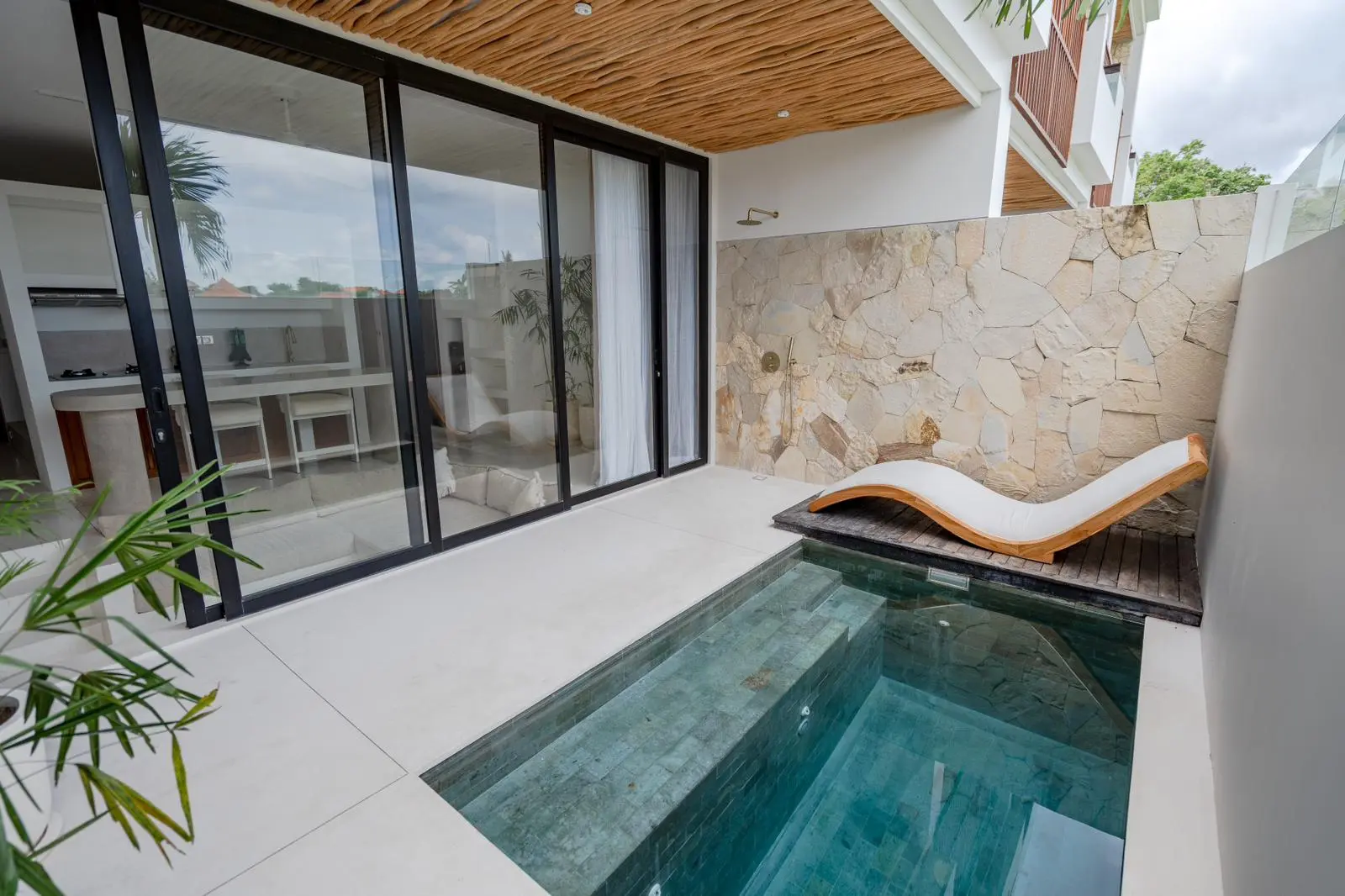
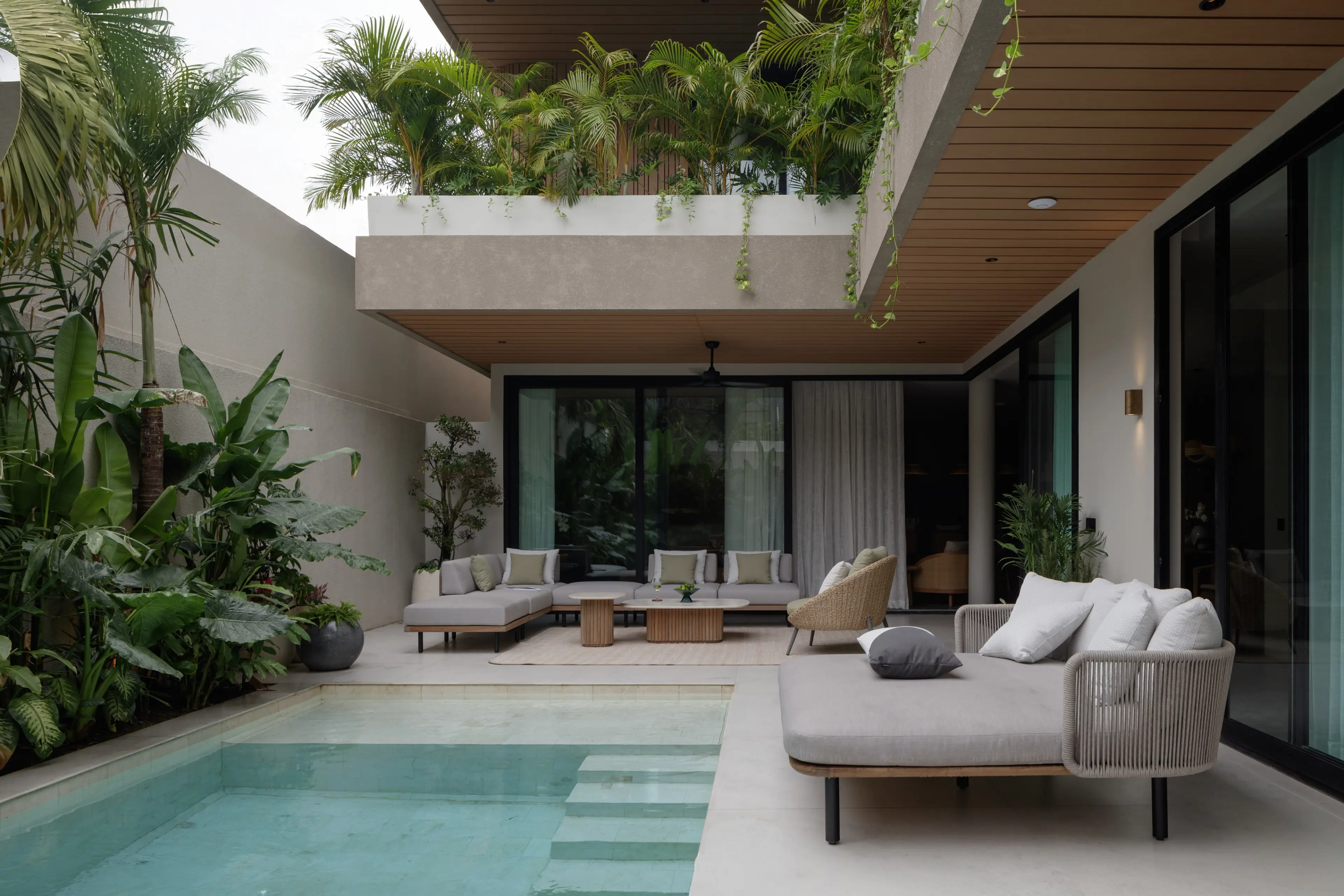
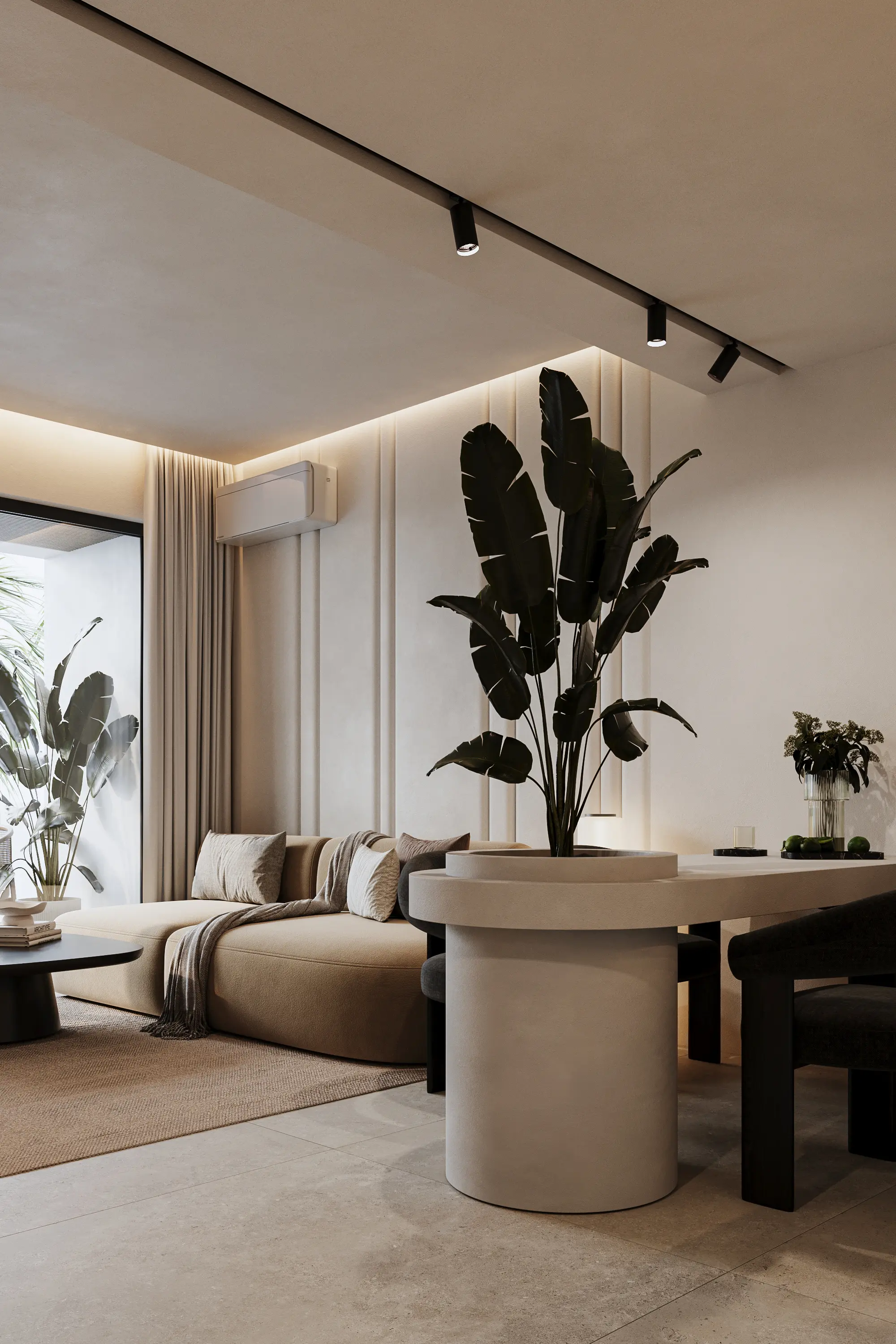
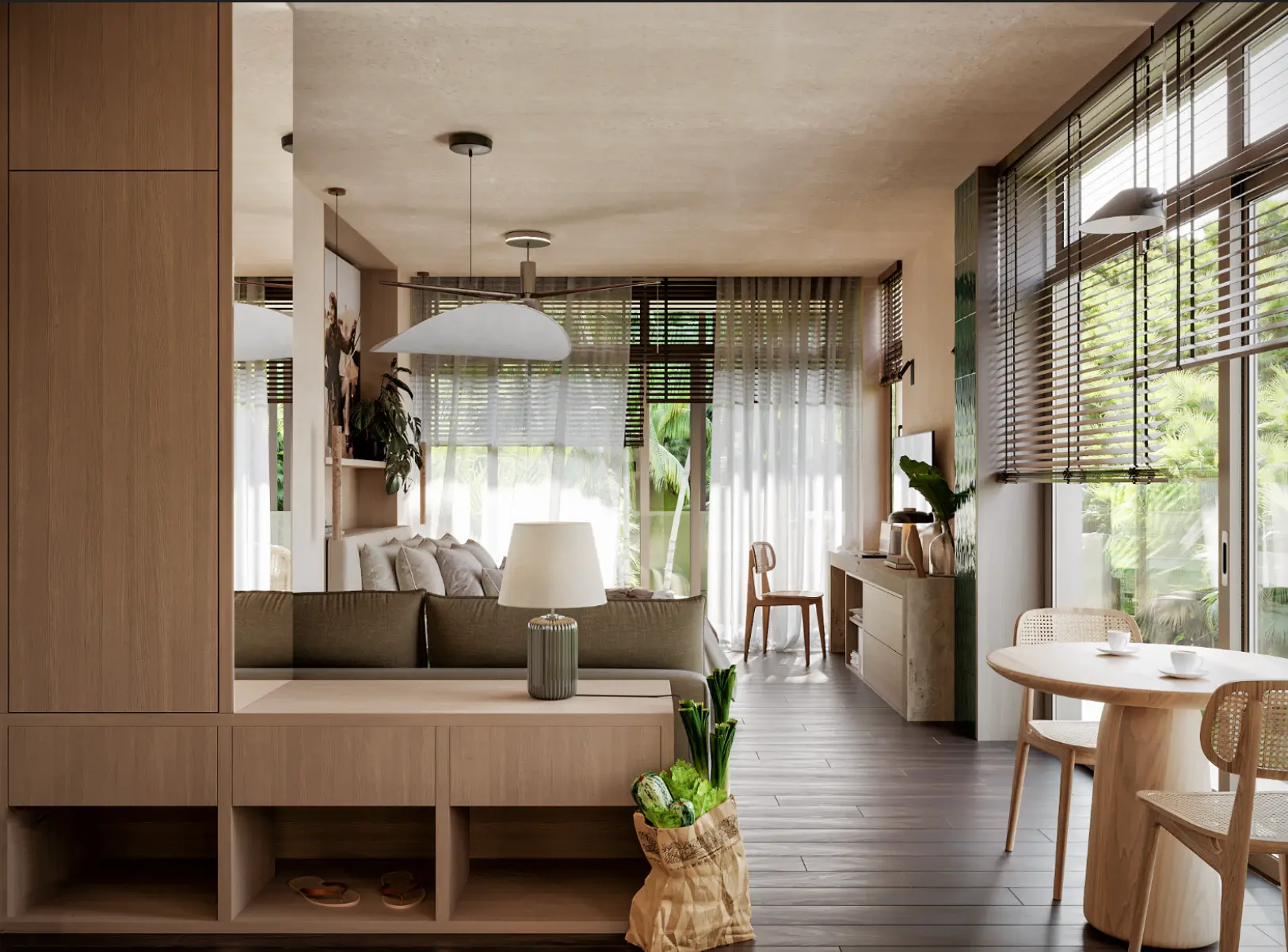
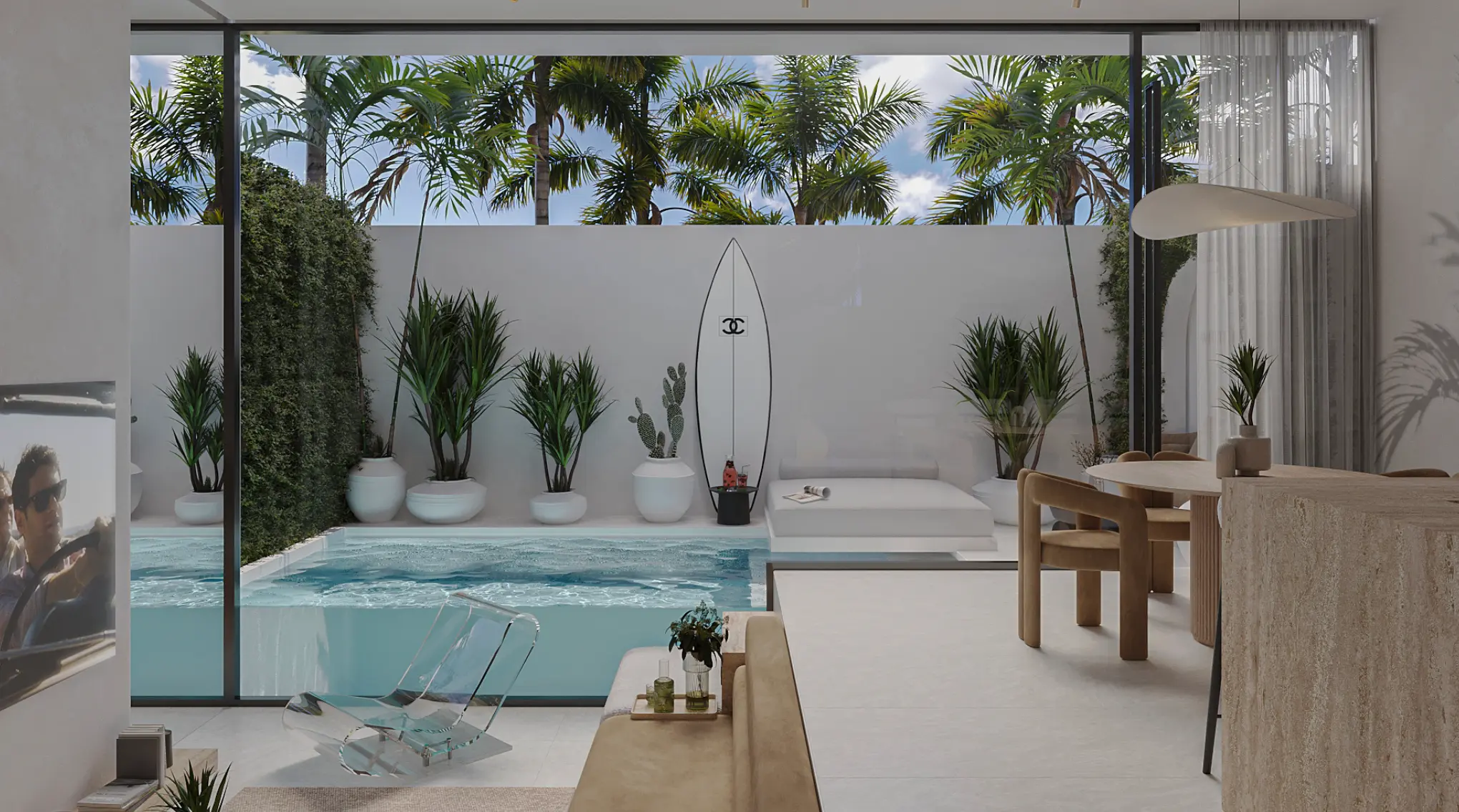
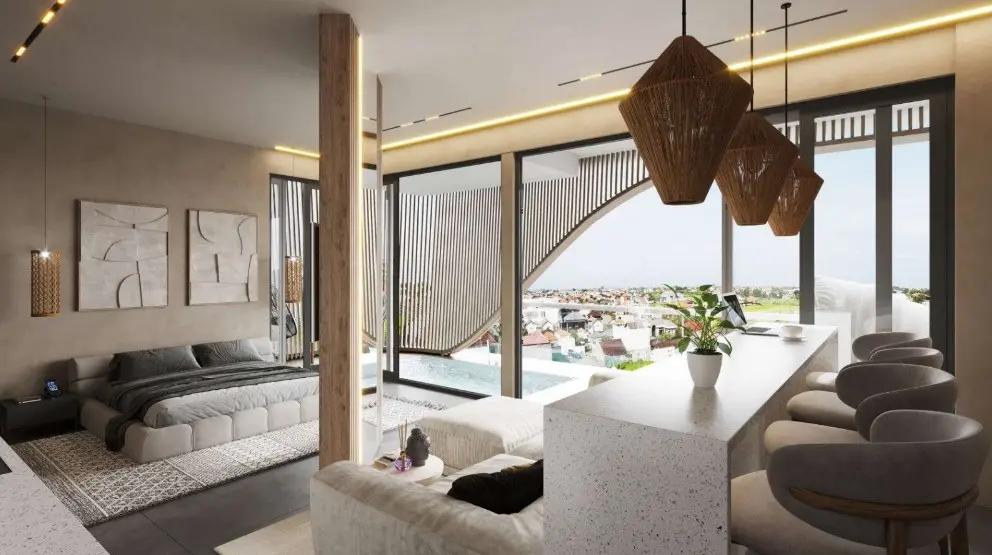
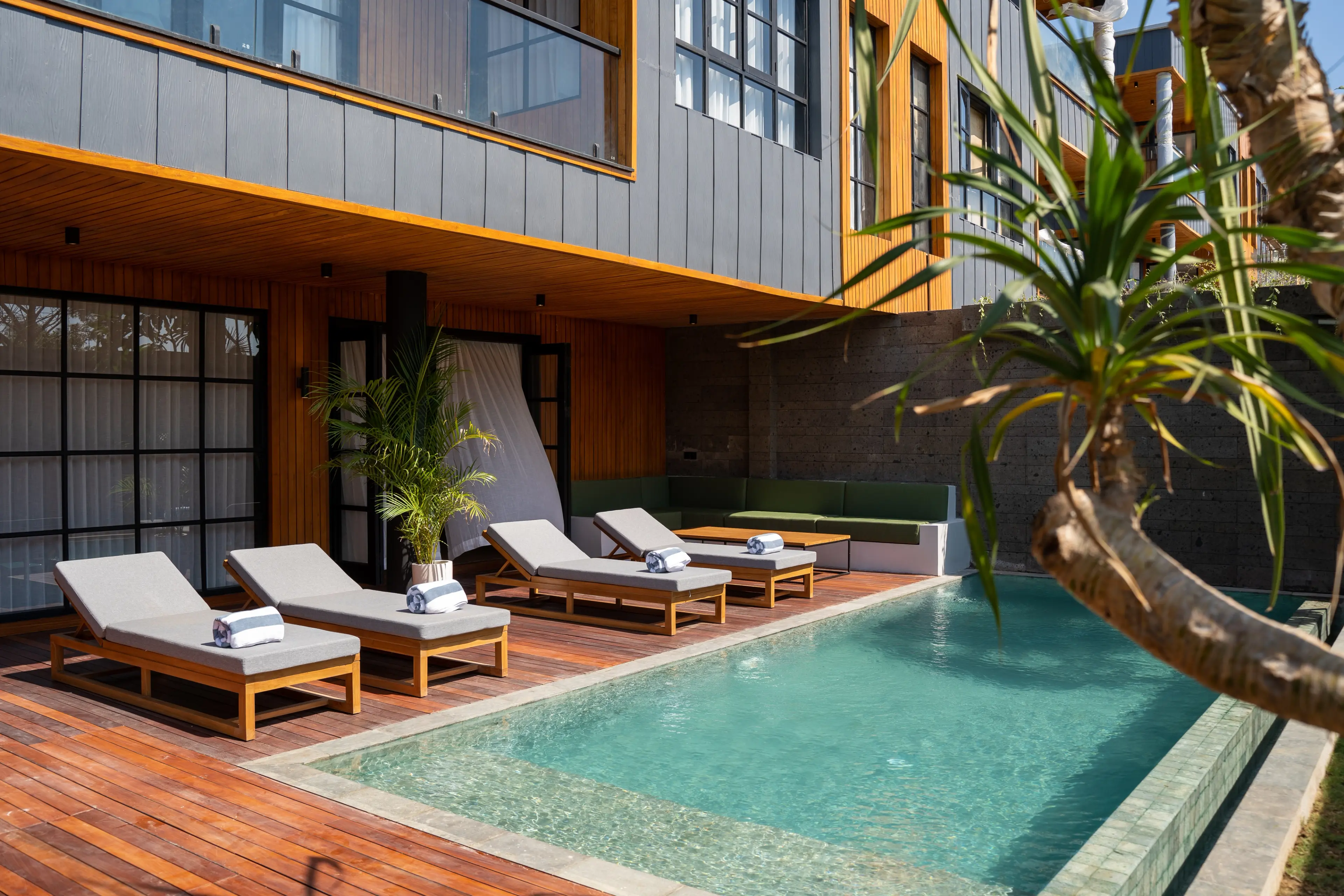
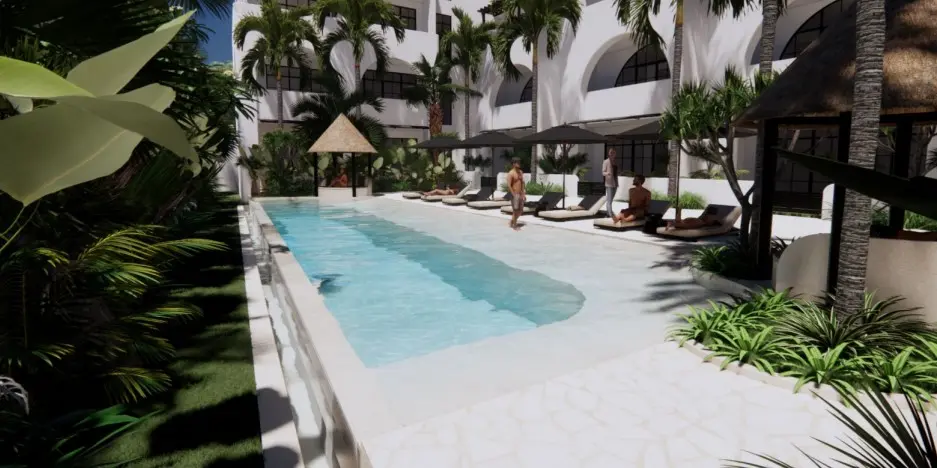
Canggu apartments typically come in studio and 1-BR formats of 25-60 m². 2-BR apartment product is rarer but exists in some premium buildings. Private outdoor space varies — balconies are common, private pools rare (apartment buildings typically have shared pool facilities instead).
Completion timing splits roughly evenly between under-construction and completed. Completed inventory is available for immediate handover and operation.
Operator models
Unlike villa purchases, Canggu apartment purchases frequently come with operator arrangements that buyers need to understand before committing. Key questions per-project:
- Is the operator contract fixed for a multi-year lock-in period, or does the buyer have flexibility to operate independently from day one?
- What's the operator revenue-share? Industry-typical is 20-40% gross; terms outside that range warrant specific diligence.
- Are there income-guarantee clauses? If yes, verify the guarantor's balance sheet behind the promise.
- Is the building affiliated with a hotel brand? Brand affiliation can change tax treatment and exit mechanics.
Apartments with "independent operation" rights exist in the Canggu pipeline but are a smaller share — buyers specifically looking to avoid operator integration should filter for those.
Tenure and zoning
Apartment tenure in Canggu mirrors the broader region: leasehold-dominant with small freehold-via-PMA pockets in select premium buildings. Lease terms cluster at 25-30 years.
Zoning: apartment projects in Canggu skew Pink (tourism, STR legal) because the economics of apartment development require the STR rental stream. Yellow-zone apartment product is rare in the current pipeline.