
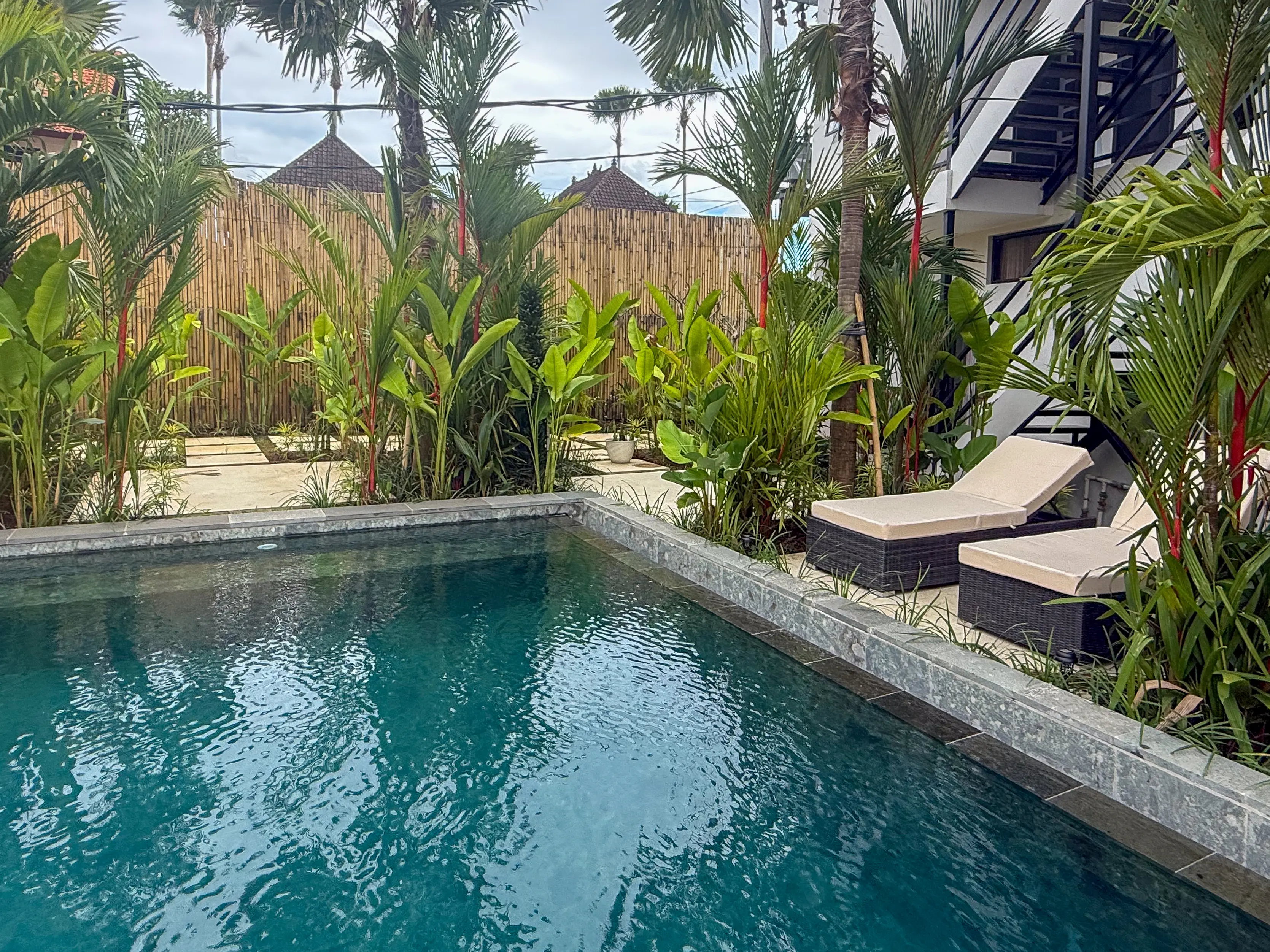
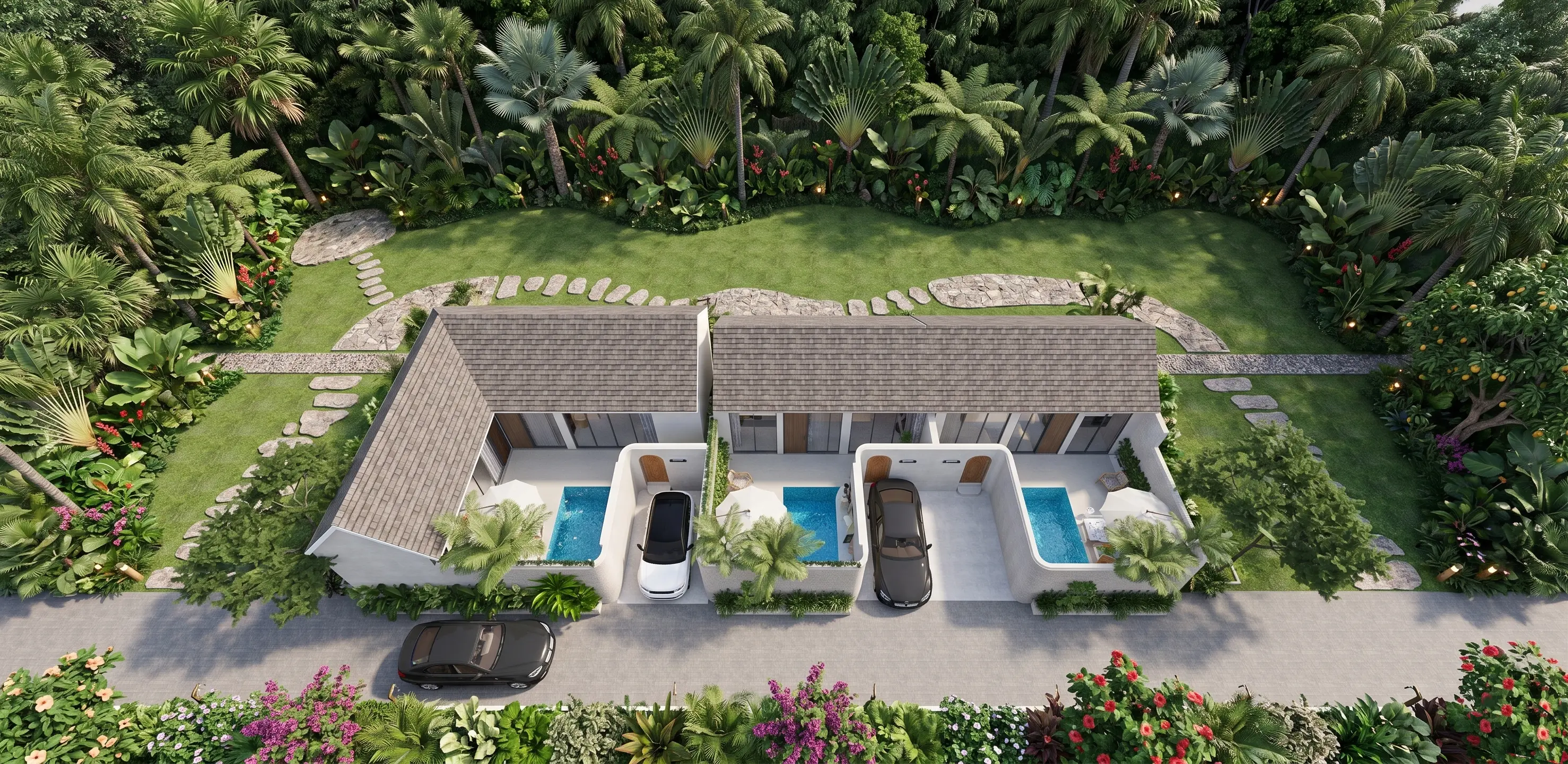
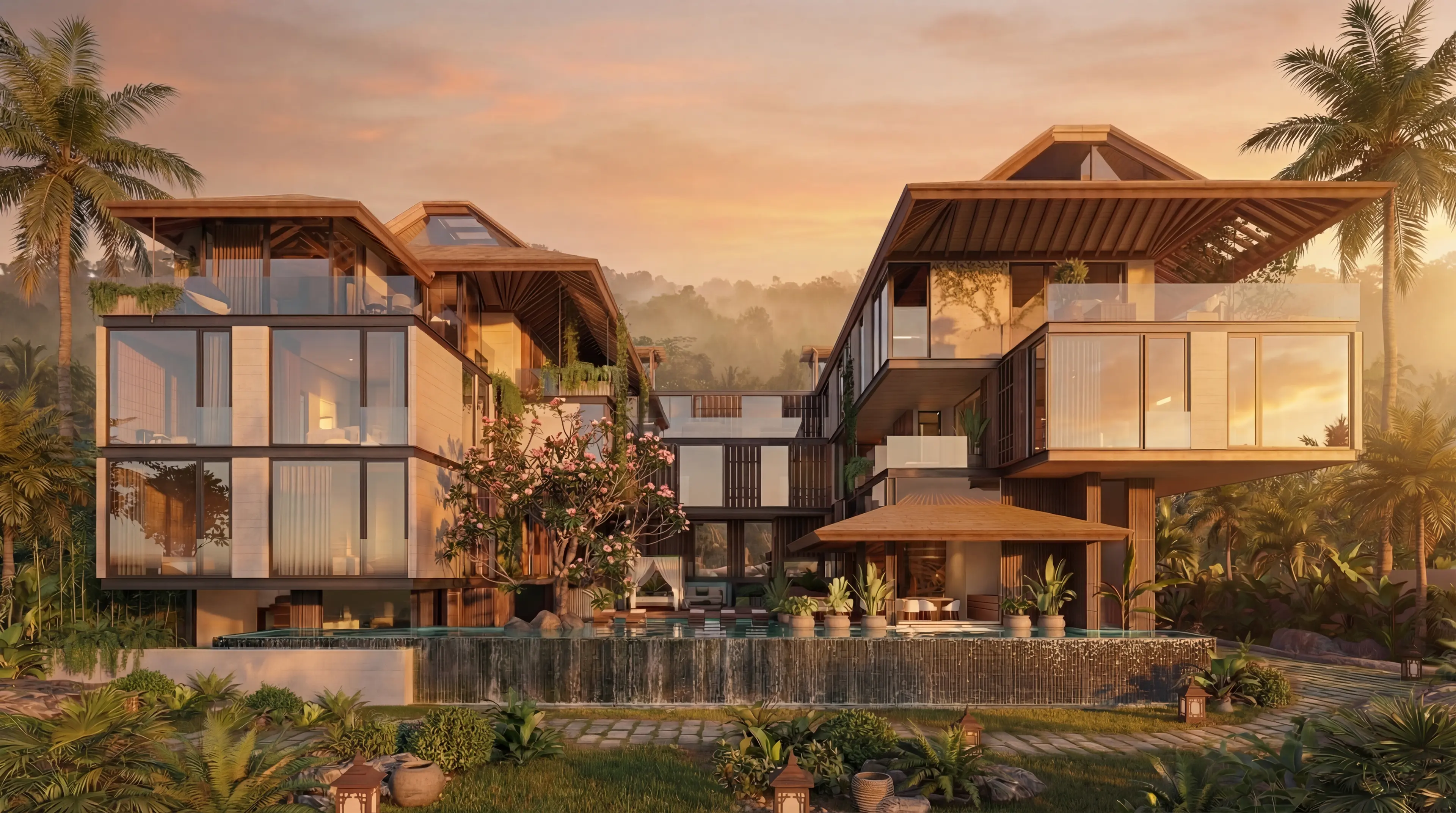
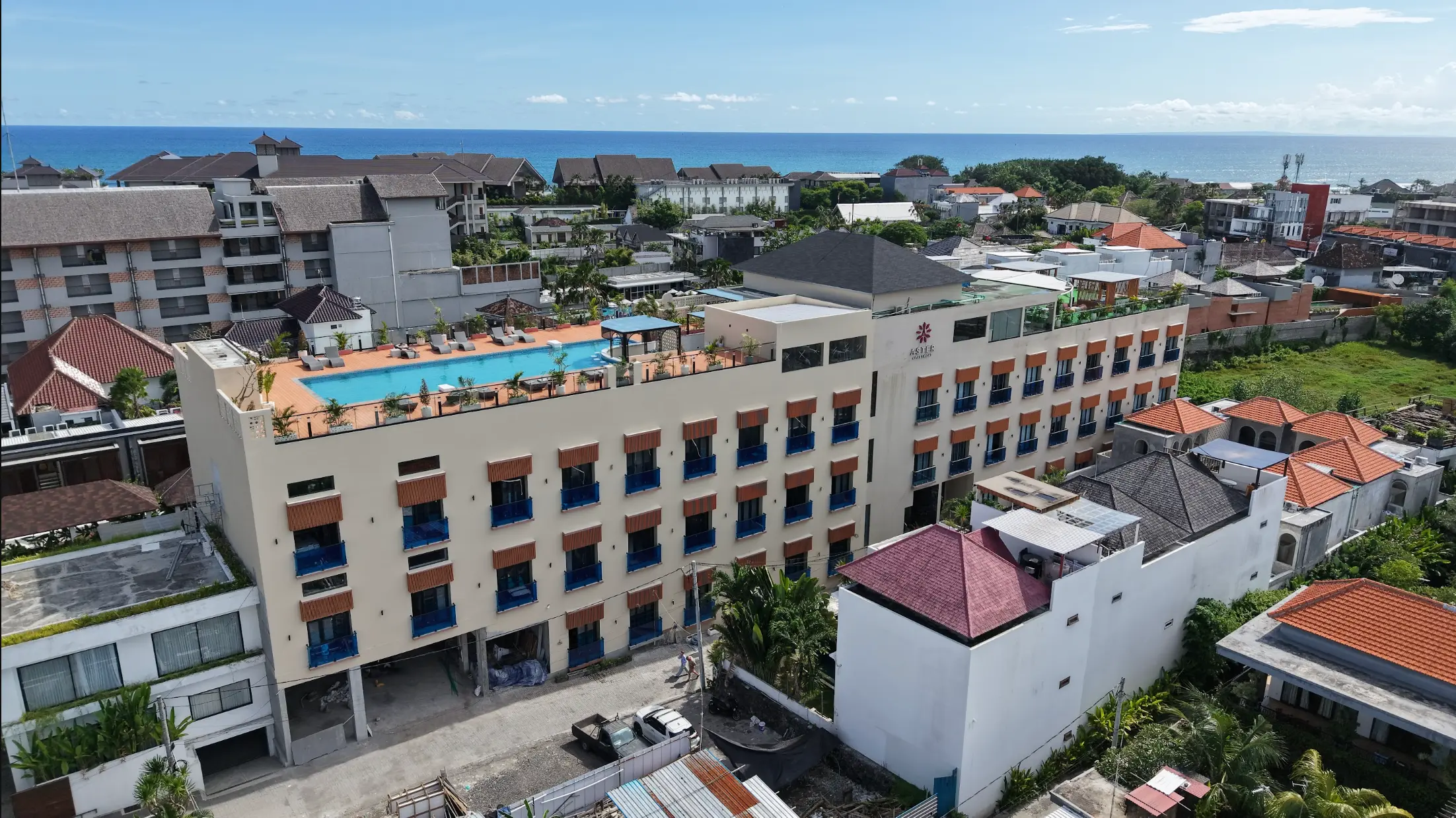
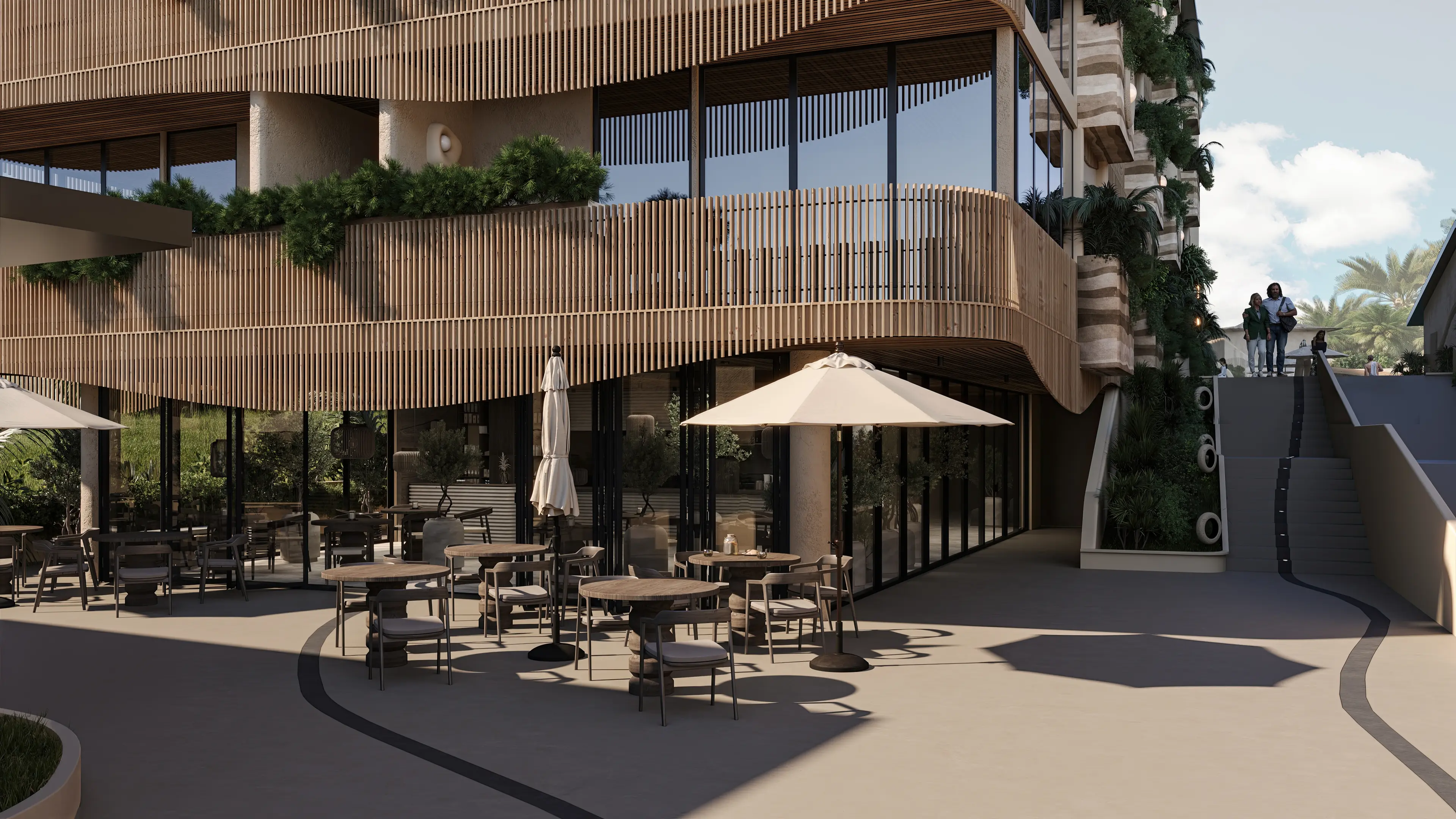
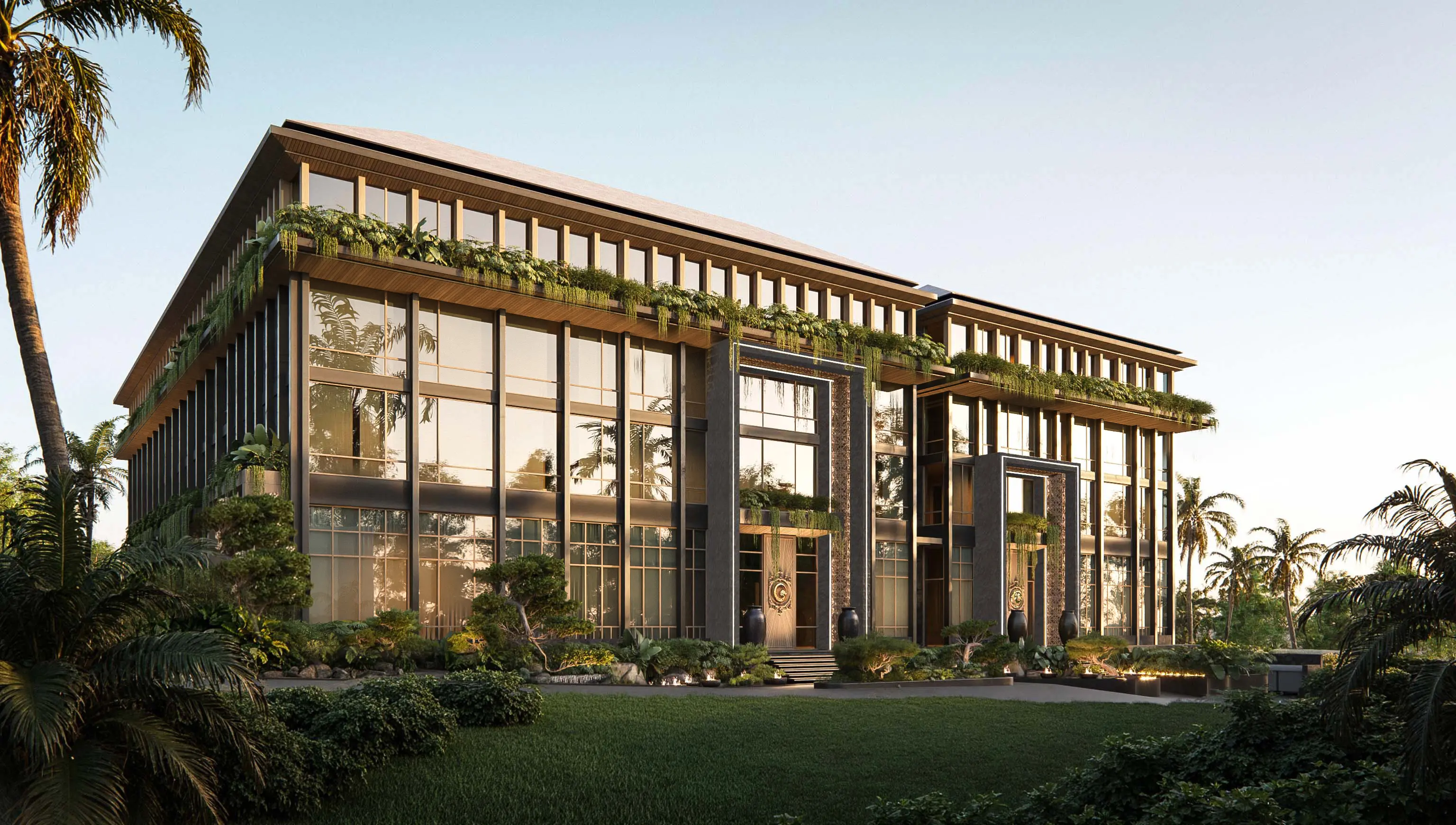


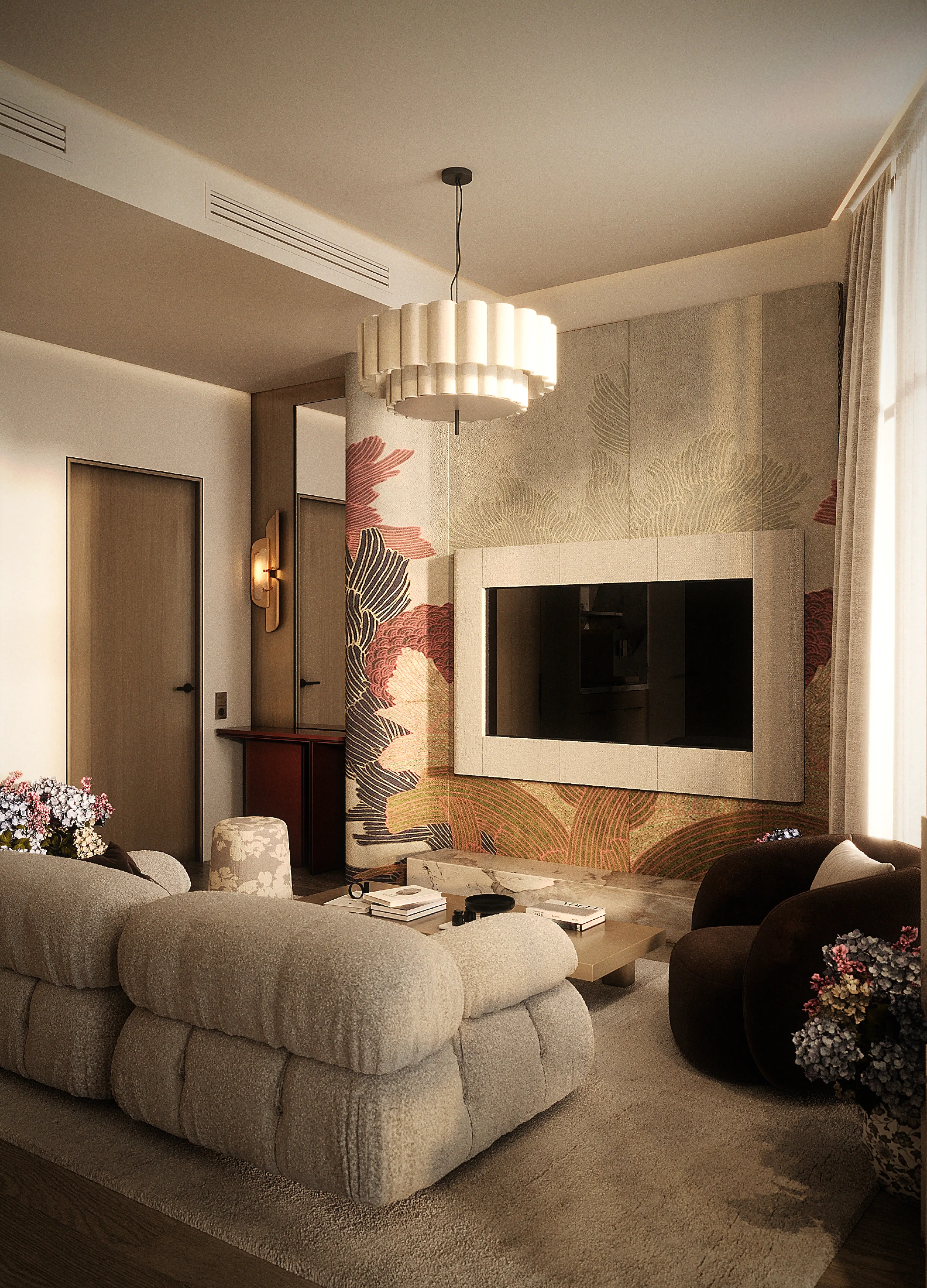
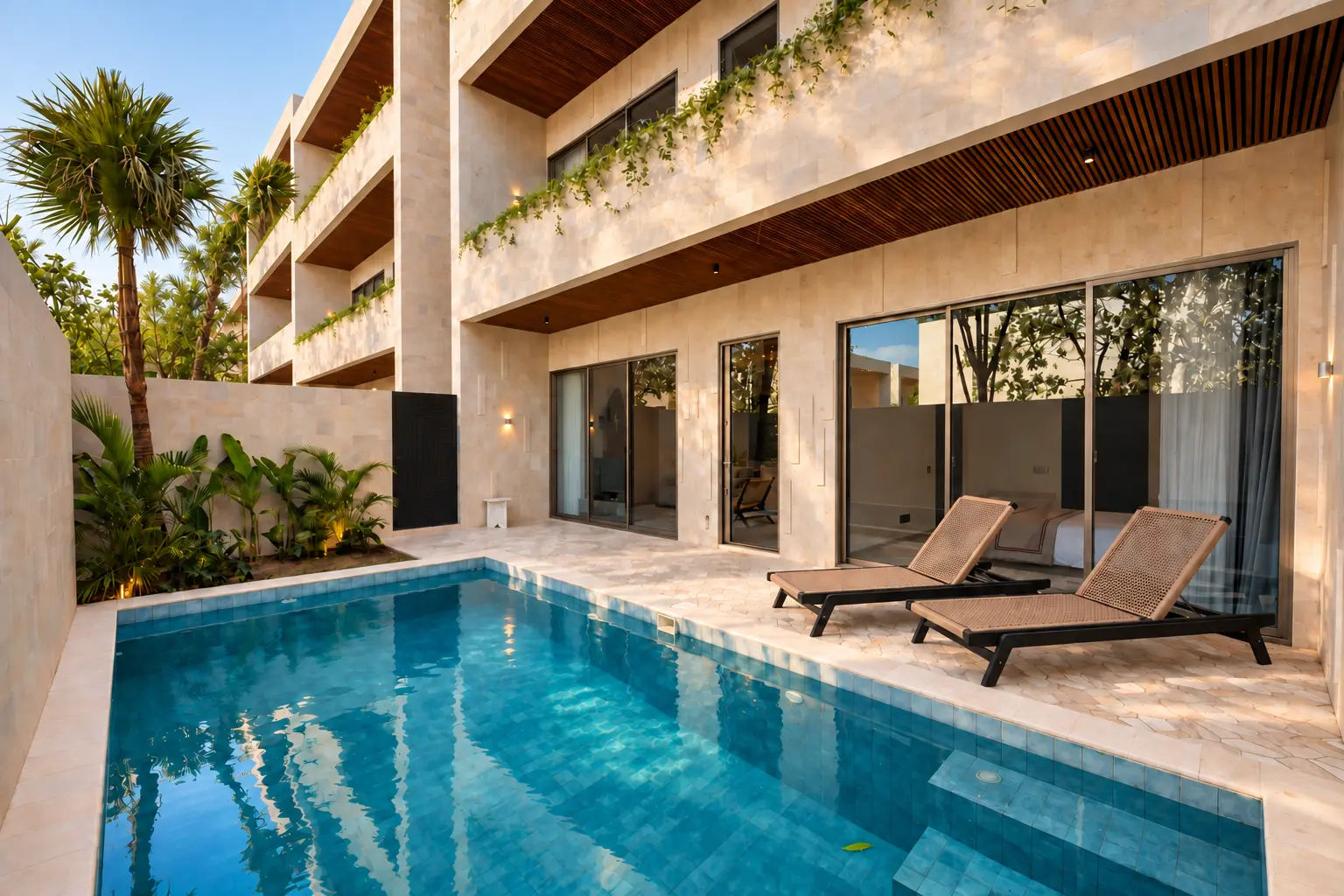
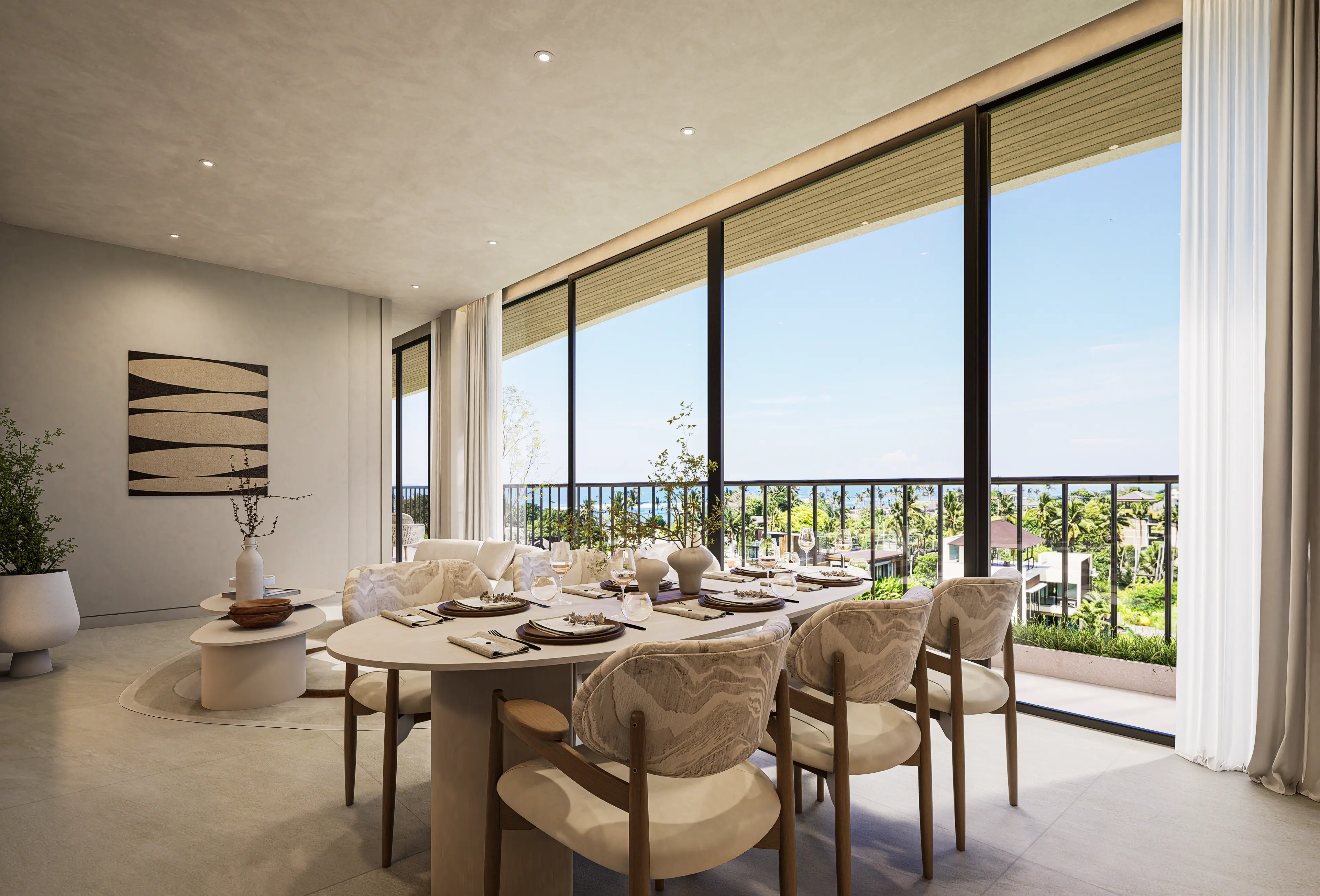
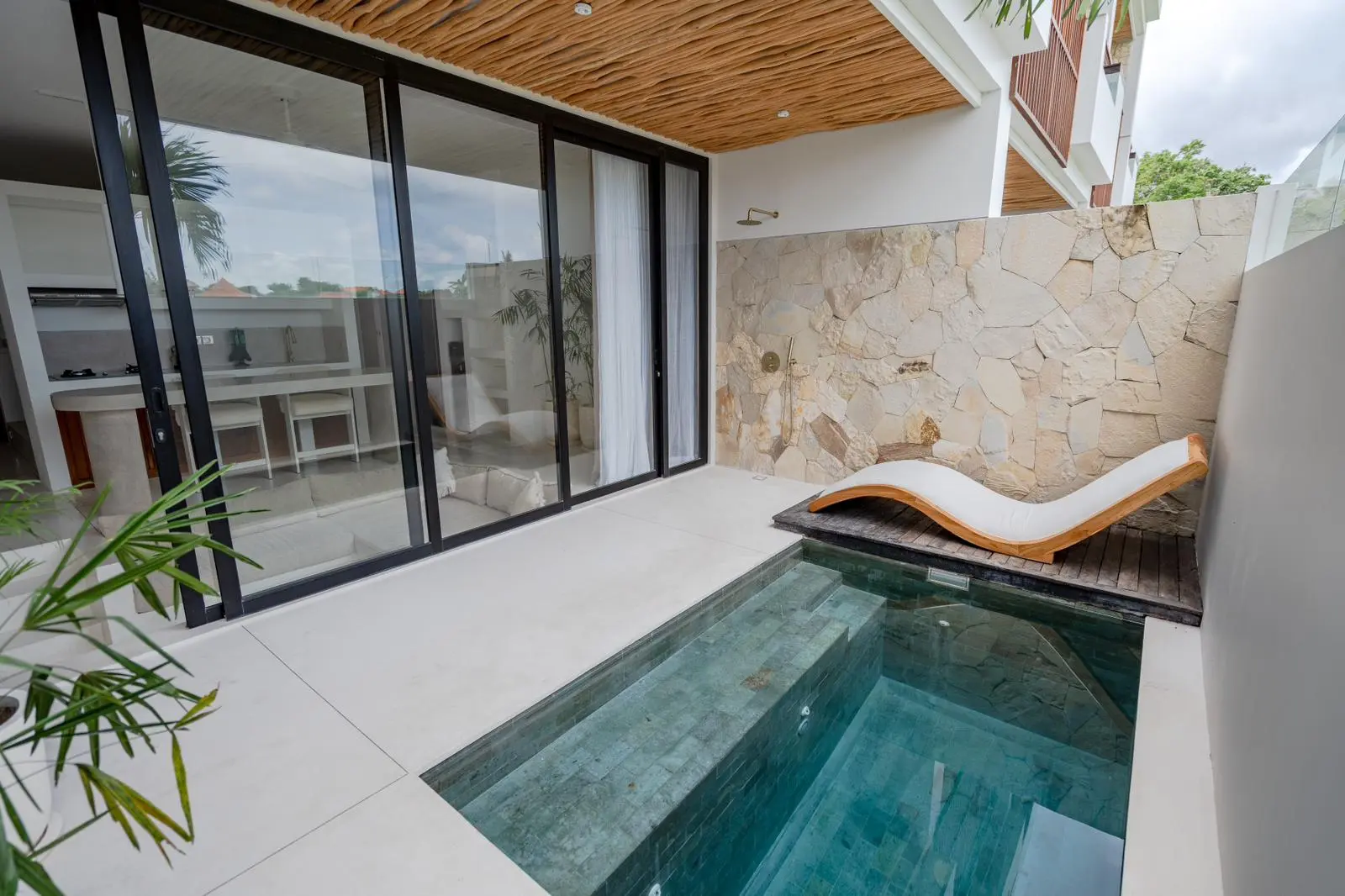
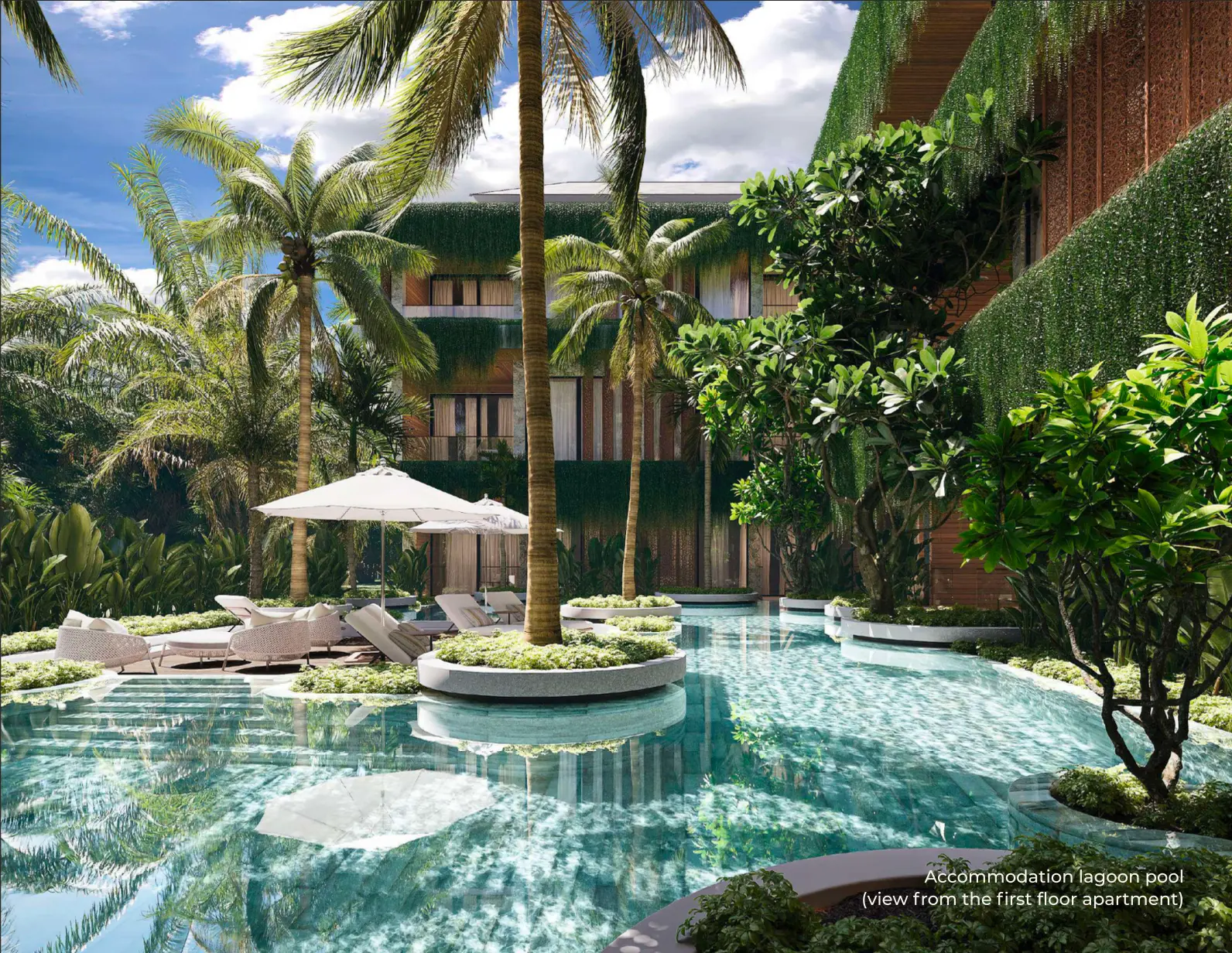
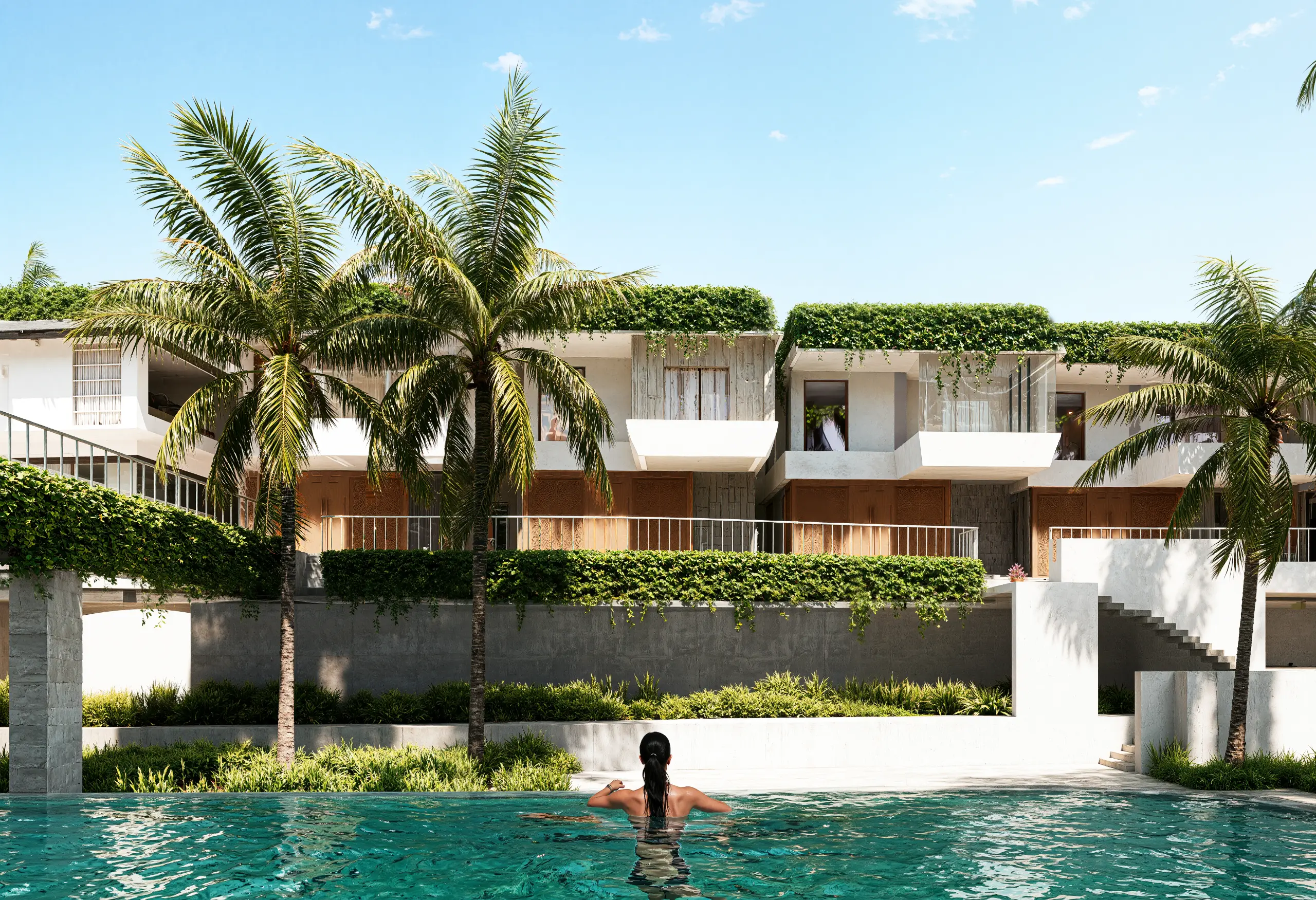
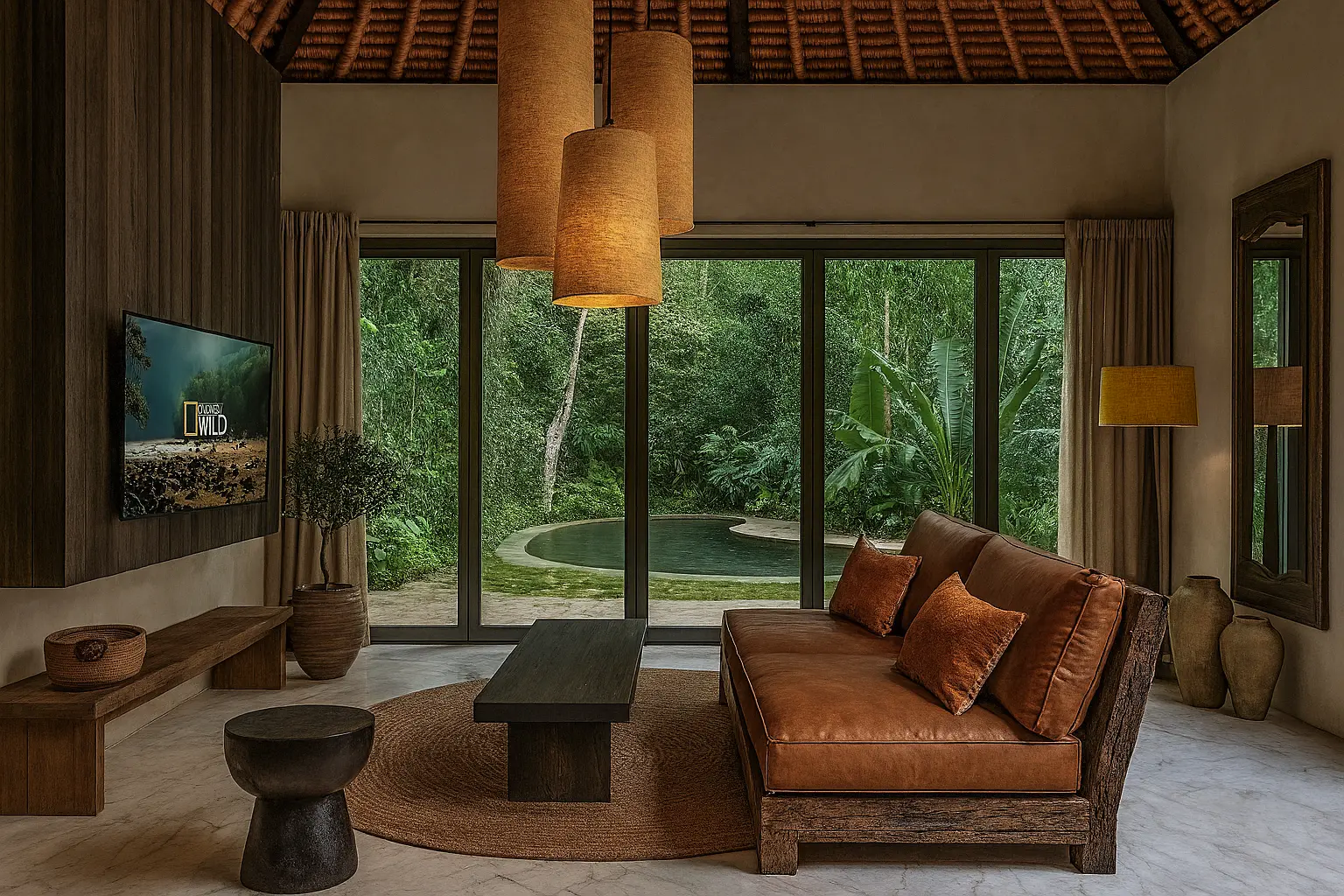
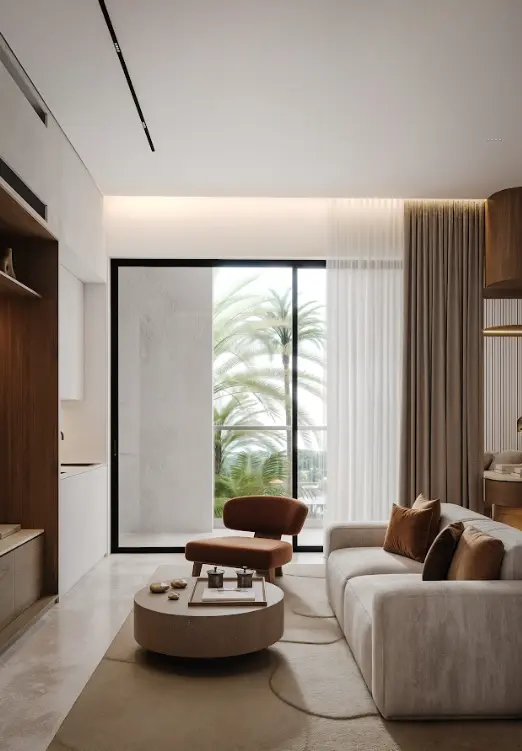
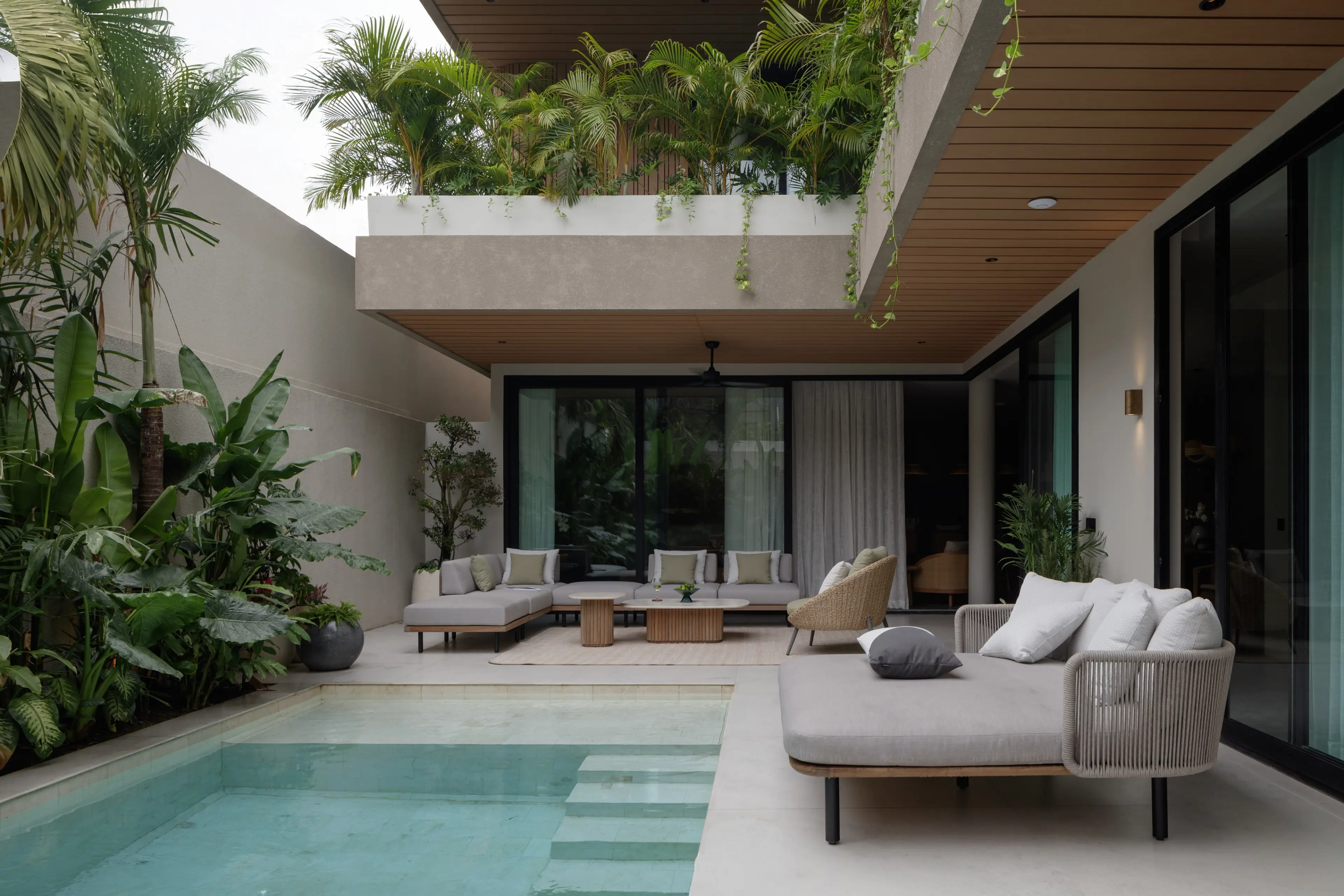
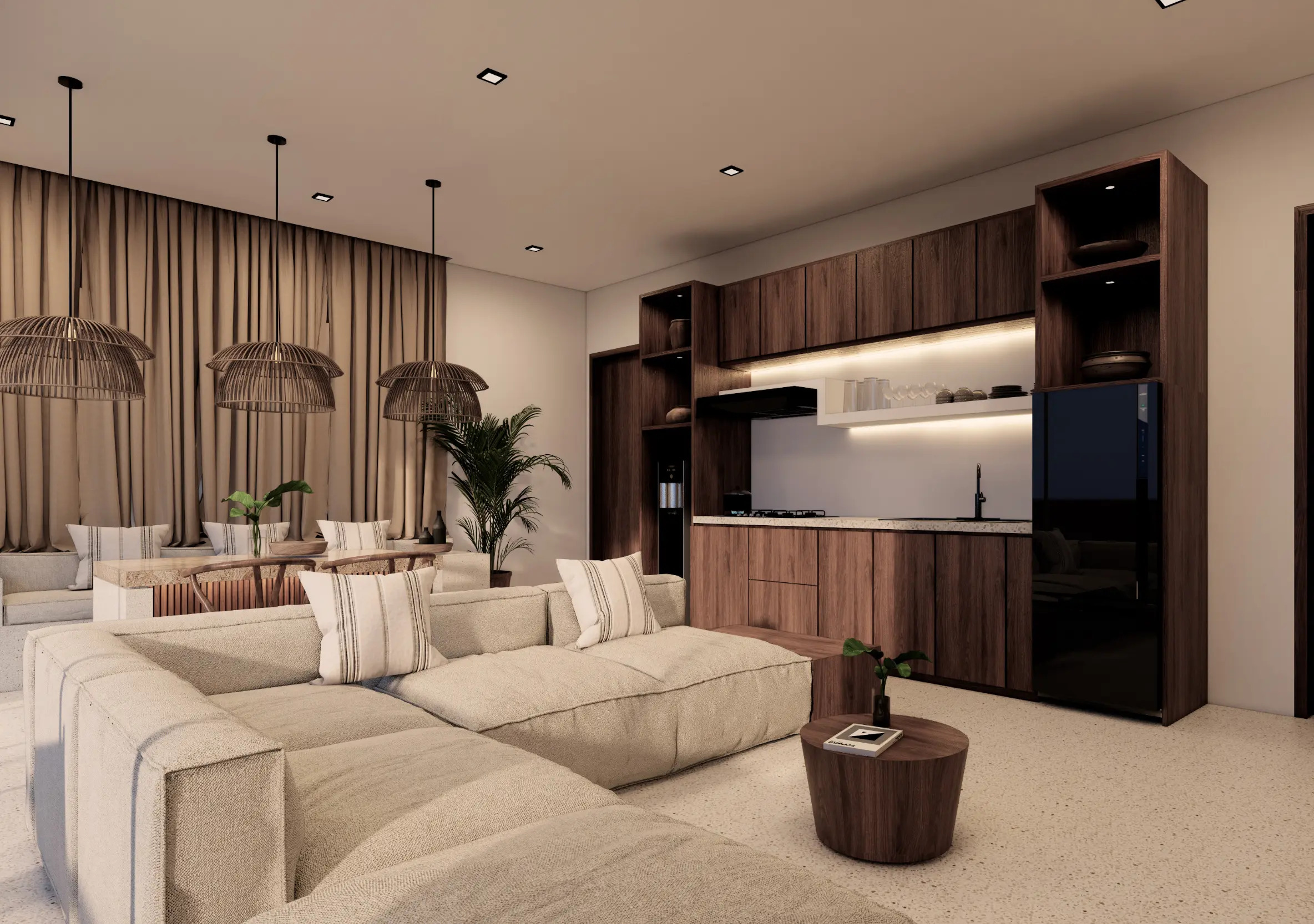
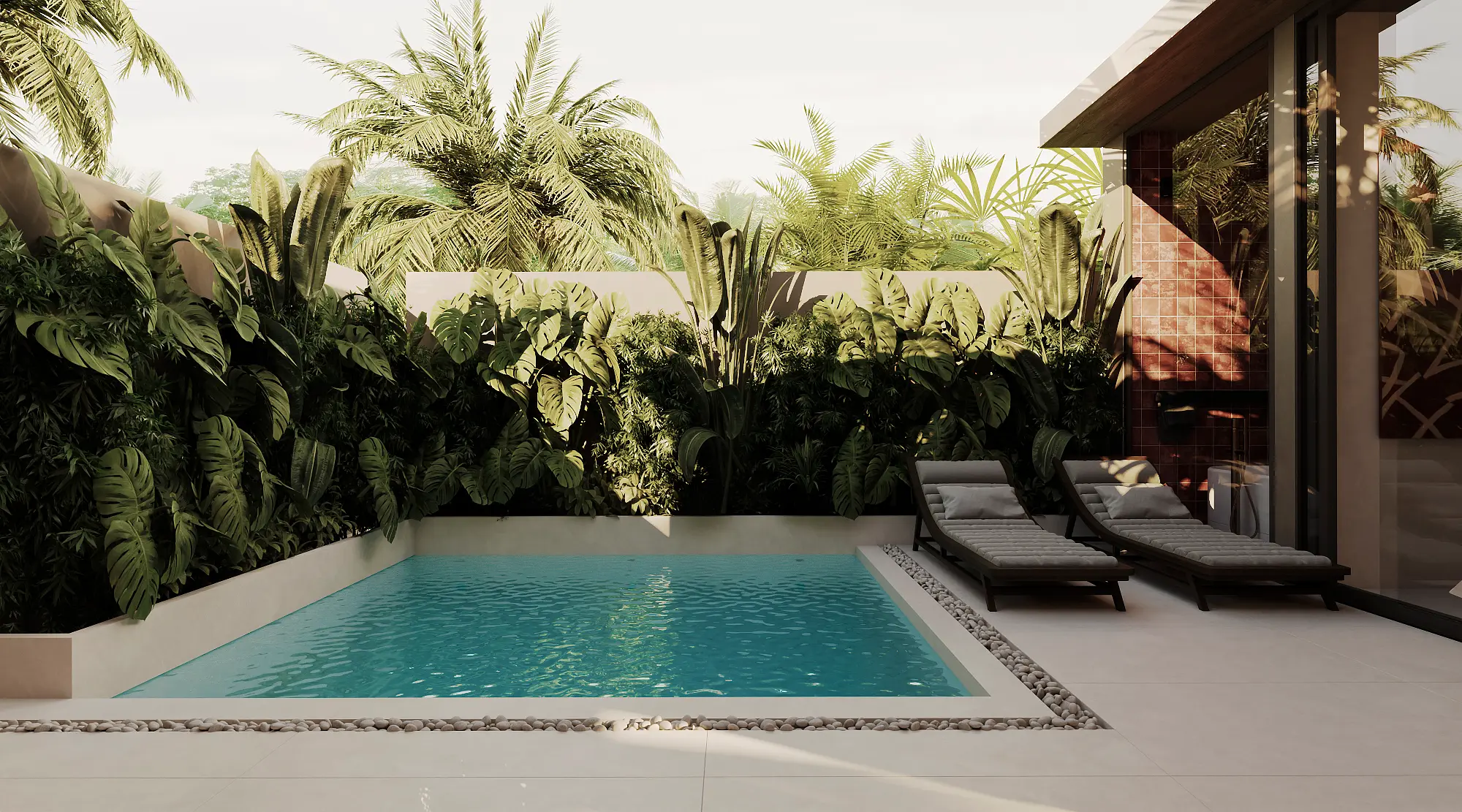
Apartments are the secondary product class in Bali's primary-market pipeline — behind villas in total inventory but increasingly prominent in the rental-operator segment. Our dataset tracks 65 active projects with at least one apartment unit priced, spanning from $36,000 for a compact studio to $2,846,429 at the top of the branded-residence segment. The median apartment price across Bali is $234,000, lower than the villa median of $345,000 — reflecting the generally smaller unit footprint.
Why apartments work in Bali
The Bali apartment market is shaped by two structural factors. First, lot economics: apartment development makes sense on smaller plots where a villa compound would be inefficient. Second, rental operations: apartments integrate naturally into hotel-managed programs or third-party short-term rental operators, which many villa purchases don't. These two factors concentrate apartment inventory in specific neighborhoods — Pererenan, Batu Bolong, Berawa on the Canggu side; Nuanu City and sub-sections of Bukit on the other.
The $36,000 entry-level pricing reflects compact 25-40 m² studio product, often in hotel-managed buildings where the buyer commits to a revenue-share with the operator. Median $234,000 inventory typically covers 1-2 BR apartments of 50-90 m².
Apartment supply by region
Apartment inventory concentrates in a few Bali sub-markets:
- Apartments in Canggu — the largest cluster. Pererenan and Batu Bolong dominate; hotel-managed buildings have scaled here fastest.
- Apartments in Bukit — second largest. Concentrated in Nusa Dua's branded-residence pipeline plus scattered Uluwatu-area product.
- Apartments in Ubud — smaller scale. Mostly serviced-apartment product around Ubud center.
- Apartments in Tabanan — concentrated almost entirely at Nuanu City.
- Apartments in Seminyak — boutique, small buildings.
Operator models to understand
Apartment purchases in Bali frequently come with operator arrangements that villa purchases don't. Before committing, verify:
- Management agreement terms: is the operator fixed for the first 3-5 years, or can you operate independently from day one?
- Revenue share: what percentage goes to the operator? Industry typical is 20-40% gross
- Income-guarantee clauses: some projects offer a contractual 6-8% return in early years — verify the guarantor's balance sheet behind the promise, not just the number
- Hotel association: whether the building is affiliated with a hotel brand (changing your tax treatment and exit options)
For buyers uninterested in operator integration, apartments with "independent operation" rights exist but are a smaller share of the pipeline — villa product is often the better fit.
Tenure and zoning
Apartment tenure distribution mirrors the broader Bali pattern: 59 leasehold-only projects, 4 with freehold-option structures, 1 pure freehold. Freehold apartment structures almost always use PT PMA (limited company holding HGB title) rather than direct freehold transfer to foreigners.
Zoning: 33 Pink (tourism), 13 Yellow (residential), small Orange and Red pockets. Apartments benefit disproportionately from Pink-zone classification because the daily-rental business model requires it.
Related searches
- Villas in Bali — the primary product class
- Apartments under $150K
- Apartments $150K-$300K
- Apartments $300K-$500K