
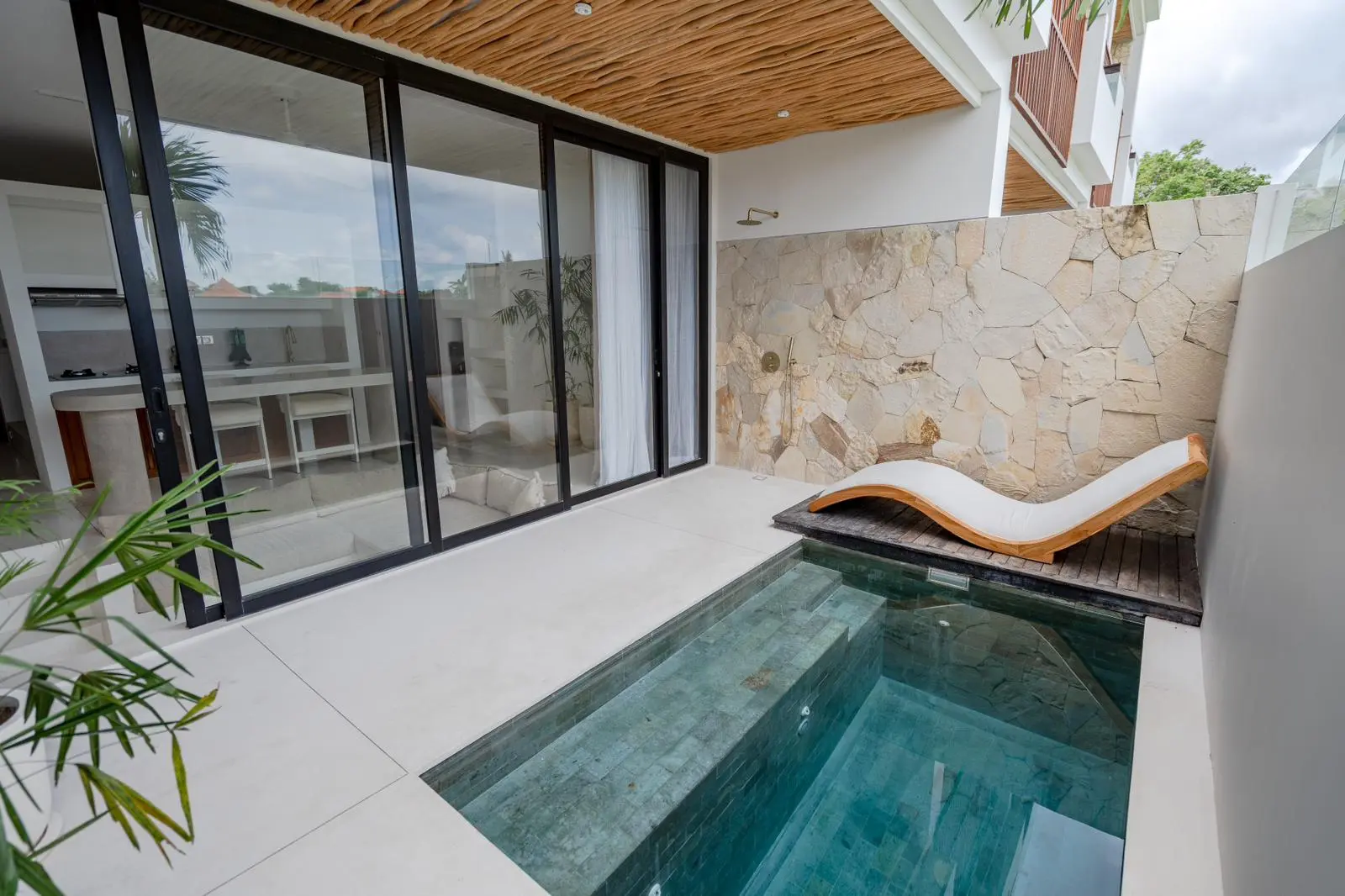
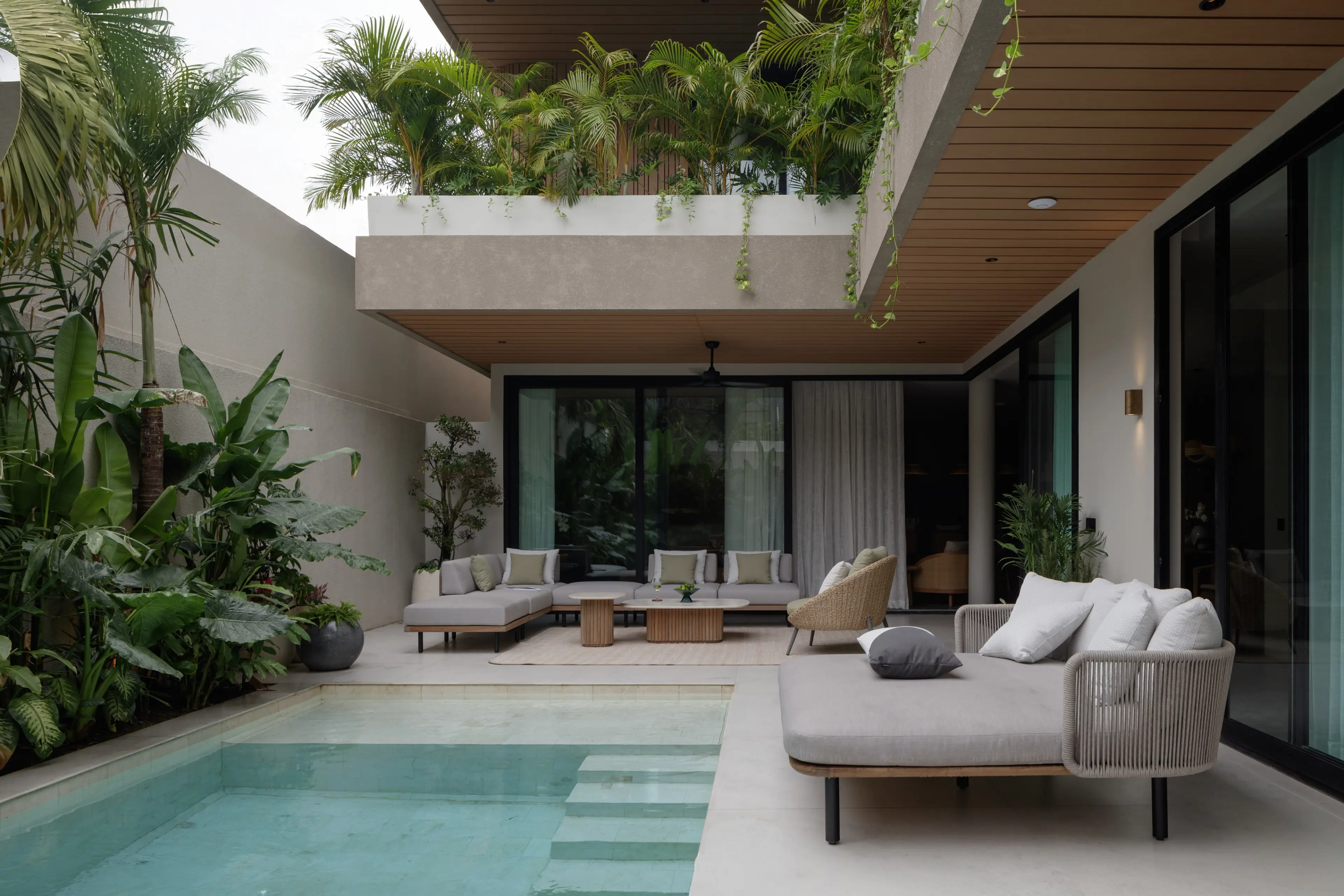
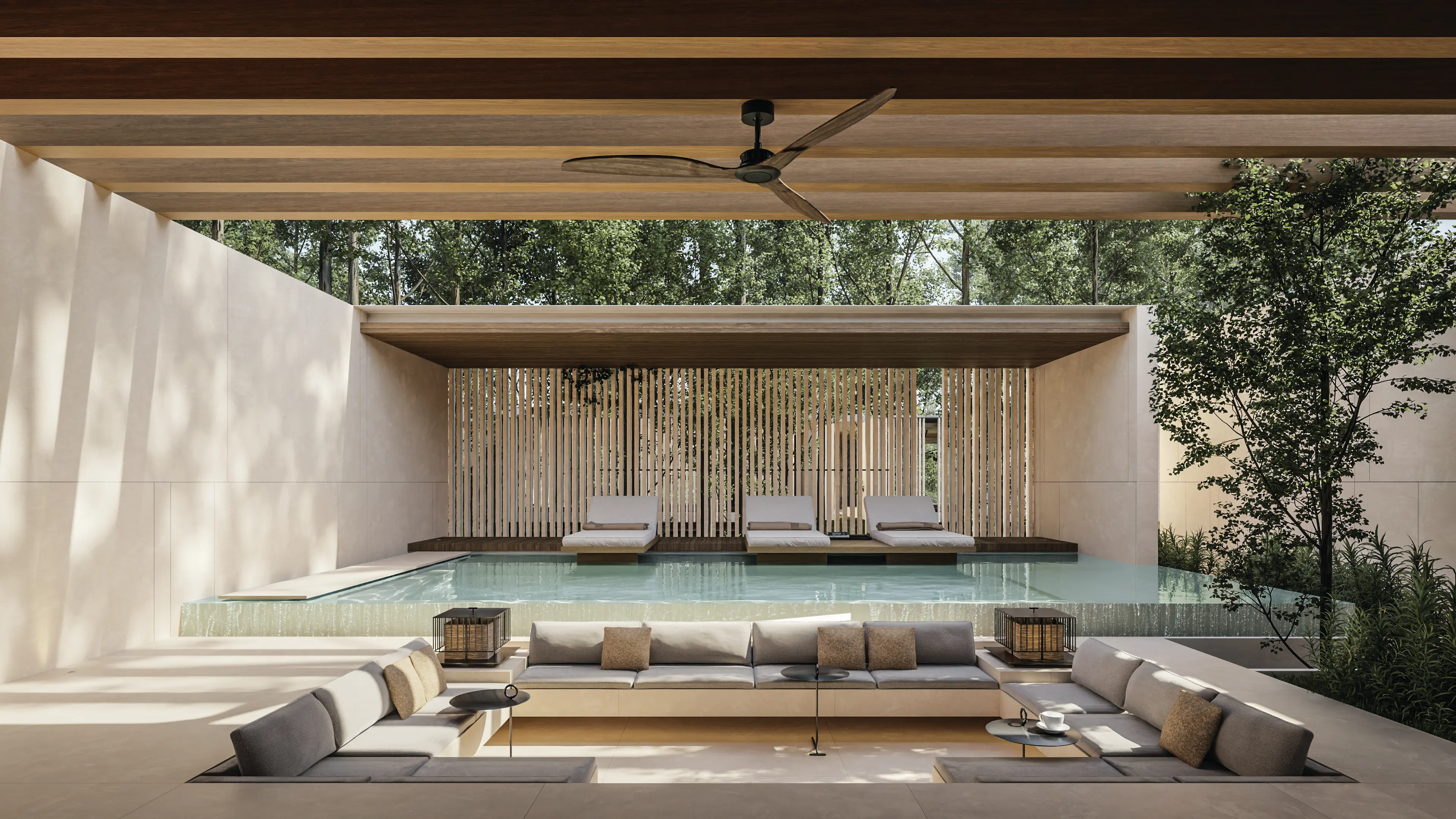
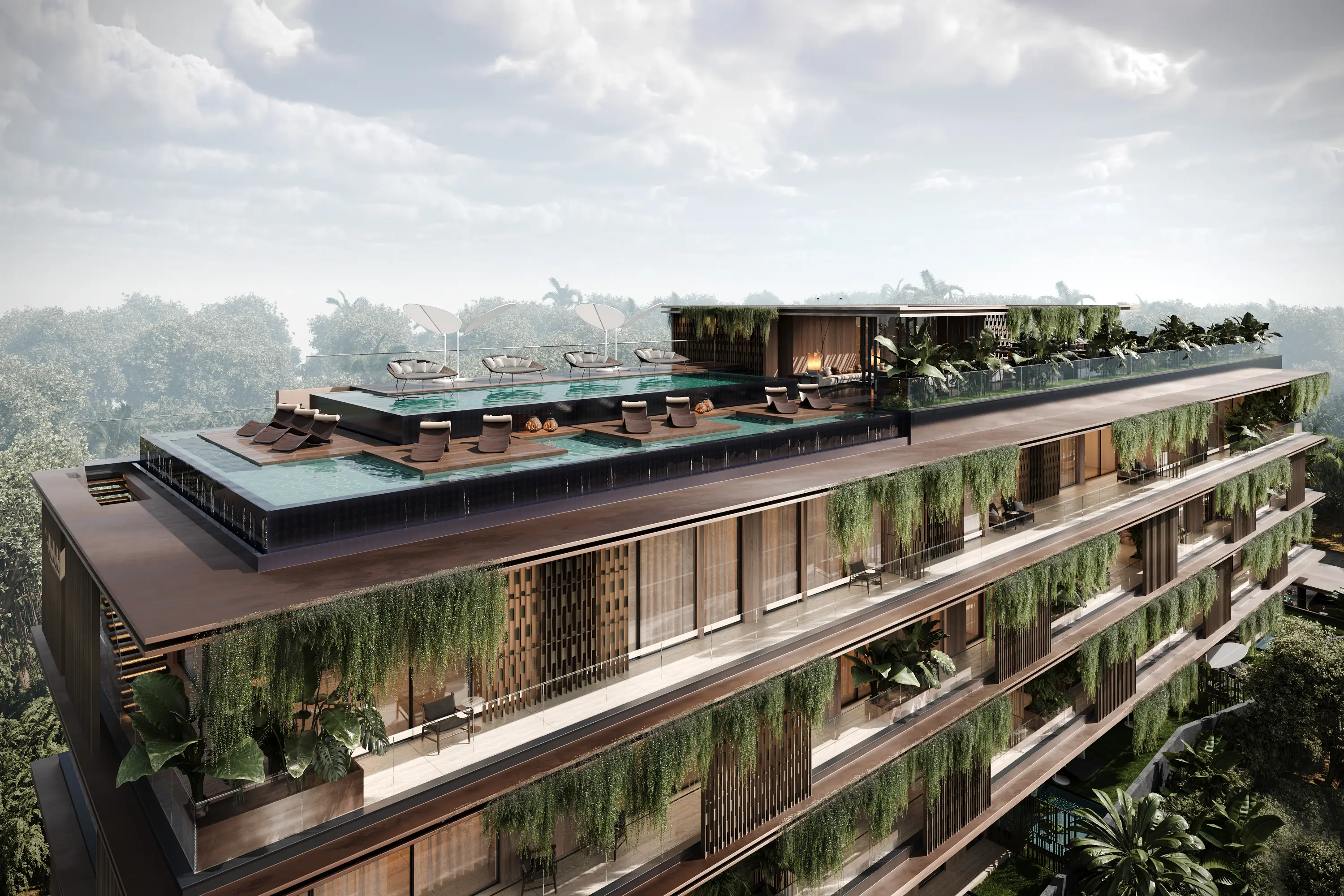
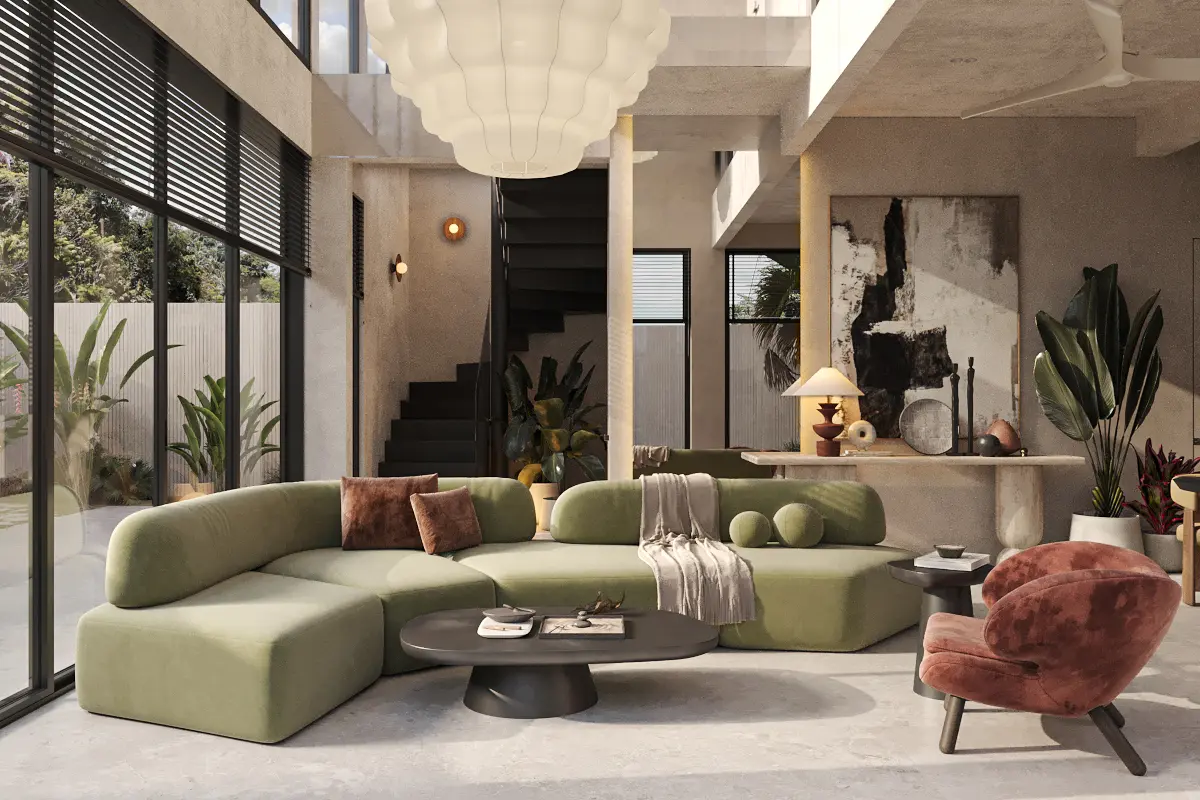
Pererenan's apartment market is small but growing — 6 active primary-market projects with apartment units priced from $95,000 at the compact entry through $502,000 at the upper band. Median apartment unit sits at $199,000. Product concentrates in boutique serviced-apartment buildings aimed at the long-stay wellness, remote-work, and monthly-rate rental demographic rather than the nightly-Airbnb market that dominates Berawa.
What makes Pererenan apartments distinct
Pererenan's character as a quieter architect-led sub-area shapes its apartment product. Building scale is modest — boutique 8-20 unit serviced buildings rather than larger tourism-precinct apartment complexes. Design bias: apartment buildings here frequently include architect-led design treatments consistent with Pererenan's villa-product character. Operator orientation: most Pererenan apartment buildings target monthly-rate rental pools rather than daily-Airbnb operations, which reflects both zoning constraints and the neighborhood's long-stay buyer demographic.
Typical configuration
At $95,000-$180,000, compact studio apartments of 30-45 m² in boutique serviced buildings. Shared amenities (pool, co-working lobby, sometimes yoga space) typical at this band.
At $180,000-$350,000, 1-BR apartment mainstream at 50-70 m². Building amenities substantial at this band, private balconies common.
At $350,000-$502,000, upper-range 1-2 BR formats with larger footprints and upgraded finish specifications. Boutique building product with meaningful architect-led design.
Operator models
Pererenan apartment product mostly comes with optional building-wide rental-pool arrangements — self-operate, third-party-manage, or opt-in to the building's monthly-rate program. Operator lock-ins shorter and less punitive than hotel-affiliated product in Nusa Dua or Seminyak. Revenue shares on monthly-rate pools cluster at 15-25% versus the 20-40% common in daily-rate operator arrangements elsewhere.
Tenure and zoning
Leasehold-dominant with lease terms at standard 25-30 year norms. Zoning mixes Pink (tourism) and Yellow (residential) depending on specific project position. Buyers targeting daily-rate STR should verify Pink classification; monthly-rate operations work across Yellow-zone inventory without the zoning constraint.
Who buys
Long-stay residents and remote-work professionals buying studio or 1-BR apartments as primary or long-secondary residences. Monthly-rate rental operators running boutique serviced-apartment programs. First-time Canggu buyers seeking low-entry-point exposure with design-forward product.