Anteya Research
What Is a PT PMA in Bali? Foreign-Owned Company Ownership Explained (2026)
April 10, 2026

A PT PMA (Perseroan Terbatas Penanaman Modal Asing) is a foreign-owned Indonesian limited liability company. For most foreigners it is the main legal vehicle used to hold property rights such as Hak Guna Bangunan (HGB, the right to build) or Hak Pakai (the right to use) and to run a rental business on the books, because a foreigner generally cannot hold Hak Milik (freehold) in their own name. In plain terms: you do not own the land personally. A company you own and control holds a title over it.
Anteya observation: Across buyer conversations logged in Anteya's CRM, roughly 25% of serious buyers raise the ownership-structure question (leasehold, freehold, Hak Pakai, or HGB) within their first few messages. It is a foundational question, and a PT PMA is one standard answer.
!(/images/pt-pma-deed.jpg)
What a PT PMA actually is
PT PMA stands for a limited company (Perseroan Terbatas) with foreign capital participation (Penanaman Modal Asing). It is a normal Indonesian company, registered through the OSS (Online Single Submission) system, that can have foreign shareholders and directors. Unlike a local PT, it is allowed to carry foreign ownership. The company is a separate legal person: it can sign leases, hold certain land titles, invoice guests, and pay tax.
"I have Kitas and maybe will open PT pma (I have already PT)"
Buyer inquiry, Anteya CRM, 2025
Why foreigners use a PT PMA
Indonesian agrarian law does not grant Hak Milik (freehold) to foreigners in their own name. That leaves a few routes, and the PT PMA is the one that scales into a business.
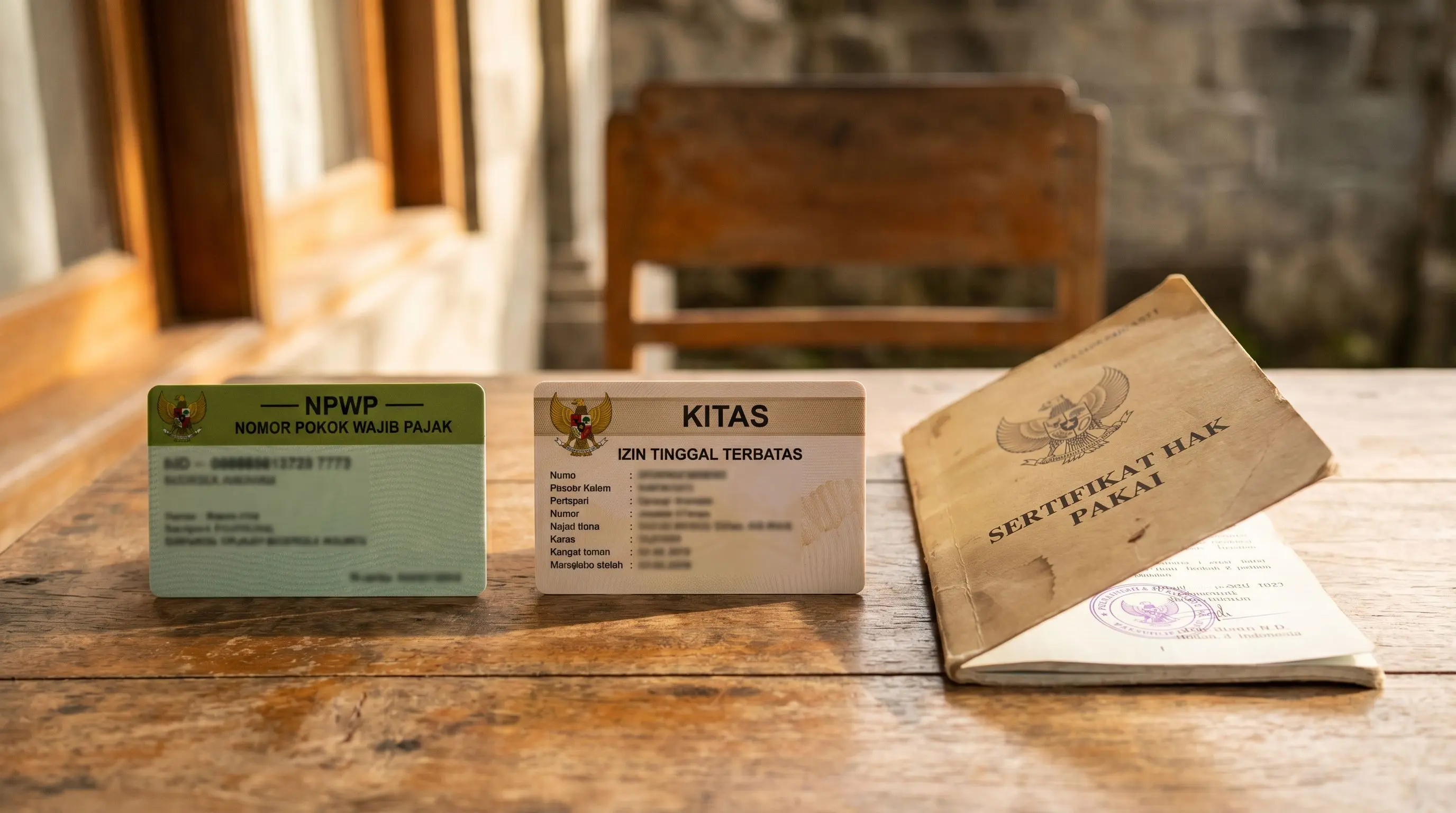
A PT PMA can typically hold HGB (Hak Guna Bangunan), the right to build and use land for a fixed, renewable period. It is the closest thing to durable, transferable control a foreign-linked structure commonly reaches. A foreign individual with a KITAS may instead hold Hak Pakai (right to use) personally, so the two routes are often compared.
The second reason is operational. A PT PMA lets you rent to guests as a declared business: invoice guests, register the correct activity code, and pay rental and corporate tax. Daily rental is only permitted in the right zone, so the structure and the zoning have to line up.
"What land title is each villa sold under (Hak Pakai, HGB, or leasehold)?"
Buyer inquiry, Anteya CRM, 2025
Compare the personal-title route in our explainer on Hak Pakai and foreign ownership and how leasehold compares with freehold.
Setting one up: capital, KBLI, and the NIB
Three pieces come up first, all best confirmed with a notaris and a corporate consultant.
Minimum capital. Regulations generally point to a minimum investment plan around IDR 10 billion (roughly USD 650,000) per business line and location, excluding land and buildings, with part issued as paid-up capital. Application varies, so treat any single figure as indicative.
KBLI activity code. The company must register the business classification (KBLI) that matches what it will do, for example real estate or short-stay accommodation. The code shapes what the company may own and operate, so choose it before you sign anything.
NIB via OSS. The NIB (Nomor Induk Berusaha) is issued through the OSS platform and works as the company's core licence, with other permits attaching to it by activity.
!(/images/oss-nib-steps.jpg)
Costs and annual obligations
A PT PMA is a company you keep alive, not a one-time setup. Expect costs for the notarial deed, OSS registration, and professional fees, plus recurring obligations: bookkeeping, monthly and annual tax returns, and periodic investment activity reports (LKPM). Budget for an accountant, not a set-and-forget entity. Figures move with scope, activity code, and provider, so get a written quote for your plan.
PT PMA vs leasehold vs nominee
These three structures get compared constantly, and they are not equivalent.
Leasehold (Hak Sewa) is a contract to use land or a villa for a term, commonly 25 to 30 years with a contractual right to extend. It is simpler and cheaper than a company and suits a single villa for personal use or passive rental. The trade-off is a declining runway and reliance on the extension being contractual, not automatic.
PT PMA costs more to set up and run, but it can hold HGB, operate a rental business on the books, and hold more than one asset. It fits buyers treating Bali property as a business rather than a holiday home.
Nominee ("freehold" held in a local person's name) is the one to watch. Indonesian agrarian law does not recognise nominee land ownership, and courts have repeatedly ruled such arrangements unenforceable against the foreign backer. A side agreement does not cure that, so the apparent "freehold" can carry a risk a lease or a company does not.
"Is it possible freehold?"
Buyer inquiry, Anteya CRM, 2025
For the full comparison, read the KITAS and PT PMA route, plus the .
What to check before you commit
Confirm in writing the title the villa is sold under. Match the KBLI code to your real plan and confirm the zoning permits daily rental if you intend it. Ask what the company costs to run each year, not just to open. Use an independent notaris and consultant, not only the seller's.
FAQ
Do I need a PT PMA to buy property in Bali?
Not always. For a single villa held personally, leasehold or, with a KITAS, Hak Pakai can be enough. A PT PMA is the sensible route when you want to hold HGB, run a declared rental business, or hold more than one asset. Confirm the title in writing before paying.
Can a PT PMA own freehold land in Bali?
Generally no. A PT PMA does not hold Hak Milik (freehold); it commonly holds HGB, the right to build for a renewable fixed term. That is the closest durable, transferable control a foreign-linked company usually reaches. Confirm the exact title on the certificate.
What is the minimum capital for a PT PMA?
Regulations generally point to a minimum investment plan around IDR 10 billion (roughly USD 650,000) per business line and location, excluding land and buildings, with part issued as paid-up capital. Application varies in practice, so confirm your case with a corporate consultant and notaris.
Is a nominee structure a safe way to hold freehold?
Approach it with caution. Indonesian agrarian law does not recognise nominee land ownership, and courts have repeatedly ruled such arrangements unenforceable against the foreign backer. A private side agreement does not fix that. A lease or a PT PMA rests on firmer legal ground.
How many years of leasehold should I expect?
Bali leasehold terms are commonly 25 to 30 years, often an initial term plus a contractual right to extend. The extension is contractual, not automatic in law, so check the exact remaining years, the extension terms, and who controls them before you sign.
Anteya Research is the editorial function of Anteya Real Estate, a Bali-based investment property advisory. This article reflects patterns across buyer conversations logged in the Anteya CRM between 2023 and 2026, plus first-hand observations from our Bali-based team.
This article is general information, not legal advice. Indonesian real-estate rules change and individual situations vary. Consult a licensed Indonesian notaris (notary) and a corporate consultant for your specific purchase.