Anteya Research
All the Taxes and Fees When Buying Property in Bali (PPN, BPHTB, Notaris), 2026 Edition
April 22, 2026
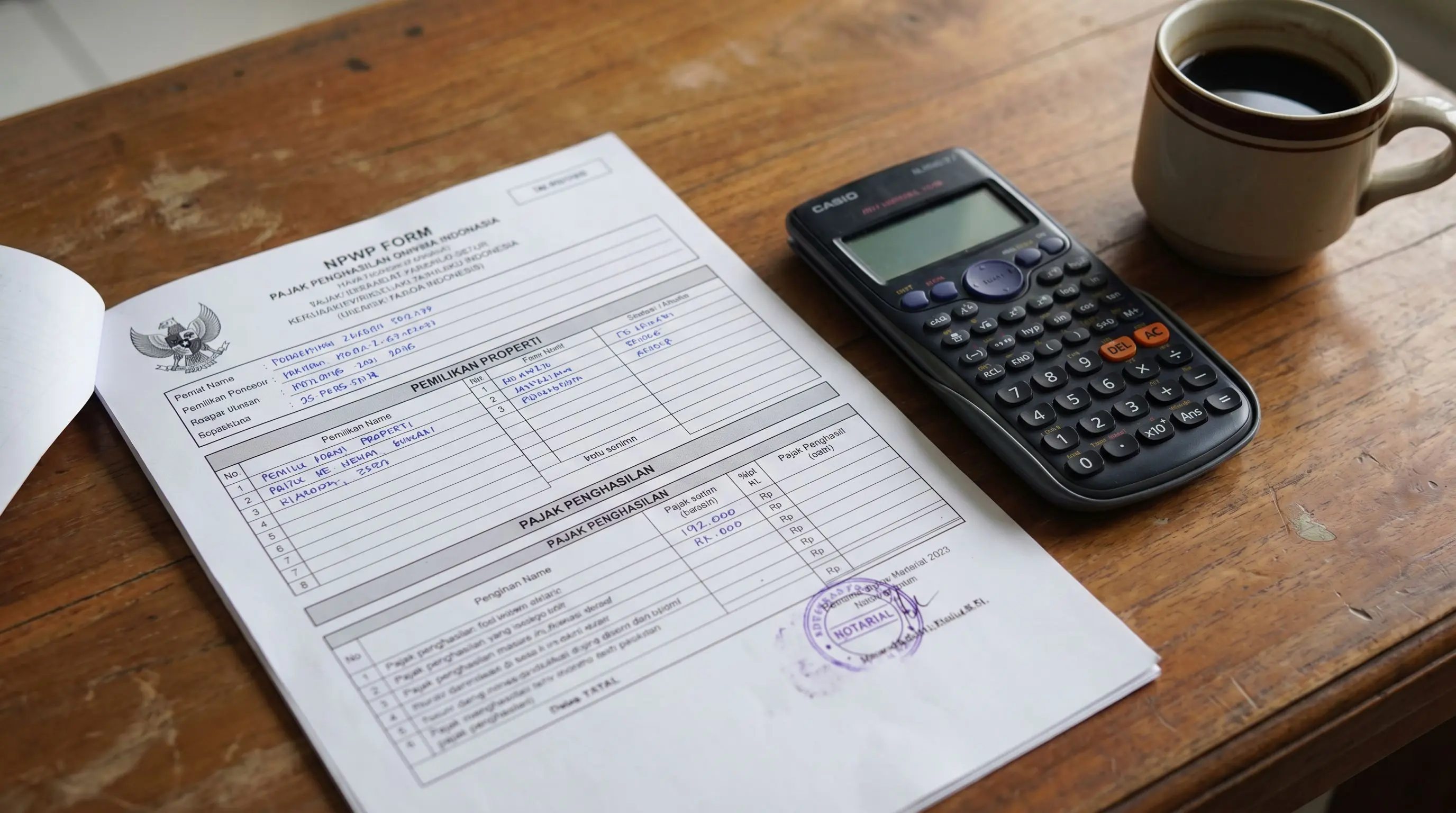
Across roughly 5,300 buyer conversations Anteya logged between 2023 and 2026, well under 1% raised a specific tax or fees question unprompted. Most buyers discover the tax mechanics through the notaris step rather than researching in advance. This article lays out the full Indonesian property-tax stack foreign buyers hit: acquisition-side PPN and BPHTB, ongoing PBB, rental-income PPh, and the 2026 PPN-DTP incentive that materially changes the closing-cost math.
Anteya observation: Across the priced villa sample we track in our Q1 2026 Bali dataset, median studio ($130,000), median 1BR ($200,000), and entry-tier villa pricing sits well inside the band that qualifies for the 2026 PMK 90/2025 PPN-DTP waiver. The median villa offering ($346,000, roughly IDR 5.4B at current FX) sits above the commonly cited Rp5B ceiling — so the waiver effect at the median is partial or nil, while most studio and 1BR product captures the full benefit. Anteya tracks ~60-70% of the primary market; figures are directional within that sample.
The acquisition-side taxes
When you buy Bali property, three taxes and one major fee hit at the notaris step:
PPN (Pajak Pertambahan Nilai, VAT on new property)
- Statutory rate: 11% on new primary-market property (12% applies only to luxury residences above IDR 30B).
- 2026 waiver: A PPN-DTP (Ditanggung Pemerintah, government-borne VAT) incentive commonly referenced as PMK 90/2025 is understood to apply to part of the sale price on qualifying residential property for 2026 handovers, with a price ceiling in the Rp5B range and government-borne PPN on an initial slice of the base (often cited as the first Rp2B). Specific thresholds, ceilings, and the extension window shift year to year; treat any figure here as directional. Anteya tracks the gazetted state of this scheme; ask us before underwriting on the waiver, and confirm the current terms with your notaris at the signing step.
- Calculation: PPN is typically calculated and paid on each milestone payment in line with the PPJB schedule, not in a lump sum at signing.
BPHTB (Bea Perolehan Hak atas Tanah dan Bangunan, land and building acquisition tax)
- Statutory rate: 5% of the taxable base, paid by the buyer.
- Taxable base: transaction value minus the regional exemption threshold (NPOPTKP). Different regencies set different exemption thresholds (typically IDR 60–80M for Bali regencies).
- Paid: at the notaris step, before the certificate of title (or assignment) is registered.
Notaris / PPAT fees
- Typical range: 1–2.5% of transaction value in practice; the statutory ceiling is lower but add-on disbursements (title search, PPAT work, registration) commonly push the all-in line item into this band.
- Split: often split between buyer and seller per contract.
- Scope: document preparation, title verification, signing witness, tax filing coordination, registration.
Real-estate agent commission
- Bali norm: 5% of sale value.
- Structure: usually paid by the seller on secondary-market deals; absorbed into price on primary-market deals.
Rule of thumb for 2026:
- Statutory-rate closing costs: roughly 17–18% on top of sticker (PPN 11% + BPHTB 5% + notaris 1–2.5%).
- With PPN-DTP waiver (qualifying homes under the price ceiling, 2026 handover): roughly 6–9% effective.
- Above the ceiling or non-qualifying: full statutory stack.
"Could you let us know your budget range and planned investment timing?"
Buyer inquiry, Anteya CRM, 2025
Budget and timing intersect with tax in 2026 specifically: a handover completing in 2026 qualifies for the PPN-DTP waiver on the first Rp2B, whereas a handover slipping to early 2027 may not, depending on the scheme's extension status at that time. That's material enough that buyers should underwrite both the statutory case and the waiver case separately.
The ongoing taxes
Once you own the property, Indonesian tax continues annually:
PBB (Pajak Bumi dan Bangunan, annual property tax)
Assessed on the NJOP (Nilai Jual Objek Pajak, fiscal sale value) of land and building. Regional authorities set the rate up to a statutory cap of 0.5%; in Bali regencies the applied rate is typically in the lower end of that range. On a $300K villa, annual PBB usually lands in the low hundreds of USD: immaterial relative to purchase price, but real to budget.
PPh on rental income
If you rent out the property (short-term or long-term), rental income is Indonesian-sourced and taxable:
- Individual owner, Indonesian tax-resident: typically 10% final-tax on gross rental income.
- Individual owner, non-resident: 20% final withholding on gross rental income (tax-treaty relief may reduce this depending on your home jurisdiction).
- PT PMA owner: 22% corporate income tax on net rental profit, plus withholding tax on foreign-shareholder distributions.
Banjar / desa adat contributions
Not a statutory tax, but a real operational line item. Banjar (village council) contributions for tourism-zone properties typically run IDR 1–5M annually, often tied to operational permits. Specific amounts vary by village.
"I have Kitas and maybe will open PT pma (I have already PT)."
Buyer inquiry, Anteya CRM, 2025
That buyer's structure (KITAS + existing PT + considering PT PMA) changes the rental-income tax picture materially. A KITAS-holder who qualifies as Indonesian tax-resident can generally access the 10% final-tax track on gross rental; a non-resident individual is typically at 20% withholding on gross; PT PMA sits at 22% corporate tax on net rental profit. The structure choice flows to the operating-tax line, not just the acquisition line.
Seller-side taxes at exit
When you sell:
- PPh final on property sale: 2.5% of gross sale value for individuals (0.5% if the property is treated as developer inventory by a PT developer), paid by seller at the notaris step.
- Agent commission: typically ~5% of sale value, usually seller-side.
Net-of-tax-and-commission proceeds typically run ~92–93% of gross sale value for individual sellers. The 5% commission is the line that funds professional sale execution (buyer sourcing, viewings, negotiation, closing coordination); it's the cost of a structured exit rather than a friction.
The 2026 waiver: why it changes underwriting
The 2026 PPN-DTP scheme changes the math for qualifying handovers under the price ceiling (commonly cited around Rp5B, roughly $310K at current FX). Using illustrative figures for a $250,000 villa and the commonly cited first-Rp2B slice:
- Statutory PPN: 11% on the full base, roughly $27,500 buyer-paid.
- With waiver applied to the initial slice: PPN on that slice is government-borne, reducing buyer-paid PPN materially (to near zero for lower-priced units fully inside the slice).
- BPHTB + notaris still apply: 5% + 1–2.5%, roughly $15,000–$21,000.
- Total 2026 closing costs with waiver: in the high single-digit % of sticker, versus roughly 17–18% on the statutory stack.
Material enough to underwrite explicitly. Confirm qualification, the current slice size, and the current ceiling with the notaris before assuming; the incentive is scoped to specific handover timing and property values and has been adjusted in prior years.
Entry-level villa and apartment product in the $130–300K segment tends to sit inside the waiver band, so the 2026 incentive can meaningfully change the all-in cost. Premium 4BR villa product often approaches or exceeds the ceiling, so the waiver effect there is partial or nil.
"How's it going my with the tax office?"
Buyer inquiry, Anteya CRM, 2025
Brief as that is, it captures the common post-handover reality: the tax relationship with the Indonesian kantor pajak (tax office) is an ongoing operational item, not a one-time closing event. Rental-income reporting, annual PBB payments, and any restructuring between foreign individual and PT PMA ownership all flow through the tax office.
FAQ
What taxes do I pay when buying property in Bali?
Three at acquisition: PPN (11% statutory on new primary-market property; partially government-borne in 2026 for qualifying homes under the PMK 90/2025 scheme), BPHTB (5% of transaction value above the regional exemption), and notaris / PPAT fees (typically 1–2.5% all-in). Total statutory stack is roughly 17–18% on top of sticker; with the 2026 PPN-DTP waiver for qualifying units, roughly 6–9%.
How does the 2026 PPN-DTP waiver work?
The 2026 PPN-DTP scheme (commonly referenced as PMK 90/2025) makes a portion of PPN on qualifying residential sales government-borne. Commonly cited terms put the ceiling around Rp5B with the government-borne slice on the first Rp2B, for 2026 handovers. Much Bali primary-market product under roughly $310K sits inside the qualifying band. Verify the current gazetted terms with your notaris.
What's the difference between PPN and BPHTB?
PPN is VAT (11%) charged on new property sold by a developer. It does not apply to secondary sales between individuals. BPHTB is a separate 5% land-and-building acquisition tax on the transaction value, paid by the buyer on all land-title-transfer transactions (primary and secondary). Both typically apply to a foreign buyer of a new Bali villa; on a secondary purchase, typically only BPHTB applies.
How much does the notaris cost?
All-in notaris / PPAT fees (including PPAT work, title search, and registration disbursements) typically land in the 1–2.5% range of transaction value and are often split between buyer and seller per contract. On a $250,000 villa, the buyer's share commonly falls in the low-single-digit thousands of USD. Cheaper notarises exist, but document quality varies: this is not the line item to economise on.
What ongoing taxes do I pay as a Bali property owner?
Annual PBB based on NJOP (regional rate under a 0.5% statutory cap), commonly low-hundreds of USD on a $300K villa. PPh on rental income: typically 10% final-tax on gross for Indonesian tax-residents, 20% final withholding for non-residents (treaty relief may apply), or 22% corporate tax on net profit for PT PMA owners. Banjar contributions run roughly IDR 1–5M annually in tourism zones.
What taxes do I pay when I sell?
Final PPh on property sale: 2.5% of gross for individuals, paid by the seller at the notaris step (drops to 0.5% if the property is treated as developer inventory by a PT developer). Plus agent commission around 5%. Net-of-tax-and-commission proceeds typically run ~92–93% of gross for individual sellers. Home-jurisdiction capital-gains treatment may also apply; consult a cross-jurisdiction tax adviser before closing.
Is rental income from a Bali villa taxed in Indonesia?
Yes. Indonesian-sourced rental income is taxable at Indonesian PPh rates regardless of owner's residency. Indonesian tax-resident individual owners typically face 10% final-tax on gross rental; non-resident individuals face 20% final withholding on gross; PT PMA owners face 22% corporate tax on net profit. Tax treaties with your home country may reduce the non-resident rate. Anteya can introduce you to a Bali-based notaris and a tax adviser we work with for cross-jurisdiction structuring.
Anteya Research is the editorial function of Anteya Real Estate, a Bali-based investment property advisory.
Browse Bali projects → Contact Anteya →
This article is general information, not legal or tax advice. Indonesian tax rules change (including the 2026 PPN-DTP incentive, which is time-bounded) and individual situations vary. Consult a licensed Indonesian notaris and a cross-jurisdiction tax adviser for your specific situation.