Anteya Research
Bali Red Zone: Commercial Land for Shops and Cafes (2026)
July 23, 2026
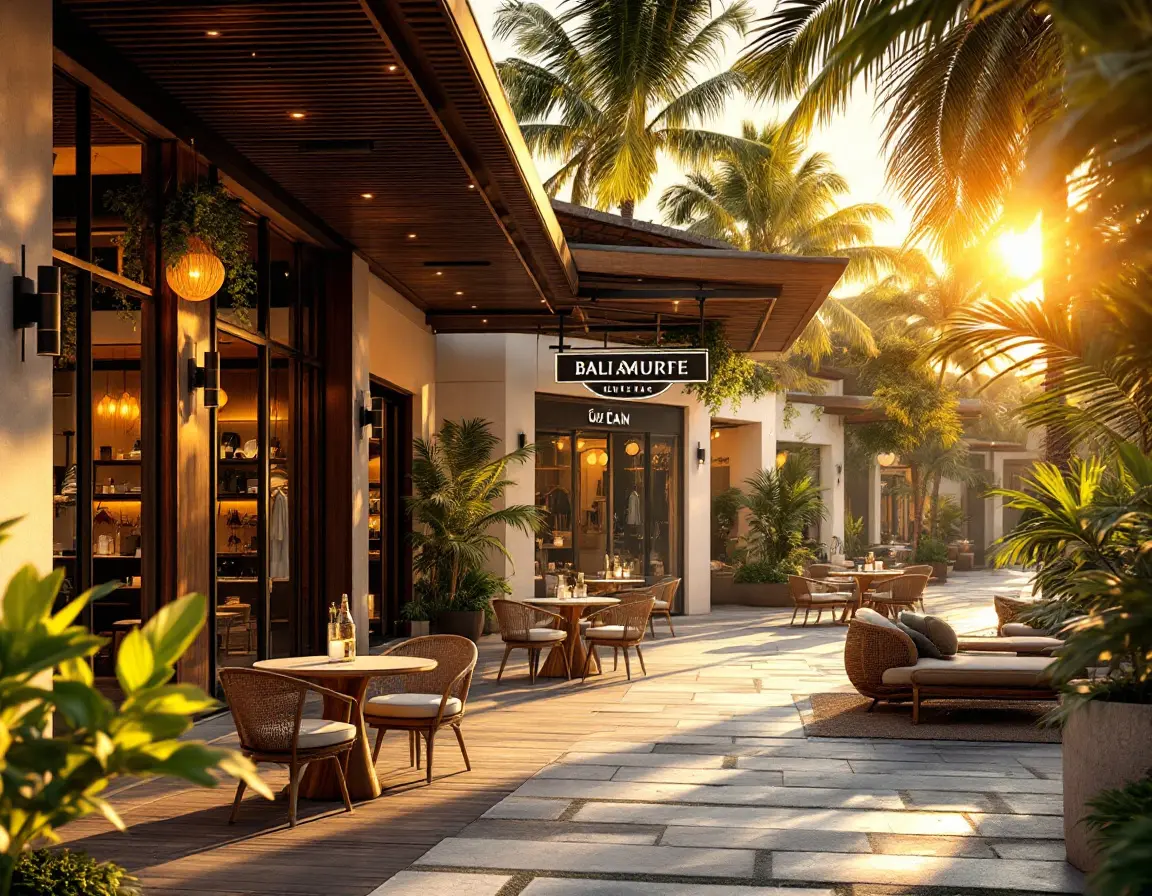
Across the 5,308 buyer conversations Anteya logged between 2023 and 2026, the buyers who asked about a "red zone" or a "pink zone" almost never wanted a villa. They wanted a plot they could put a cafe, a shop, a small office, or a mixed retail-and-stay project on. In Bali's zoning language, that is commercial land: a parcel the regency spatial plan flags for trade, services, and tourism business rather than housing or farming. A foreigner can build and operate there, but only through an Indonesian company (a PT PMA) that holds the right business licence for the activity. This article walks through what the red zone actually permits, who builds there, the licence and KBLI angle, the residential grey areas, and how to check a plot before you commit.
!(/images/red-zone-commercial-strip.jpg)
What the red zone actually permits
The "red zone" is the everyday name buyers use for the commercial and tourism-business band on a Bali regency's spatial plan (the RDTR, or detailed spatial plan). On many regency maps this band prints as pink or magenta rather than a true red, which is why the same land gets called both. The label matters less than the underlying designation: commercial, trade, services, and tourism activity are the intended uses.
So for Airbnb ... We should choose a pink zone ? For more flexibility of way of rentals
Buyer inquiry, Anteya CRM, 2025
In broad terms, a commercially designated plot is where a regency typically expects to see shops, restaurants, cafes, bars, offices, coworking, clinics, retail, and short-stay hospitality. That is the opposite of a green zone (agricultural or protected, where daily rentals and most commercial building are generally not allowed) and different again from a yellow residential zone, which is meant for housing. The practical takeaway: if your plan is to earn revenue from a business that the public walks into, you are usually looking for a commercial designation, and you should confirm it against the current RDTR for that exact parcel rather than a colour on a tourist map.
Anteya observation: Across the primary-market supply we track, the overwhelming majority of declared capacity is residential villas and apartments; genuinely commercial-zoned, commercially licensed projects are a small minority. The pink or red commercial band tends to be a thin ribbon along the main tourism corridors, not the broad interior, which is one reason well-located commercial parcels command a premium.
Who builds in the red zone, and why
Three buyer types dominate the commercial-land conversations we log. F&B operators want a cafe, restaurant, beach club, or bar in a high-footfall corridor. Retail and services buyers want a shopfront, a wellness studio, a clinic, or a boutique office. And mixed-use investors want a building that combines ground-floor commercial with short-stay rooms above, chasing the rental flexibility the client above was asking about.
We should choose a pink zone ?
Buyer inquiry, Anteya CRM, 2025
For a foreign buyer, the route into any of these is the same: an Indonesian foreign-owned company, the PT PMA. A foreign individual cannot hold freehold title (Hak Milik) or run a licensed local business in a personal capacity, so the company becomes the legal actor that leases or holds the land, obtains the licences, employs staff, and books the revenue. Setting up a PT PMA carries a commonly cited minimum investment plan (often reported around IDR 10 billion, excluding land and buildings) and paid-up capital requirements, but treat those figures as typical and verify the current thresholds, because they are periodically revised. See our explainer on how a PT PMA works for foreign buyers for the company-structure detail.
The licence and KBLI angle for a commercial operation
Zoning tells you what the land is for. A licence tells you what your company is allowed to do on it. In Indonesia the two connect through the OSS system (Online Single Submission), where your PT PMA obtains its business identity number (the NIB) and registers one or more KBLI codes: the standard classification numbers that describe your activity. The zone and the KBLI have to line up, and both have to match reality.
The codes below are the ones we most often see attached to commercial operations. Treat every code as reported and verify it against the current KBLI list and your regency's rules through OSS before relying on it.
| Activity | KBLI code typically cited | Notes |
|---|---|---|
| Restaurant | 56101 | Sit-down food service |
| Cafe / coffee shop | 56303 | Beverage-led venues; confirm the current sub-code |
| Bar / beach club | 56301 | Alcohol service adds separate permits |
| Retail shop | 47xxx family | Code depends on goods sold |
| Office / coworking | 68xxx / 82xxx | Depends on service offered |
| Short-stay accommodation | 55xxx family | Overlaps hospitality licensing |
Getting the KBLI wrong is not a paperwork footnote. If your company is licensed for retail but you run a kitchen, or licensed for offices but you short-let rooms, you are operating outside your permit even if the building sits on correctly zoned land. Our guide to OSS and KBLI business licensing breaks down how the codes are registered and layered.
Residential-in-commercial nuances
The grey area buyers ask about most is living or short-letting inside a commercial building. A pure commercial designation is meant for business use, so a plot that is only commercial is not automatically a place you can register as a home. In practice, many projects marketed for short-stay flexibility sit on land carrying a mixed or tourism-accommodation designation, which is what actually enables legal daily rentals, rather than a bare retail-commercial code.
!(/images/rdtr-zoning-map.jpg)
This is where the "pink zone gives more flexibility" belief needs a caveat. Flexibility comes from the specific designation and the licences layered on top, not from the colour alone. A parcel can be commercial and still be a poor fit for nightly rentals if the accommodation activity is not permitted or licensed there. Confirm the precise RDTR sub-designation and the matching KBLI for accommodation before you assume a commercial plot doubles as a legal short-let.
How to verify a red-zone plot before you commit
Verification is where most avoidable losses happen, because the map a seller shows you is rarely the authoritative document. One buyer described the exact trap:
Because i saw a map and when i zoom in... It gets kinda blurry bit still it looks like they are on the outside of the pink zone.
Buyer inquiry, Anteya CRM, 2025
A blurry screenshot is not zoning proof. The parcel needs to be checked against the official RDTR for its coordinates, and the building permits need to exist and match. When a project is genuinely ready, the paperwork is specific, as another buyer noted after a clean check:
PBG certificate obtained
Buyer inquiry, Anteya CRM, 2025
Run this checklist before signing anything:
- RDTR designation for the exact parcel coordinates, pulled from the regency portal, not a marketing PDF. Verify it reads commercial or tourism, not green or residential.
- PBG (the building approval that replaced the old IMB) issued for the actual structure and use, and SLF (the certificate of building worthiness) where the building is complete.
- Land title and lease term: what the PT PMA is actually acquiring, and for how long. Extensions are contractual, not automatic, so read the term.
- KBLI and NIB for the operating company, confirming the licensed activity matches what you intend to run.
- Developer documentation. One buyer put the standard bluntly:
Can you provide the developer's name, completed projects, and a notarized sample from a previous foreign buyer transaction?
Buyer inquiry, Anteya CRM, 2025
For the full colour-by-colour breakdown of what each zone allows, read our Bali zoning 101 guide to pink, yellow and green zones.
Common mistakes
- Trusting the colour, not the coordinate. "Pink zone" on a tourist map is a starting hypothesis, not a designation. Only the RDTR for the specific parcel settles it.
- Assuming commercial equals short-let legal. Nightly rental legality follows the accommodation designation and licence, not the commercial label by itself.
- Registering the wrong KBLI. A cafe run under a retail or office code is out of licence even on correctly zoned land.
- Skipping the PBG and SLF. A plot can be commercially zoned while the building itself lacks a valid permit for its use.
- Reading the lease as a freehold. Foreign ownership runs through the company and a lease or usage right; the term and its extension mechanics are contractual and need reading.
This article is general information, not legal advice. Indonesian zoning, licensing and tax rules change and individual situations vary. Confirm any specific plot against the current RDTR and consult a licensed Indonesian notaris (notary) and a licensing adviser before you commit.
FAQ
We should choose a pink zone?
For a business the public walks into, yes: you generally want a commercial or tourism designation, which prints as pink or red on many regency maps. But confirm the exact parcel against the current RDTR. The colour is a starting point, not proof, and the sub-designation decides what you can actually build and license.
Is a pink zone better for Airbnb and rental flexibility?
Not automatically. Short-stay legality follows the accommodation designation and the matching licence, not the commercial colour alone. Some commercial plots permit nightly rentals; others do not. Verify the RDTR sub-designation and the accommodation KBLI before assuming a commercial parcel doubles as a legal short-let.
Can a foreigner buy commercial land in the red zone?
Not as an individual. A foreign buyer operates through a PT PMA, an Indonesian foreign-owned company, which leases or holds the land, obtains licences, and runs the business. The company is the legal actor. Freehold title (Hak Milik) is not available to foreign individuals under Indonesian agrarian law.
What KBLI code do I need for a cafe or restaurant?
Restaurants are commonly cited under KBLI 56101 and coffee-led cafes under a 56303 sub-code, but treat these as reported and confirm the current classification through OSS. The registered KBLI must match both your actual activity and the zoning. A kitchen run under a retail or office code is operating outside its licence.
How do I check if a plot is really commercial zoned?
Pull the RDTR designation for the exact parcel coordinates from the regency portal, not a seller's PDF or a blurry screenshot. Cross-check that the building carries a valid PBG for its use, and an SLF if complete. Then confirm the operating company's KBLI matches the activity you plan to run.
What is the difference between PBG and the old IMB?
PBG (Persetujuan Bangunan Gedung) is the building approval that replaced the former IMB permit under Indonesia's updated building rules. It authorises construction and use of a specific structure. A commercial land designation does not substitute for it: the parcel can be correctly zoned while the building still needs a valid PBG, and an SLF once finished.
Anteya Research is the editorial function of Anteya Real Estate, a Bali-based investment property advisory. This article reflects patterns across 5,308 buyer conversations logged in the Anteya CRM between 2023 and 2026, supplemented by first-hand observations from our Bali-based team.