Anteya Research
How to Inspect a Bali Villa Remotely: Plan Your Site Visit (2026)
April 22, 2026
Across several thousand buyer conversations Anteya has logged since 2023, only a small fraction ever coordinated a dedicated site-visit trip before going under contract. Most foreign buyers in 2026 shop remotely at first contact, then travel once a shortlist is ready. This article maps the remote-inspection toolkit, the in-person site visit logistics, and a realistic 5-day Bali property-scouting itinerary.
Anteya observation: The majority of tracked Bali primary-market projects are currently Under Construction, which means the typical villa a foreign buyer inspects is a show-unit, sales model, or render rather than the specific unit they're buying. The inspection toolkit has to work against that reality.
Remote inspection: what can and can't be verified from abroad
What a buyer can reasonably verify remotely:
- Area and sub-market fit: Google Maps street view, drone footage from the developer, Instagram location tags, YouTube walkthrough videos of the area.
- Developer track record: online reviews, past-buyer reference calls, completed project photos.
- Document package: PPJB draft, land title, PBG, RDTR zone confirmation (via notaris).
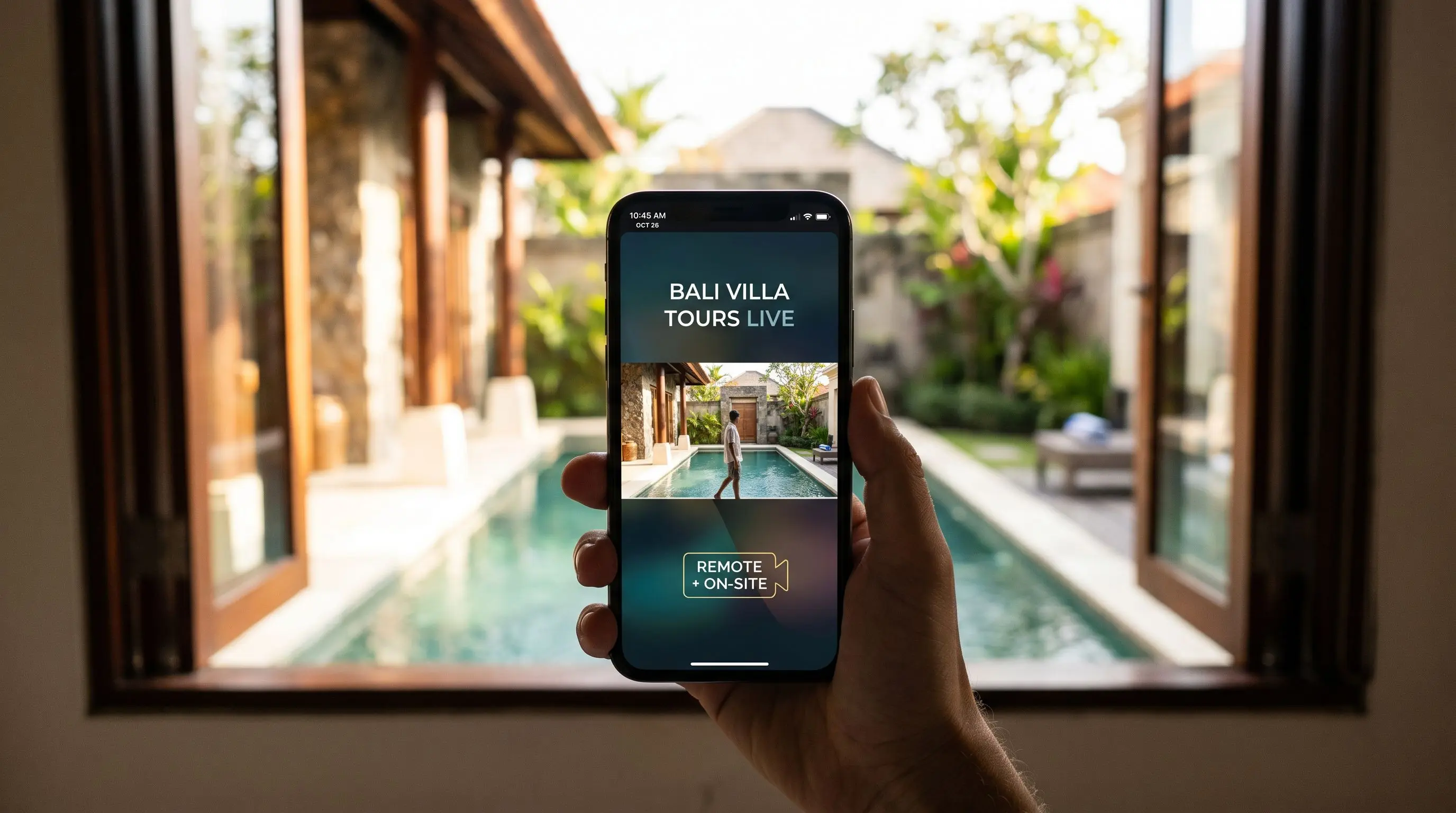
- Show-unit or sales-model walkthrough: live video call with the developer's project manager on-site.
- Construction progress: monthly geotagged photo reports, time-lapse video from a fixed-point camera if the developer has one, drone footage of the plot showing boundary, access road, and drainage.
- Plot context via drone: a drone pass over the site shows the plot boundary, the full access road from the main road, and where water drains to in heavy rain, better than any ground-level video.
What a buyer should not try to verify only remotely:
- Specific unit finish quality: glazing, joinery, flooring detail.
- Access-road condition: especially the final 100m to the villa, which is often an unpaved gang.
- Neighbourhood vibe at different times of day: morning scooter traffic, evening noise from bars or construction, roosters at dawn, nearby mosque call to prayer, flooding risk in monsoon.
- Land-parcel boundaries on the actual plot vs the marketing site plan.
- Banjar/neighbourhood relations: impossible to sense remotely.
- Monsoon vs dry-season behaviour of the plot and road. A property that inspects cleanly in July can flood or lose access in January.
The live video tour: what to demand
"Are you coming to Bali in the near future?"
Buyer inquiry, Anteya CRM, 2025
Every serious buyer reaches this question. Before they answer "yes, next month", the video tour is the bridge.
Checklist for a productive video tour with the developer:
- Ask for the specific unit number: not the show-unit, your unit. If the unit is still under construction, the PM shows current progress; if complete, the PM walks the actual property.
- Time stamps and geotag: each video segment should display a date/time stamp and ideally a GPS pin that matches the property coordinates.
- Utility spot-checks: PLN meter and capacity (required for rental operation at scale), water source (PDAM municipal vs private well, with flow-rate if available), sewage (septic tank vs municipal, and where the tank actually sits), internet availability and a live speed test.
- Cell signal and Wi-Fi strength: ask the PM to stand in each bedroom and the pool deck and show bars on a roaming SIM, plus a Wi-Fi speed test on the property's own connection. Coastal lots in Pererenan and Uluwatu routinely have one good corner and one dead one.
- Sound check: record 30 seconds of ambient sound from the pool deck and bedroom windows. Berawa Beach Club strips, Seminyak nightclubs, nearby construction, and temple odalan proximity all come through.
- Neighbour perspective and noise sources: a walk-around video showing what's visible from the pool deck and master bedroom, plus what's on the neighbouring plots. Active construction next door, a rooster operation, or a mosque 50 metres away will define the next two years of your property.
- Time-of-day pass: ask for short video clips at three different times, morning traffic on the access road, evening at 20:00 for noise, and night for security lighting and visibility.
- Road access: a narrated video of the drive from the main road to the property gate (width, surface, parking, emergency access).
Most professional operators welcome these requests; if specific items are hard to fulfil, push for an alternative (Anteya can mediate the workflow with the project manager).
Anteya offers buyer-side site walks for clients who can't be in Bali; third-party inspection services are an alternative if you're shopping outside our representation.
The Bali property-scouting trip: a realistic itinerary
For buyers committing to a 5-day property-focused trip, a realistic itinerary:
Day 1 (arrival): Ngurah Rai airport, transfer to base area. Most buyers base in Canggu or Seminyak for the first trip, which is central to the largest product set. Evening scooter drive through the main street of the target sub-market to feel the traffic and vibe at rush hour.
Day 2 (area immersion): Pick the top 2 sub-markets from your shortlist. Walk the beach, eat at a local warung, drive the access roads to 3–4 candidate projects. Don't inspect interiors yet. Just calibrate the area feel.
Day 3 (property-focused Canggu/west-coast): Schedule 3–4 property viewings at 1-hour intervals. Bring a measuring tape, a phone with GPS, and a checklist. Take geotagged photos. Eat where the projects are, not where your hotel is.
Day 4 (property-focused Bukit/south or Ubud): Same pattern, different region. Bukit day: Uluwatu → Melasti → Nusa Dua drive, 3 viewings max. Ubud day: Central → Penestanan → Nyuh Kuning, typically 2 viewings (Ubud properties are more spread out).
Day 5 (notaris and shortlist review): Meet with a notaris to review document packages on your top 1–2 choices. This is the session that separates shortlists from signatures. Afternoon: return to top choice for a second visit, ideally at a different time of day than the first. Evening: decision check-in.
The week-out confirmation is where most preparation happens, or should. If you're on the plane to Bali without viewings scheduled, a notaris pre-briefed, and a shortlist narrowed, the week on-island gets spent on setup rather than decisions.
"Am I right to understand you are coming to Bali next week, correct?"
Buyer inquiry, Anteya CRM, 2025
By the week-out point the question shifts from "are you coming" to "what are we doing while you're here". That's the right transition.
Checklist for the on-site visit
Bring (or have phone access to):
- Property address, PBG number, land title certificate number for each unit.
- Measuring tape (5m minimum) for verifying stated built-area vs actual.
- Voltage tester for PLN capacity verification if the property is complete.
- Water flow rate tester: an inexpensive phone-compatible flow meter is worth bringing for wells.
- GPS-enabled camera or phone: photos should carry location stamps.
- List of current market $/m² for the sub-market to sanity-check the asking price live.
On the property:
- Walk the boundaries. A marketing site plan and a real boundary often disagree by a meaningful margin. Compare against the land-certificate drawing.
- Check access road width, surface, and drainage. Especially the last 50m. Look at where water goes in rain.
- Test utilities. Electricity (PLN kVA on the meter), water pressure at a tap, internet speed test on the actual Wi-Fi, cell signal on your phone in each room. Check whether sewage goes to a septic tank (most of Bali) or a municipal line, and where the tank is.
- Photograph every room twice: wide angle and detail.
- Photograph every defect. Defect lists become negotiation levers.
- Ask about waste management. Who collects trash, how often, what's the fee.
The inspection flow varies by format and sub-market. Canggu-tier villas (Pererenan and wider Canggu) emphasise access-road drainage, monsoon-period flooding history, and finish consistency across multi-villa plots. Bukit-tier villas (Melasti and Uluwatu) push harder on clifftop setback, water-table depth, and PLN capacity. Apartment-format product shifts the checklist toward building-common-area spec and strata-style service-charge history.
"Are you coming to Bali then? Do you have the dates set yet?"
Buyer inquiry, Anteya CRM, 2025
Once the dates are confirmed, the planning shifts from generic "scope a trip" to the specific contractor-site-time triangulation: which units are accessible on which days, which notaris is available for a same-day briefing, and which weather window the trip falls into.
FAQ
How do I inspect a Bali villa remotely from abroad?
Core toolkit: live video tour with developer's project manager (with GPS + timestamp), monthly geotagged progress photos (for off-plan), past-buyer reference calls, notaris-verified document package (PPJB draft, land title, PBG, RDTR zone). What you can't verify remotely: access-road condition, neighbourhood vibe across different times, land-parcel boundaries on actual site, banjar relations.
How many days should I spend on a Bali property-scouting trip?
Minimum 4–5 days for a serious first trip. Day 1 arrival + area immersion, Days 2–3 property viewings in top sub-markets, Day 4 second-region viewings, Day 5 notaris review of documents on shortlisted properties. Shorter trips work only if you've narrowed to one sub-market and one developer remotely first.
Should I use a buyer's agent for the site visit?
Most foreign buyers work with an agent coordinating viewings across developers, which compresses the trip and provides a sanity check on developer-specific claims. The alternative is individual appointments, typically 2–3 viewings per day instead of 4–5. Anteya offers buyer-side accompaniment that also joins the notaris review; third-party inspection services are an alternative if you're shopping outside our representation.
What's the best time of year for a Bali site visit?
Dry season (April–October) gives reliable access to all sub-markets and clear sightlines. Monsoon season (November–March) reveals flooding risk and drainage quality. If you can inspect during the rainy season and the property still performs, you've learned something material that a dry-season visit won't show. Ideally the second visit is in the opposite season from the first. Avoid the Nyepi week (date shifts annually; typically March) when the island shuts entirely.
How do I verify utilities on a Bali property?
PLN: check meter rating (kVA/VA). Water: turn on a tap and measure flow; thin well flow is a real issue, especially on coastal lots where wells can salinate. Sewage: confirm septic vs municipal and tank location. Internet: run a speed test on the property's Wi-Fi. Cell: check signal bars in each room on a roaming SIM. Don't rely on the agent's general assurance.
Should I inspect the villa at different times of day?
Yes if schedule allows. A property that's quiet at 11am can be loud at 10pm near Seminyak nightclubs or the Berawa Beach Club strip. Visit once in morning, once in evening, and ideally once on a weekend if the neighbouring bars have weekend patterns. Five-minute recordings from the master bedroom at each time tell you more than any developer assurance.
What questions should I ask during the site visit?
Ask the PM: when was this structure built versus permitted; who lives in the neighbouring properties and what's their pattern; what's the banjar arrangement for noise, parking, and ceremony access; what's the water source and capacity; what's the PLN history; what maintenance has been done in the last 12 months. Answers should be specific. Vague answers are themselves information.
Anteya Research is the editorial function of Anteya Real Estate, a Bali-based investment property advisory.