Anteya Research
What Is a Banjar in Bali? The Village Council That Affects Your Property (2026)
July 10, 2026

A banjar is the traditional Balinese neighbourhood council, the customary (adat) body that runs community life on your street: temple ceremonies, local security through the pecalang, shared costs, gotong royong (communal work) days, and local rules alongside Indonesian state law. For a foreign owner, it is the informal but real local authority whose fees, cooperation, and goodwill shape how easily you build, staff, and rent.
Buyers rarely ask about the banjar before they buy. It usually surfaces only after handover, when the first ceremony levy or security contribution arrives.
!(/images/banjar-hall.jpg)
Why a banjar matters to a foreign owner
Four parts of ownership touch the banjar directly.
Contributions. It collects regular dues (iuran) for security and street upkeep, plus one-off levies when the local pura (temple) holds its odalan (temple anniversary). Foreign owners in its territory contribute like any resident landholder.
Construction cooperation. A build runs smoother when the banjar is kept informed. Your PBG (building permit) is the state's approval; the banjar's goodwill is separate, and can still slow deliveries or gotong royong help when your paperwork is clean.
Rental and noise attitudes. Some banjars are relaxed about daily rental; others limit it through awig-awig (their customary rules) or expect a contribution. It sits on top of the zoning question, not instead of it.
"So for Airbnb ... We should choose a pink zone ? For more flexibility of way of rentals 🤔"
Buyer inquiry, Anteya CRM, 2025
Ceremonies and access. Nyepi (the day of silence) closes the whole island for 24 hours, airport included. Galungan, Kuningan, and the local pura's odalan bring processions and temporary closures on your gang (lane). Real guest-experience facts, not folklore.
Banjar vs desa adat vs the formal village administration
Bali runs on two overlapping systems, and an owner answers to both.
The customary layer is the desa adat (customary village), and the banjar is its smallest neighbourhood cell. Its rules are the awig-awig, its security arm the pecalang, its decisions made in meetings (sangkep). This layer governs ceremonies, communal land, and neighbour relations.
The state layer is the desa dinas (administrative village), under the regency (kabupaten). This is where formal documents live: your PBG, land certificates, and the RDTR zoning map that sets whether a plot is pink (tourism/commercial), yellow (residential), or green (protected/agricultural). Daily-rental legality is decided here, not at the banjar.
"PBG certificate obtained"
Buyer inquiry, Anteya CRM, 2025
The practical point: a pink-zone plot with a valid permit can still hit friction if the banjar relationship is poor, and a warm banjar cannot legalise an unapproved build.
How owners handle banjar contributions in practice
Most foreign owners never deal with the banjar directly. The villa manager, local staff, or operating team handles it: the sangkep, the iuran, ceremony levies, gotong royong days. Confirm who owns this job before you sign.
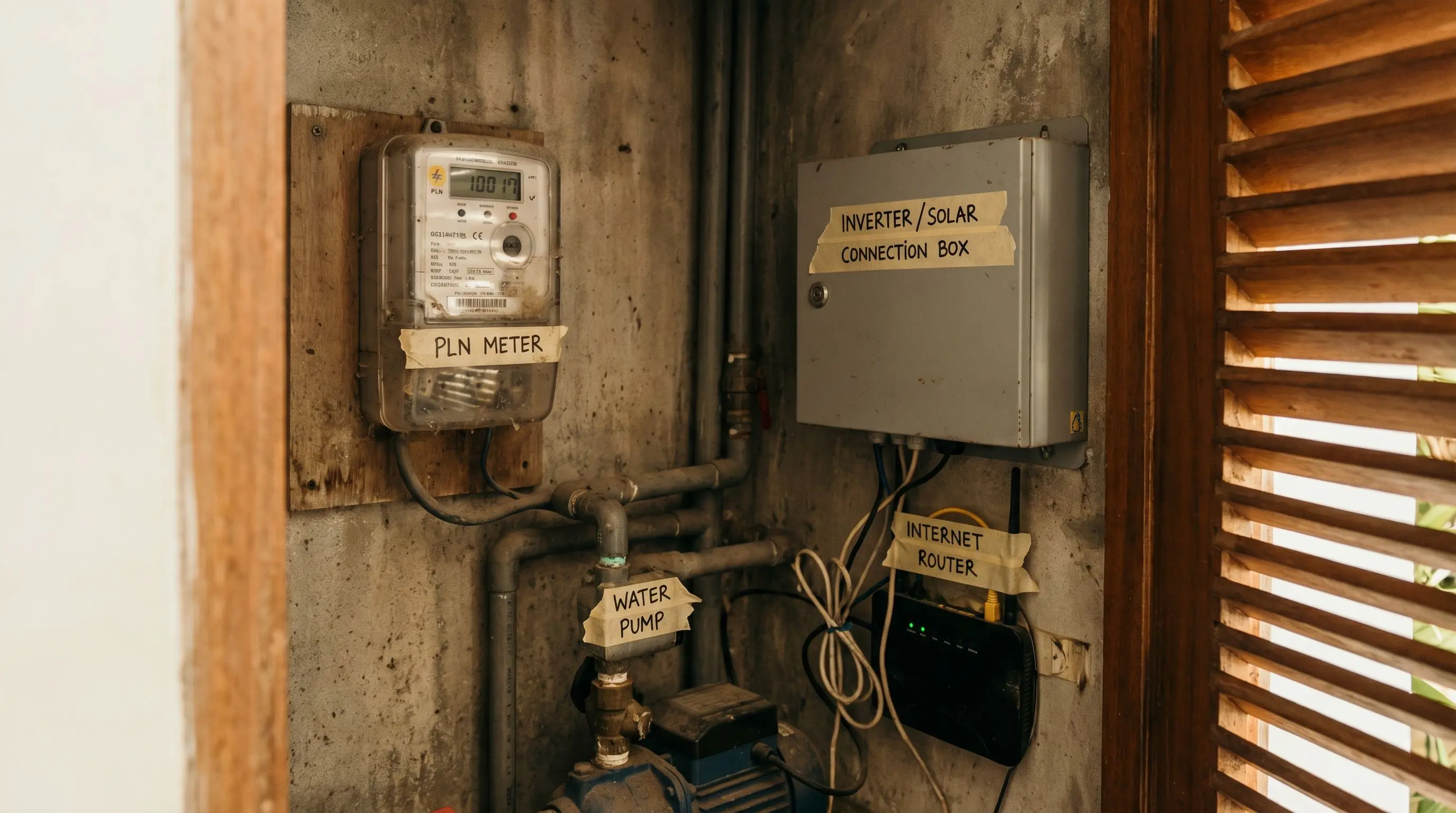
Treat banjar contributions as a running-cost line alongside staff, pool, and maintenance and your monthly PLN electricity, water, and internet. Regular dues are modest; one-off ceremony levies are larger and less predictable, so budget a buffer.
Anteya observation: Banjar contributions almost never appear in a buyer's pre-purchase cost model. Running-cost questions in our conversations concentrate on staff, pool, and utilities; the banjar line usually surfaces only after the first levy arrives post-handover. A small recurring cost, but a predictable surprise.
"I am looking to rent out"
Buyer inquiry, Anteya CRM, 2025
!(/images/galungan-penjor.jpg)
How to research a plot's banjar before buying
Ask which banjar the plot sits in, and its stance on foreign owners and daily rental. Two neighbouring plots can fall under different banjars with different awig-awig, so the answer is plot-specific.
Verify the state side separately: the zone colour on the RDTR and the building-permit path. If the colours are new to you, start with the basics of pink, yellow, and green zones. The zone map answers legality; the banjar answers daily life.
"Because i saw a map and when i zoom in... It gets kinda blurry bit still it looks like they are on the outside of the pink zone."
Buyer inquiry, Anteya CRM, 2025
Then talk to existing foreign owners on the same lane. The banjar's real attitude shows in how current villas operate, not in any certificate.
Common mistakes
Reading the zone colour as the whole answer and skipping the banjar. Assuming the fees are a scam rather than a customary contribution. Ignoring ceremonies and gotong royong, then wondering why neighbour relations cooled. Not budgeting for one-off ceremony levies. Buying on a lane whose banjar quietly discourages daily rental, then planning an Airbnb.
None are legal traps. They are relationship and expectation gaps, cheap to avoid if you ask the right questions before the deposit.
FAQ
Do foreign villa owners have to pay banjar fees?
In practice, yes. The banjar collects regular dues (iuran) for security and upkeep, plus occasional levies for temple ceremonies. Foreign owners contribute like any resident landholder, and your manager usually handles payment.
Should I choose a pink zone for more rental flexibility?
Zone and banjar are separate questions. A pink (tourism/commercial) zone is where daily rental is legally cleaner, but the local banjar can still hold its own attitude to short-term guests through its awig-awig. Check both.
Does the banjar decide whether I can run an Airbnb?
Not legally. Daily-rental legality is a state and zoning matter, tied to the RDTR zone and your permits. But the banjar's attitude still counts: some councils welcome short-term guests, others discourage them. A plot can be legally rentable yet sit on an unwelcoming lane.
Who pays the banjar and attends the meetings for me?
Usually your villa manager, local staff, or operating team. They attend the meetings (sangkep), pay the iuran, and contribute to ceremony levies. Confirm who owns this before you buy: a neglected banjar relationship is harder to repair than to maintain.
How do I find out which banjar my plot belongs to?
Ask directly during due diligence, because banjar boundaries are plot-specific and two adjacent lots can differ. Cross-check the RDTR zone colour and permit path separately, then speak to existing foreign owners on the same lane; their experience reveals more than any document.
Anteya Research is the editorial function of Anteya Real Estate, a Bali-based investment property advisory. This article reflects patterns across buyer conversations logged in the Anteya CRM between 2023 and 2026, plus first-hand observations from our Bali-based team.
Browse Bali projects → Contact Anteya →
General information, not legal advice. Customary practice varies by village; consult your local team and a licensed notaris (notary) for your specific plot.