Anteya Research
How to Buy a Resale Villa in Bali: The Secondary Market Playbook
May 19, 2026
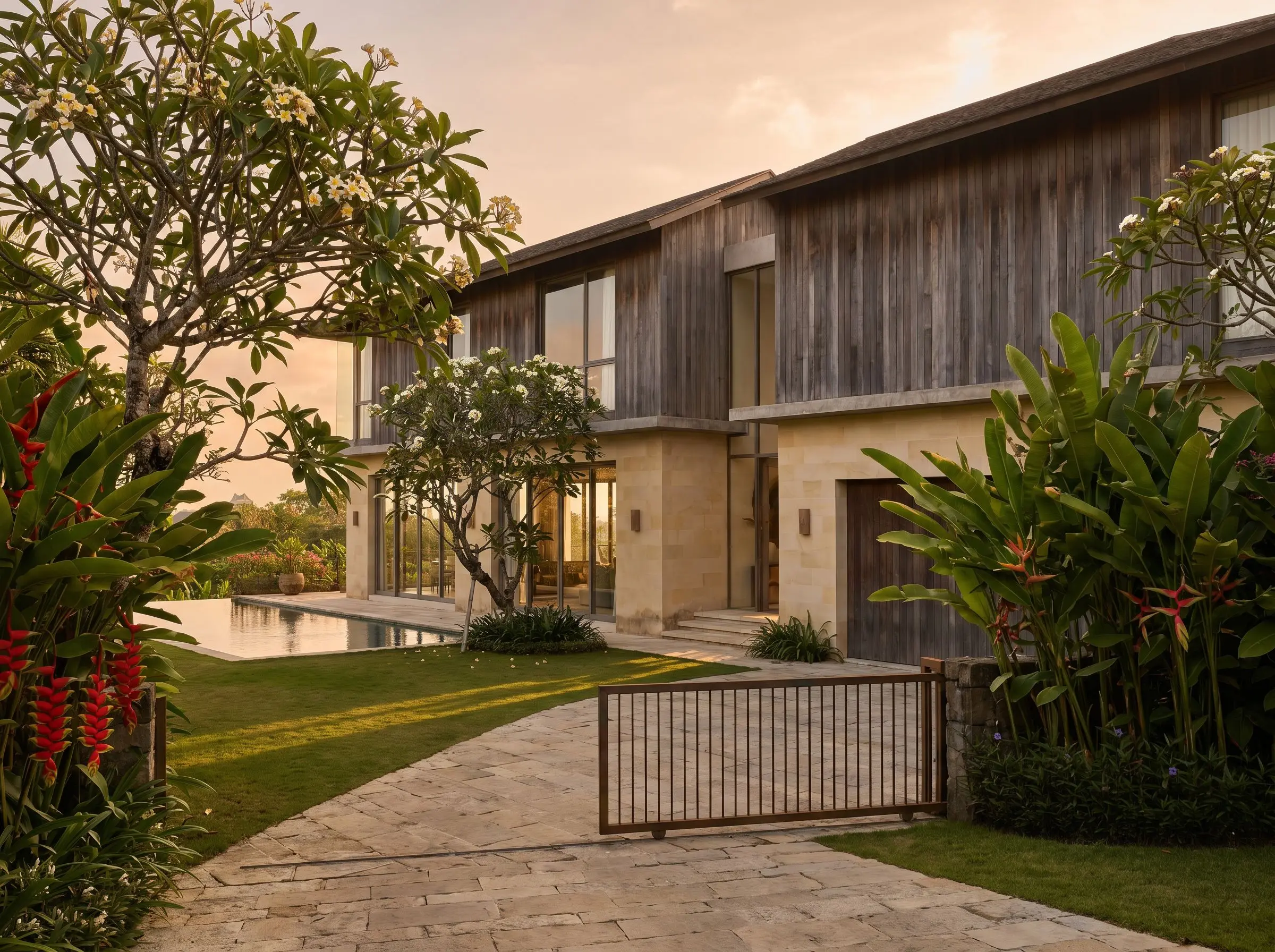
Across more than 5,300 buyer conversations Anteya logged with Bali property buyers between 2023 and 2026, a meaningful share asked the same question: "Why am I only being shown off-plan? What about resale?" The secondary market on Bali is real, it is not as visible as the developer pipeline, and for a subset of buyers it is the better fit. This article maps where to actually look for a resale villa, the lease-term math that determines whether the listing price is fair, the due-diligence steps that differ from an off-plan purchase, and the transfer mechanics that close the deal at the notaris/PPAT.
Why a secondary market exists in Bali in the first place
The Bali resale market is structurally smaller than the off-plan market because the island's leasehold model concentrates inventory in the first transaction. Most foreign-owned villas are 25 to 30 year leases that the original buyer intends to occupy or rent out for most of that period. Resale becomes the path when something changes:
- Relocation. The buyer moved to Bali, lived there three to five years, decided to leave (often back to family in their home country).
- Lifestyle pivot. A villa bought for personal use becomes a poor fit (location, layout, neighbourhood density), and the owner would rather sell than fix.
- Partnership exit. Co-ownership ended on a buy-out or external sale, and one or both partners want out.
- Income disappointment. Projected rental yields didn't materialise; the owner is consolidating capital.
- Estate planning timing. Older buyers with multi-year lease remainders chose to monetise rather than extend.
In our experience, the cleanest resale listings come from owners who have held the villa for several years, know exactly what the asset produces, and price near the realistic transaction range rather than the asking-price fantasy that some long-listed offers carry.
"I want a villa I can move into next month, not wait 18 months for handover. Where do you find resale on Bali, and why do agents always push me toward off-plan?"
Buyer inquiry, Anteya CRM, 2025
Where to actually look for resale villas
The secondary market is fragmented across channels with widely varying reliability. Roughly in order of effort-to-quality ratio:
Boutique agencies with a secondary book. Most well-run Bali agencies sell off-plan because the commission per deal is higher and the pipeline is broader. Some carry a resale roster as a secondary line of business. These listings are typically the cleanest because the agency has already done a first-pass diligence on the title, the remaining lease term, and the basic legal status before they accept the listing. Commission is paid by the seller; the price you see usually includes that load. In practice, resale stock circulates inside informal agent WhatsApp networks before going public, so a buyer working with one well-connected agent often gets first-look on listings that never reach a portal.
Facebook groups, Telegram channels, and informal Bali property forums. Volume is high, quality variance is also high. The most active venues are FB groups like Bali Property For Sale, Bali Villas For Sale/Rent, and Canggu Community (occasional resale posts), plus Telegram channels and Russian-speaking expat networks where resale postings circulate daily. A meaningful fraction of postings are misrepresented (wrong remaining lease term, photos older than current state, "freehold-equivalent" framing that conceals a leasehold with limited time left). Treat these channels as sourcing, not closing: find candidates, then route through a proper notaris/PPAT and a buyer-side agent before any commitment.
Direct from owner via local networks. Lower commission load and sometimes meaningful price improvement; higher friction on legal hygiene. In practice this means tipping the villa-management or staff network in the relevant area, expat community events, and co-working circles in Canggu / Ubud where owners often signal intent to sell months before formal listing. Some of the best resale prices come through here, but the buyer absorbs the entire diligence cost themselves.
Portal listings (international real-estate aggregators). Portal coverage of Bali resale has grown since around 2022 but quality of fact-check on listings remains light. Useful for budget triangulation and seeing what the asking range looks like across sub-markets; less useful as a closing channel because portal-side diligence on Bali listings is thin.
"I keep seeing villas on Facebook with prices way below the developer asks. Are these scams or is the secondary market actually that much cheaper?"
Buyer inquiry, Anteya CRM, 2025
The general pattern: secondary villas trade at a discount to a comparable new-build of similar size and location, because the buyer is taking on a shorter remaining lease, a property with use-history, and the friction of refurbishment costs. The discount is real; the per-month-of-remaining-lease cost is often similar to off-plan once the math is done properly.
The lease-term math: where the price is real
A 25 or 30 year leasehold villa with 18 years remaining is a fundamentally different asset from the same villa with 28 years remaining, and the price should reflect that. The simplest workable framing: price per remaining year of lease, set against a comparable new-build at the same per-year cost. If the new-build per-year cost is, say, USD 8,000 per remaining lease year (USD 240,000 villa with a fresh 30 year lease), a resale villa with 18 years remaining and the same physical specifications should price at roughly USD 144,000 ± renovation cost and use-history adjustment.
This is a rule-of-thumb anchor, not a valuation formula. Real adjustments above and below:
- Lease extension already pre-paid. Some original buyers paid the lease-extension fee up front, pre-paying the contractual extension for an additional 25 to 30 years at the original-price formula. This is a major valuation upgrade (subject to the extension clause holding up on enforcement) and often not disclosed in the listing without a direct question.
- Pre-negotiated extension on the deed. The original lease may include a contractual option to extend at a defined formula. Check the akta sewa-menyewa for an opsi perpanjangan clause; the existence of this option (vs a discretionary renewal at the landowner's choice) is materially price-relevant.
- Renovation cost reality. A villa that hasn't been refreshed in seven years typically needs roughly USD 15,000-50,000 of work to bring back to current rental standard (paint, pool resurfacing, AC replacement, soft-furnishing refresh, alang-alang re-thatch). The lower end is achievable on cosmetic-only work; pool resurfacing and re-thatch push the figure toward the upper band. Build this into the offer; sellers often won't.
- Iuran banjar in arrears. Some sellers leave unpaid banjar (customary village) contributions that the new owner inherits as a practical matter even when not legally bound. Verify directly with the kelian banjar (banjar head) or bendahara banjar (treasurer), not just the seller; foreigner-tier iuran banjar varies sharply by banjar in Canggu / Pererenan / Ubud and often includes ad-hoc upacara (ceremony) contributions on top of the monthly figure.
Anteya observation: Across our 2023-2026 buyer pipeline, the buyers who closed cleanly on resale typically did so after at least one walk-through of the property, a written remaining-lease-term verification from the original akta sewa-menyewa, and an independent renovation-cost estimate from a Bali contractor before the offer letter. The buyers who skipped any one of those three steps overwhelmingly renegotiated mid-process or pulled out.
Due diligence on a resale: what changes vs off-plan
Off-plan due diligence centres on the developer (track record, project licensing, payment schedule milestones, completion risk). Resale due diligence centres on the specific physical asset and the seller's title to it. Different checklist:
- Verify the actual remaining lease term. Pull the akta sewa-menyewa from the seller's notaris/PPAT; do not rely on a number in a brochure. Compute remaining years from today to lease expiry; check whether any contractual extension is registered on the deed.
- Verify zoning and operational permits. A villa built ten years ago may sit on land that was zoned correctly then but reclassified since. Pull the Pertimbangan Teknis Pertanahan (PTP, land-use technical consideration) and current zoning under the regency Tata Ruang (RTRW) plan. If the villa is currently used for daily rental, verify the Pondok Wisata (small-scale tourist accommodation) license; by Indonesian regulation this license is held by an Indonesian citizen (typically the landowner), so confirm in whose name it sits and whether it remains valid after the lease assignment.
- Inspect the physical asset. This is the single most-skipped step on resale and the most consequential. Photos are not sufficient; a midday viewing is not sufficient. Try to visit during a heavy wet-season downpour (October to April); that is when gang flooding at the gate, pool overflow, septic backflow, alang-alang roof leaks, and water staining behind downpipes actually show themselves. A dry-season walkthrough hides all of it. Drainage, water pressure, AC age, pool tile condition, roof structure, gutter system, and electrical-panel state all materially affect post-purchase cost.
- Check for liens and outstanding obligations. Beyond utilities, ask the notaris/PPAT to verify there are no recorded encumbrances, no pending disputes, and no informal claims (the previous tenant who still has belongings stored on the property, the maintenance contractor who is owed three months of fees).
- Get the rental history if rental-yield is part of the buying thesis. Actual booking data from the last twelve months, not the developer-marketed projection. Booking records from a property-management company are auditable; the seller's own monthly claim is not.
Negotiating on a resale villa: different game from off-plan
Off-plan price is largely fixed: the developer has a list price, sometimes a small early-buyer discount, rarely meaningful negotiation room beyond payment-schedule flexibility. Resale is the opposite: the asking price is the seller's starting position, and the negotiated outcome can sit materially below it.
Reasons resale has negotiation room:
- The seller has a personal timeline (relocating, partnership exit, lifestyle change) that the buyer's offer can accelerate.
- The asking price may have been set 6 to 18 months ago and not refreshed against current market.
- The remaining lease term math gives the buyer a defensible anchor that the seller may not have computed properly.
- Renovation cost is an honest line-item the buyer can hold the seller to.
What works in practice:
- Open with a written offer, not a phone conversation. Documented offer with computed remaining-lease-term basis and renovation-cost line item. Sellers respond differently to a written framework than to an emotional conversation.
- Walk-away credibility. The buyer who has 2 to 3 alternative resale listings under active consideration negotiates better than the buyer who has fallen in love with one villa.
- Specific repair/rehabilitation as price reduction or seller-completed work. Either knock the price by the renovation estimate or get the seller to fix specific items before closing.
- Pre-paid lease extension as price increment. If the buyer wants the extension before closing, structure that as an additional negotiated layer rather than an assumed default.
"Seller is asking USD 280,000. I think the realistic number is USD 220,000 given the lease term and the renovation I'll need to do. How do I make that offer without losing the deal?"
Buyer inquiry, Anteya CRM, 2025
There is no universal rule on what's negotiable. In our experience, resale sellers with 6+ months on the market are typically open to 10-20% movement from asking; freshly listed sellers may move 0-10%. The seller's personal urgency, not the listing age, drives the actual room.
Transfer mechanics: what actually changes hands
On resale of a leasehold villa, the transaction is a transfer of the leasehold right from the existing tenant to the new buyer, executed at the notaris/PPAT through one of two mechanisms depending on lease structure and parties' preference:
- Assignment (cessie) of the existing lease. The new buyer steps into the existing lease contract with the landowner; the original tenant exits. Notarised through an akta cessie (deed of assignment) or akta pengalihan hak sewa (deed of lease transfer) depending on the structure the notaris/PPAT applies, or as an amendment to the original akta sewa-menyewa. Requires landowner consent in most cases. Preserves the original lease term and any contractual extensions.
- Termination and fresh lease. The original lease is terminated; a new lease is signed between the landowner and the new buyer. Cleaner contractually but typically resets the lease term from "X years remaining" to "fresh 25 to 30 years" with a market-rate lease premium, which materially changes the economics.
Most resale transactions use the novation path because the value of the deal depends on inheriting the original lease terms (including any pre-paid extension or contractual renewal option). The fresh-lease path is appropriate only when the landowner wants to reset the terms and the buyer is paying for that reset.
Standard closing costs the buyer bears on a resale:
- Notaris/PPAT fees for the transfer akta (typically around 1% of transaction value, with room to negotiate down on larger deals or up on small tickets where fixed-cost floors apply)
- Buyer-side legal review (separate from the closing notaris if the buyer wants independent counsel)
- Lease-extension fee if pre-paying additional years (varies widely by location and landowner)
- Inheritance of banjar contributions and any pro-rated utilities, capped by what was disclosed in DD
What the seller bears: agent commission (typically 3-5% of transaction value in resale, lower than developer-side commissions); any seller-side closing costs the notaris/PPAT allocates by convention; capital-gains tax exposure depending on the seller's residency status and the structure under which the original purchase was held.
What does not work on a resale purchase
Patterns to avoid, based on what our team has seen unwind:
Buying sight-unseen on photos. A finished villa hides its problems in photographs. A drone shot does not capture water pressure, AC noise, or the smell of a poorly drained pool deck. The buyer who closes without a physical walk-through almost always ends up renegotiating later from a weaker position or absorbing surprise costs.
Trusting the seller's verbal lease term. "About 20 years left" is not a lease term; it's a guess that has been wrong in our experience more often than right. Get the akta sewa-menyewa and compute remaining years to expiry yourself.
Skipping zoning verification on older builds. A villa built before the current Tata Ruang may sit in a zone where new permits would not be issued today. This is rarely a deal-killer for personal-use buyers, but materially affects daily-rental viability and resale liquidity. Verify before, not after.
Ignoring "as-is" framing in the listing. Sellers who explicitly market "as-is" typically know about specific defects they don't want to negotiate against. Treat this as a flag, not a guarantee that the price already reflects the defects.
Closing without independent buyer-side legal review. The closing notaris/PPAT is the official deed-drafter but is not the buyer's advocate. Independent buyer-side legal review for a resale typically costs USD 500 to 1,500 and is the single highest-return line item in the deal budget.
FAQ
Why is the Bali secondary market so much smaller than the off-plan market?
Bali's primary market is structurally larger because the leasehold model concentrates volume in the first transaction; a 25 to 30 year lease produces a single transaction that the original buyer typically holds for most of the term. The secondary market exists where life-circumstance changes (relocation, partnership exit, lifestyle pivot, income disappointment) drive earlier sales. The discount on resale relative to comparable new-build is real but lease-term-adjusted.
Where do I actually find resale villas in Bali?
Three working channels, roughly in order of reliability: boutique agencies with a secondary book (cleanest, agency has done first-pass DD), Facebook groups and informal Bali property forums (high volume, high quality variance, treat as sourcing not closing), and direct-from-owner via local networks (best prices, highest DD burden on the buyer). Portal listings are useful for triangulating asking ranges; less useful as a closing channel.
How much cheaper is a resale villa than a comparable new-build in Bali?
The discount depends on remaining lease term and renovation cost. Resale villas with around 18 years remaining typically transact 30 to 45% below comparable new-build asking on a fresh 30 year lease, before renovation. Renovation (often USD 15,000 to 50,000 on a 5 to 8 year-old villa, more if pool and re-thatch are included) layers on top. Per-remaining-year cost is often similar to off-plan once computed properly.
What due diligence do I need on a resale villa that I wouldn't need on off-plan?
Three additions specific to resale: physical inspection of the actual asset (drainage, water pressure, AC age, pool tile condition, roof, electrical panel), verification of the actual remaining lease term from the akta sewa-menyewa rather than a brochure or verbal claim, and a check for inherited obligations (utilities arrears, banjar contributions, informal claims by previous tenants or contractors). Off-plan DD centres on the developer; resale DD centres on the specific physical asset and the seller's clean title.
Can I negotiate down from the asking price on a resale?
Yes. Resale negotiation room is materially wider than off-plan. Resale listings that have been on the market six or more months typically have 10 to 20% movement from asking; freshly listed sellers may move 0 to 10%. The seller's personal urgency, the remaining-lease-term math, and a credible renovation-cost estimate are the strongest negotiating anchors. A written offer with computed basis works better than a phone conversation.
How does the legal transfer of a resale leasehold villa work in Bali?
Two paths through the notaris/PPAT: novation (cessie) of the existing lease, where the new buyer steps into the original lease contract with the landowner and the original tenant exits; or termination and a fresh lease between the landowner and the new buyer. Most resale closings use the novation path to preserve the original lease term and any contractual extensions. Both routes require formal documentation through the notaris/PPAT.
What ongoing costs do I inherit on day one of buying a resale villa?
Pro-rated utilities (PLN electricity, water, internet) as of the transfer date, banjar contributions to the village council on the rolling local schedule, any property-management contracts the seller had in place (review before closing whether you want to continue or terminate), and ongoing lease payments to the landowner where the lease structure is annual rather than fully pre-paid. Disclose all of these in the DD package before signing, not after.
Anteya Research is the editorial function of Anteya Real Estate, a Bali-based investment property advisory. This article reflects patterns across more than 5,300 buyer conversations logged in the Anteya CRM between 2023 and 2026, supplemented by first-hand observations from our Bali-based team. It is general information, not legal advice. Indonesian property regulations and individual transaction structures vary; consult a licensed Indonesian notaris/PPAT (notary and land-deed official) and a qualified Indonesian tax adviser before structuring a resale purchase.