Anteya Research
Bali Villa Near a Mosque, Church, or Temple: A 2026 Buyer Guide
June 7, 2026
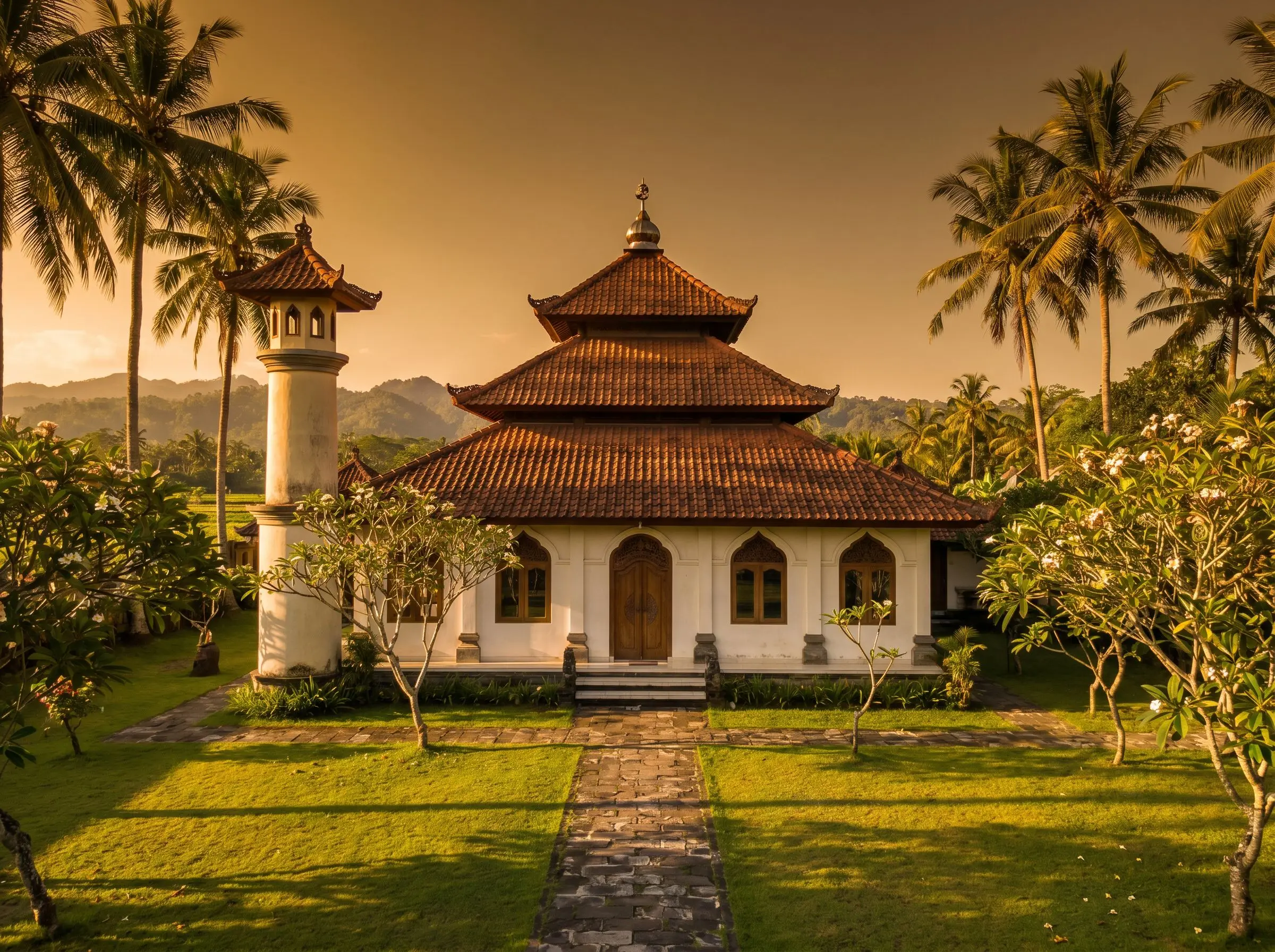
A criterion most Bali guides ignore
A buyer in Singapore wrote to us last quarter with a brief that read, almost verbatim, like this: 300,000 dollar budget, ready 2 to 3 bedroom villa, close to a mosque. No mention of pool depth, occupancy projection, or rental zoning. The mosque came first.
Bali is roughly 87% Hindu by resident population, with around 200 mosques and far fewer churches across the island. But the foreign-buyer pool is structured very differently. In our experience, a meaningful share of inquiries comes from Muslim families in the Gulf, Malaysia, Singapore, and the wider Indonesian diaspora, plus Christian-cultural buyers from Europe, the Americas, and Australia. Every standard Bali property guide assumes the buyer is religiously agnostic. Reality is different. For a sizeable minority of foreign buyers, walking distance to a mosque, a Sunday service, or a Hindu temple sits in the top three location criteria, alongside school proximity and beach access.
This article walks through where religious infrastructure actually clusters, what the Friday prayer commute looks like from each major sub-market, and how halal food logistics work in practice.
Mosques in Bali: where they cluster
There are roughly 200 plus mosques on Bali, against something on the order of 5,000 Hindu temples. The ratio matters because it shapes how far a Muslim owner will typically drive for Friday prayer, and which sub-markets are realistic for daily prayer at a community mosque.
The densest mosque clusters sit in and around Denpasar, with the Pemecutan and Sesetan neighborhoods carrying multiple community mosques within short walking distance of each other. Nusa Dua hosts Masjid Agung Ibnu Batutah within the Puja Mandala interfaith complex (a planned multi-faith site built alongside a Catholic, Protestant, Hindu, and Buddhist place of worship), which functions as the de facto central mosque for the southern peninsula. Kuta has long-established Muslim communities tied to the airport, hospitality work, and the historic Javanese trading population, with several mosques within a few minutes of the main road. Nusa Dua, by virtue of being a planned tourism enclave with international staff housing, has decent mosque coverage anchored on the Puja Mandala complex. Sanur sits in the middle range, with several mosques serving the resident community.
The Tuban area near the airport, Jimbaran's fishing community, and the Pemogan and Pesanggaran corridors south of Denpasar are all reasonably well served. If a buyer is optimising for daily congregational prayer rather than only Friday jumu'ah, these are the realistic options.
Canggu and Pererenan, by contrast, have low but non-zero mosque density. There are small mosques in Berawa and toward Echo Beach, but the surrounding Balinese-Hindu community is dominant, and the closest larger mosque tends to be a 10 to 15 minute drive away depending on traffic. Ubud has very limited mosque presence within the central area; the closest established mosque is typically a 25 to 35 minute drive toward Denpasar or Gianyar.
The Bukit (Uluwatu, Pecatu, Bingin, Ungasan, Nusa Dua's outer cliffs) is the thinnest sub-market for mosque proximity. The cliff-edge corridor has historically had a very small Muslim resident population, and a buyer here should expect a 30 to 45 minute commute to the nearest substantial mosque, traffic dependent. Nusa Dua town itself is the practical workaround for Bukit-based Muslim owners who want to attend Friday prayer without a long drive.
"We're moving from Doha to Singapore for work and want a Bali base for school holidays. My wife needs a mosque within 10 minutes walk for the family. Where can we actually look?"
Buyer inquiry, Anteya CRM, 2025
Anteya observation: Roughly one in five foreign-buyer inquiries we logged in 2024 and 2025 mentioned a religious or community criterion in the first three messages, typically mosque proximity, a specific church community, or "somewhere quiet where ceremonies don't run all night." It is not a fringe filter; it is a routine location constraint, and it should be treated that way during the brief-taking call.
Christian churches in Bali
Catholic and Protestant Christian communities have been on Bali long enough to have established physical infrastructure, though it is far more concentrated than Hindu temples and slightly less geographically spread than mosques. St Joseph's Catholic Cathedral in Denpasar is the largest Catholic landmark, and there are additional Catholic parishes in Kuta, Sanur, Nusa Dua, and Lovina on the north coast. Lovina in particular has a long Catholic missionary history and a small but stable congregation.
Protestant churches are present in Denpasar, Kuta, Sanur, and across the expat-heavy areas of Canggu and Seminyak. The expat-oriented international congregations such as Bali International Church and various non-denominational fellowships tend to serve English-language services and meet in rented venues or shared facilities. Service times and locations shift more often than for established Catholic parishes, so a buyer planning around a specific congregation should verify the current meeting place before committing to an area.
Ubud has Catholic mass on a less frequent schedule; expat Christians in Ubud often drive to Denpasar for Sunday services or attend smaller home-based fellowships. The Bukit is similarly thin for Christian infrastructure: weekend services typically mean a drive to Nusa Dua, Jimbaran, or Kuta.
Multi-faith Christmas and Easter services in Canggu and Sanur are common in the expat community, with rented hotel ballrooms or beach club spaces hosting Christmas Eve gatherings that draw a few hundred people. These are a reasonable substitute for a parish church for buyers who attend services seasonally rather than weekly.
Hindu temples: cultural infrastructure for everyone
Hindu temples in Bali are ubiquitous. The figure most commonly cited is around 5,000 temples across the island, including the major directional temples (Besakih, Tanah Lot, Uluwatu, Ulun Danu Bratan, Lempuyang, Goa Lawah, Pura Luhur Batukaru, Pura Pasar Agung) and many thousands of village, family, and neighborhood shrines. Almost every Hindu Balinese home has a family temple called a sanggah, and daily offerings (canang sari) are visible on doorsteps, dashboards, and pavement corners across the island.
For a Hindu visiting buyer from India or the diaspora, Bali Hinduism is a distinct tradition with its own pantheon emphasis, ritual calendar, and temple architecture. Practitioners from the Indian Hindu tradition are generally welcomed at major temples (with sarong and sash, and respecting the standard restrictions during menstruation and after a recent bereavement), but the day-to-day community life of a Balinese banjar is rooted in clan structures that take years to enter as anything more than a respectful neighbor.
For non-Hindu buyers, Hindu temple infrastructure is best understood as cultural rather than religious context. It means temple processions on certain calendar dates that close roads for an hour or two. It means gamelan music from a village temple drifting in for an evening. It means village-level banjar coordination on certain festival days. None of this is intrusive in a hostile way, but it is part of the lived environment, and buyers who want absolute predictability around their property should know this before signing.
By sub-market: where to buy by religious need
The matrix below is the rough orientation we use when a brief specifies a religious criterion. Drive times are off-peak estimates; expect 30 to 50 percent longer during Friday afternoon rush or major ceremonies.
| Faith / Need | Best sub-markets | Distance to faith infrastructure |
|---|---|---|
| Muslim, daily prayer | Denpasar, Sanur, Nusa Dua town | Under 5 minutes to nearest mosque |
| Muslim, Friday prayer only | Canggu (Berawa, Kuta-side), Kuta, Jimbaran | 10 to 15 minutes |
| Muslim, Bukit / Uluwatu | Difficult; expect a 30 to 45 minute drive to Nusa Dua or Jimbaran for jumu'ah | 30 to 45 minutes |
| Muslim, Ubud | Difficult; closest substantial mosque is in Denpasar or Gianyar | 25 to 35 minutes |
| Christian Catholic | Denpasar, Kuta, Sanur, Lovina | Under 10 minutes |
| Christian Protestant (expat congregation) | Canggu, Seminyak, Sanur | Under 10 minutes |
| Hindu visiting buyer | Anywhere on the island | Walking distance everywhere |
In practical terms: if Friday prayer at a community mosque is non-negotiable and the buyer is unwilling to drive, the search narrows to Denpasar, Sanur, Nusa Dua, and the southern Kuta-Jimbaran-Tuban corridor. If Friday prayer at home (which is acceptable in many schools of jurisprudence for residents without easy access) is on the table, Canggu becomes workable. The Bukit and Ubud genuinely do require a longer commute or a willingness to pray at home most weeks.
Halal food and lifestyle, in practice
Halal food on Bali is more accessible than first-time visitors expect, but the geography is uneven. Padang restaurants (the Sumatran-Minangkabau tradition) are reliably halal by convention and exist in essentially every sub-market, including Canggu and Pererenan. Indonesian-Muslim warungs (small family eateries) are common around Denpasar, Kuta, Jimbaran, and Nusa Dua. Jimbaran's fishing community runs grilled-fish operations that are almost universally halal, and the area is generally a comfortable choice for Muslim families dining out.
International halal certification, on the other hand, is not standard across the bulk of Canggu, Pererenan, Bukit, or Ubud cafes and restaurants. Many places serve no pork and would be considered Muslim-friendly in practice, but the official MUI (Indonesian Council of Ulama) halal certificate is the exception rather than the rule outside of the Indonesian-Muslim restaurant segment. Buyers from countries with strict halal certification habits (Malaysia, Singapore, Gulf states) should expect to rely on the Indonesian-Muslim restaurant network plus self-catering rather than mainstream Western-style cafes.
Halal-leaning supermarket shopping is workable. Pepito, Bali Buda (largely vegetarian), and traditional Indonesian markets cover most household needs. Imported specialty items can be sourced through Denpasar's larger supermarkets and several Muslim-owned grocers. Alcohol is freely available across Bali; the Aceh-style restrictions that exist in some other Indonesian provinces do not apply here, so non-drinking households simply need to recognise that bars and restaurants throughout the tourist corridors will serve alcohol openly.
The Friday prayer commute math
For Muslim owners not living within walking distance of a mosque, jumu'ah is the practical pinch-point. Friday prayer falls in the early afternoon, typically around 12:05 to 13:15 depending on the season and the mosque's schedule. Traffic at that hour is moderate on most days but spikes around school dismissal and Friday after-prayer movement.
From the Bukit to the nearest substantial mosque in Nusa Dua town, count on 30 to 45 minutes off-peak and longer on Fridays. From Ubud, the drive to Denpasar's mosques runs 25 to 35 minutes outside peak. From Canggu and Pererenan, Berawa or Kuta-side mosques are 10 to 20 minutes, which is the realistic upper bound of what most owners will sustain weekly.
The honest reality, from what we have observed among Muslim owners with property in the Bukit or Ubud: roughly half default to praying at home on Fridays after the first few months, and roughly half make the drive but feel the time cost. A small number of boutique-stay operators on the Bukit arrange a Friday van service for staff and guests who request it, but this is not a standard hospitality offering and a buyer should not assume it will be available. If Friday congregational prayer matters week in and week out, choose a sub-market that supports it; relying on a future "I'll figure it out" tends to disappoint.
"I'm Catholic and my husband is Muslim. Where in Bali works for both of us, ideally within 15 minutes of each other's church and mosque?"
Buyer inquiry, Anteya CRM, 2025
For an interfaith household, the practical answer to the question above is the Denpasar to Sanur corridor, or the Kuta to Nusa Dua corridor. Both have Catholic parishes and established mosques within a 10 to 15 minute drive of each other, plus reasonable schooling options, expat infrastructure, and decent rental positioning if the property doubles as an investment.
For buyers who want religious privacy
The flip side of the religious-infrastructure question is the buyer who actively does not want close proximity to a mosque (the morning adhan over loudspeakers carries), or who wants distance from the louder Hindu temple festivals, or who is shopping for spiritual quiet without a specific tradition attached. This is also a recurring brief, and it shapes the geography in the opposite direction.
The Bukit, Ubud's outer ridges (Tegallalang, Payangan, Sayan), and rural Tabanan are the sub-markets most often selected by buyers prioritising religious quiet. The Bukit's cliff-edge villages have very limited mosque presence and the Hindu temple network, while present, is more dispersed than in Ubud's denser banjar grid. Outer Ubud carries the gamelan and ceremony soundtrack on certain dates, but a property set back from the village road can be substantially insulated. Tabanan's rice-terrace interior is the quietest of the three.
Sanur and Denpasar offer the maximum religious flexibility (mosques, churches, and temples all within easy reach) at the cost of higher tourist-and-traffic density. The trade is real and worth naming on the call.
Anteya observation: In briefs we logged across 2024 and 2025, religious-quiet seekers and religious-proximity seekers showed up at roughly comparable rates in the inquiry mix. The two cohorts steer toward almost mirror-image sub-markets, which is why the brief-taking conversation matters: a buyer who says "I want somewhere peaceful" can mean either "away from the call to prayer" or "near my church community", and the answer determines whether we are looking on the Bukit or in Sanur.
Practical due diligence before you sign
Three concrete steps before committing to a sub-market on a religious-infrastructure basis:
First, drive-test the nearest mosque, church, or temple at the time you would actually use it. Friday early afternoon for jumu'ah. Sunday morning for Catholic mass. A weeknight if there is a regular evening prayer or service you would attend. Off-peak Wednesday afternoon traffic tells you nothing about Friday around 12:30; only the actual hour does.
Second, verify the imam, priest, or pastor's hours and the active community. A building exists, but whether services run on a schedule that fits your routine is a different question. Established Catholic parishes and large mosques run reliable schedules; smaller community spaces, particularly expat Protestant congregations, can shift venues and times. Confirm directly rather than relying on the previous owner's experience from three years ago.
Third, interview the staff or property manager about religious accommodation. In our experience, most Bali villa staff are Hindu Balinese, and Muslim staff (where present) routinely take Friday lunch off for jumu'ah, plus the major Idul Fitri and Idul Adha days. Hindu staff observe Galungan, Kuningan, Nyepi, and various odalan ceremonies at their family temples. None of this needs special permission; it is standard practice. The conversation worth having is logistics: which days, how is coverage handled, and (for Nyepi, the day of silence) what the household plan is, since the entire island shuts down for 24 hours.
"Our family is Hindu, but Indian-Hindu, not Balinese-Hindu. Do we connect with the local Hindu community, or are we outsiders?"
Buyer inquiry, Anteya CRM, 2025
The short answer to that one: you will be welcomed at major temples and respected as a fellow Hindu, but the everyday banjar community life is a separate fabric. Most Indian and diaspora Hindu owners we have talked to find the visit-and-respect mode more sustainable than trying to integrate into a Balinese village structure that is built on multi-generational clan ties. That is not a rejection; it is just the shape of the local social organisation.
Putting it together
If religious-infrastructure proximity sits in your top three location criteria, the sub-market shortlist is shorter than the standard "Canggu vs Uluwatu vs Ubud" framing implies. Muslim daily prayer narrows the search to the Denpasar to Nusa Dua axis. Christian Catholic centres are similarly concentrated. Hindu cultural infrastructure is everywhere, but community integration is a different question from temple access. Halal food works with the Indonesian-Muslim restaurant network as the backbone, supplemented by self-catering. Friday prayer commute from the Bukit or Ubud is a real weekly cost.
The article you have just read is exactly the kind of conversation we have on first-call briefs with religiously observant buyers. Where many guides default to area-by-area ROI tables, this filter often comes earlier in the search funnel, and skipping it leads buyers to villas they will not actually want to live in for the prayer hours they actually keep.
FAQ
Where are the main mosques in Bali for a foreign Muslim buyer?
The densest mosque clusters are in Denpasar (Pemecutan and Sesetan community mosques), Nusa Dua (Masjid Agung Ibnu Batutah within the Puja Mandala interfaith complex), Kuta, Sanur, Jimbaran, and the Tuban corridor near the airport. These sub-markets give walking-distance or short-drive access to community mosques. Outside this axis, mosque density drops significantly.
Is it possible to own a Bali villa near a mosque on the Bukit?
Not really, in walking-distance terms. The Bukit (Uluwatu, Pecatu, Bingin, Ungasan) has very limited mosque infrastructure. The realistic option is to accept a 30 to 45 minute drive to Nusa Dua town for Friday prayer, or to pray at home and visit a mosque on visits to the south. Buyers who need a mosque close by typically buy in Nusa Dua town or Jimbaran instead.
Where are Christian churches in Bali for expat services?
Catholic services are anchored at St Joseph's Cathedral in Denpasar, with additional parishes in Kuta, Sanur, Nusa Dua, and Lovina. English-language Protestant and non-denominational congregations meet primarily in Canggu, Seminyak, and Sanur, though specific venues shift. Ubud has more limited Christian infrastructure, and the Bukit is thin. Verify current meeting locations directly with the congregation before choosing an area on that basis.
Is Bali easy for a foreign Muslim family with kids?
It can be, if the sub-market is chosen with that in mind. The Denpasar to Sanur axis and the Kuta to Nusa Dua corridor have mosques, halal food, international schools, and family infrastructure within reasonable distances. Canggu is workable with some compromise on mosque proximity. The Bukit and Ubud are harder for a family that wants congregational prayer and halal food within easy daily reach.
Can I find halal restaurants in Canggu and Pererenan?
Yes, but mainly through the Indonesian-Muslim restaurant network rather than mainstream cafes. Padang restaurants are reliably halal by convention and exist in both areas. Indonesian warungs run by Muslim families are also present. Western-style cafes and restaurants in Canggu and Pererenan generally do not carry MUI halal certification, and many include pork and alcohol on the menu.
How far is the nearest Catholic church from Ubud?
Catholic mass schedules in Ubud itself are limited. Most Ubud-based Catholic expats either attend smaller home-based fellowships or drive to Denpasar (25 to 35 minutes off-peak) for a regular parish service. Some attend Catholic services in Sanur, which is a similar drive in the opposite direction. Confirming the current schedule directly with the parish before relying on Sunday access is sensible.
Do I need to participate in Hindu ceremonies as a non-Hindu owner?
No. As a non-Hindu owner you are not expected to participate in Balinese Hindu ceremonies, though you are welcome to observe respectfully if invited. Most foreign owners simply contribute to the banjar (neighborhood association) financial collections where applicable and stay out of the way during major ceremonies. On Nyepi, the island-wide day of silence, all residents observe the rules regardless of faith.
Anteya Research is the editorial function of Anteya Real Estate, a Bali-based investment property advisory. This article reflects patterns across thousands of buyer conversations logged in the Anteya CRM between 2023 and 2026, supplemented by first-hand observations from our Bali-based team. The buyer-voice quotes in this piece are composites drawn from recurring inquiry patterns; identifying details have been removed.
This article is general guidance, not legal or religious advice. Individual circumstances vary; for specific religious-practice questions, consult an imam, priest, or qualified religious authority in your tradition. For property-specific advice, consult a licensed Indonesian notaris.